Case Studies
Each case study breaks down my role within a project, outlining the information I was given, the challenges faced, and the decisions made along the way. They explore how design constraints, client requirements, and limitations were addressed, as well as what worked particularly well. By reflecting on both problems and positives, these studies give an honest insight into the process of each project and the route taken to produce the final deliverables.
No1. Hendrewen Hotel
Refurbishment
Virtual Reality
No2. The Cathedral Hotel
Interior Design
Custom
No3. Priority Pass
Spatial Planning
Branding
HENDREWEN HOTEL
“This is going to bring me to tears!”
- Martin Roberts, UK property expert and TV presenter
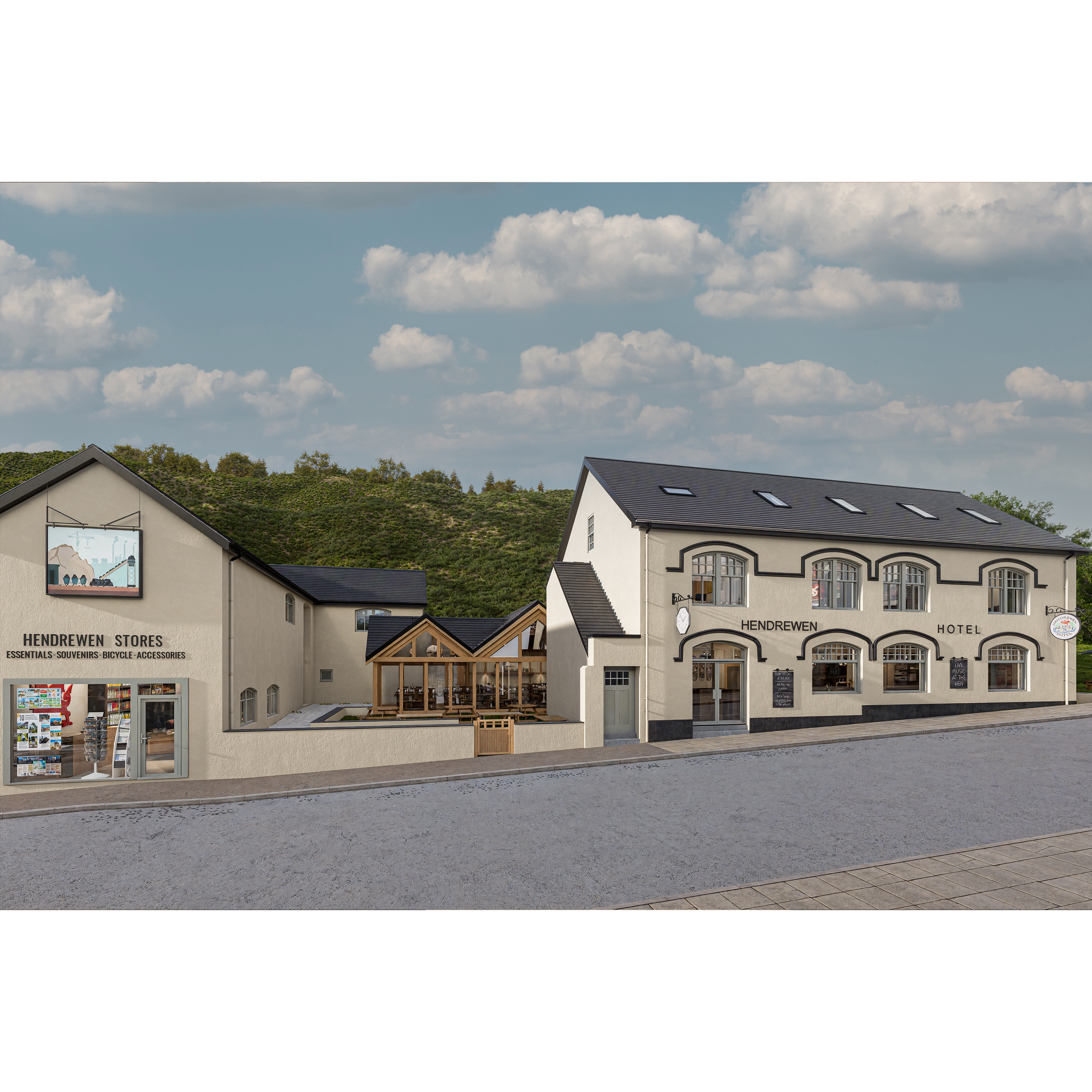
This project was a refurb of an old hotel in Wales that Martin Roberts (Homes Under The Hammer) took over and wanted to improve. I received a descriptive brief from Martin and collaborated on design choices throughout.
A range of industry-standard software was used throughout the project:
Revit & SketchUp for building and asset modelling
D5 Render for high-quality visual rendering
Adobe Photoshop for post production
3D Vista and Premiere Pro for VR tour editing and video editing
The sections below outline decision making, details of how the collaboration was structured, how the process was streamlined to ensure efficiency and the main alterations that were made.
Client
Martin Roberts - Homes Under The Hammer
Date
04/2025
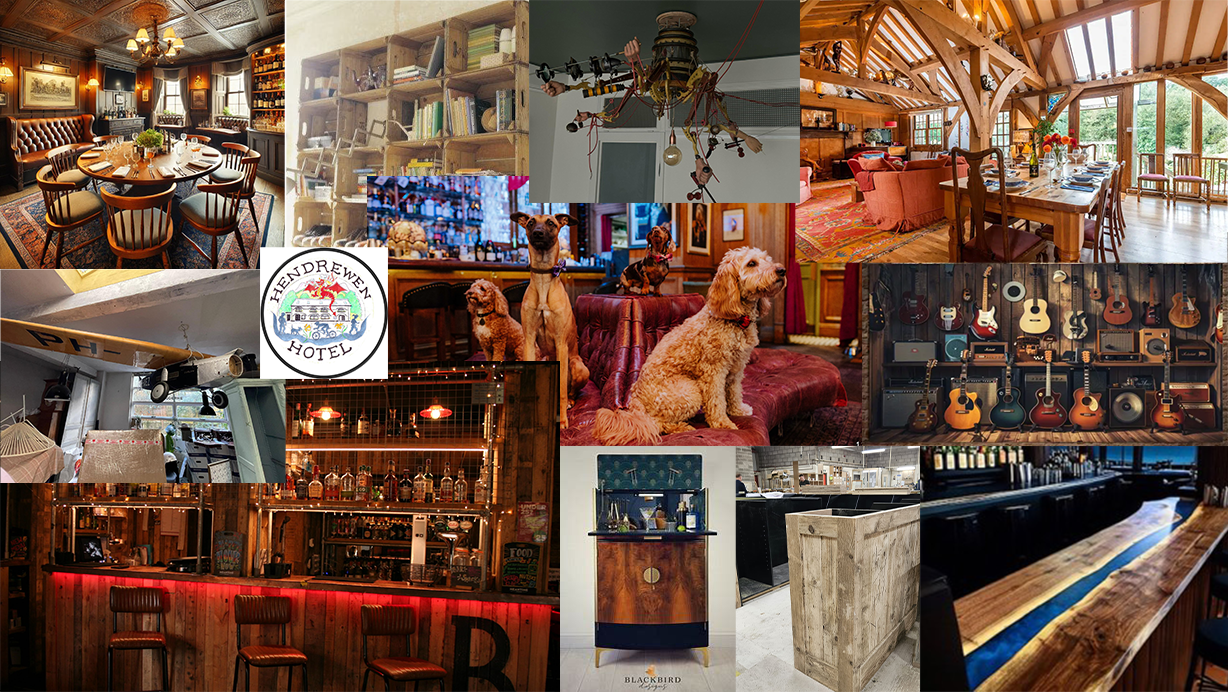
Meetings & Brief
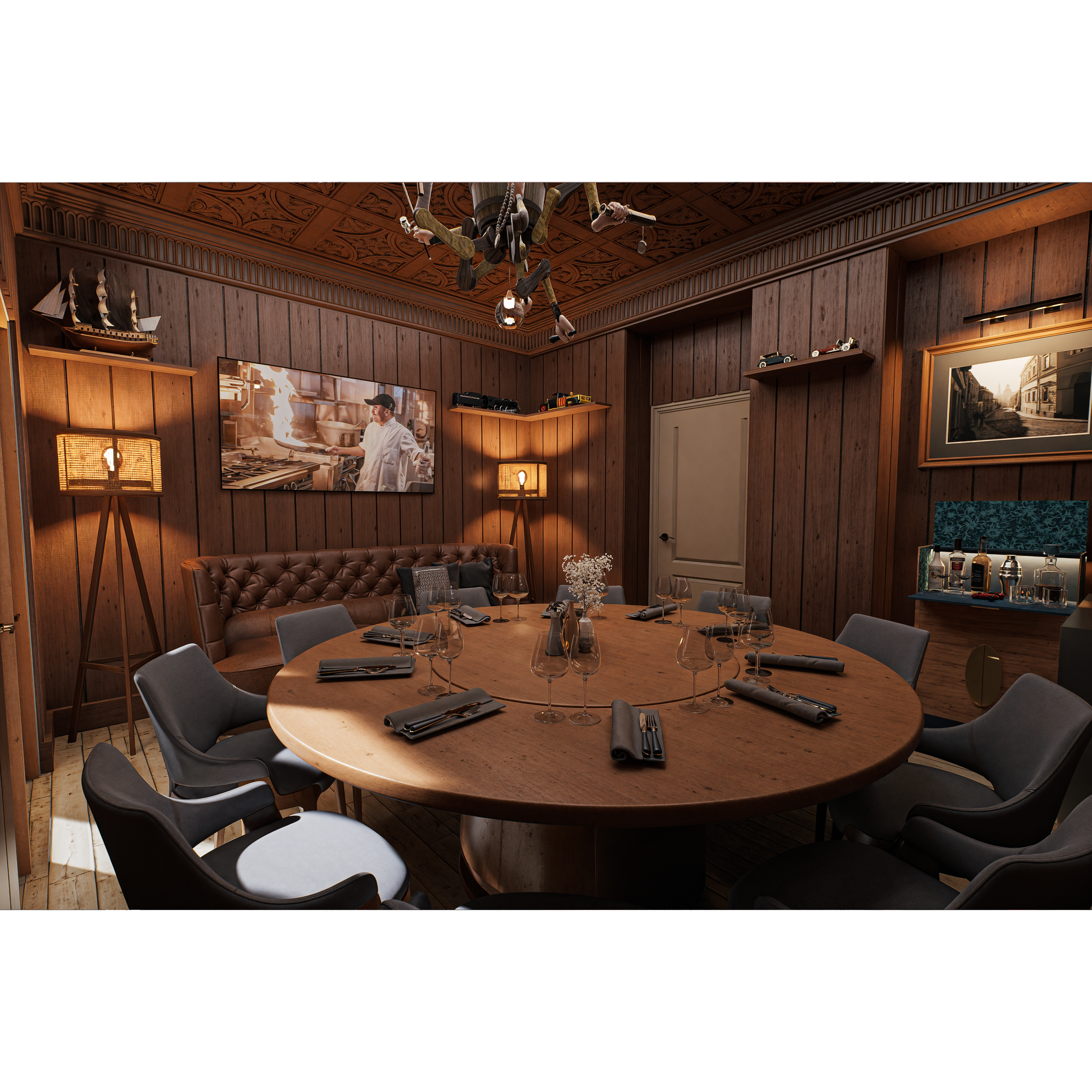
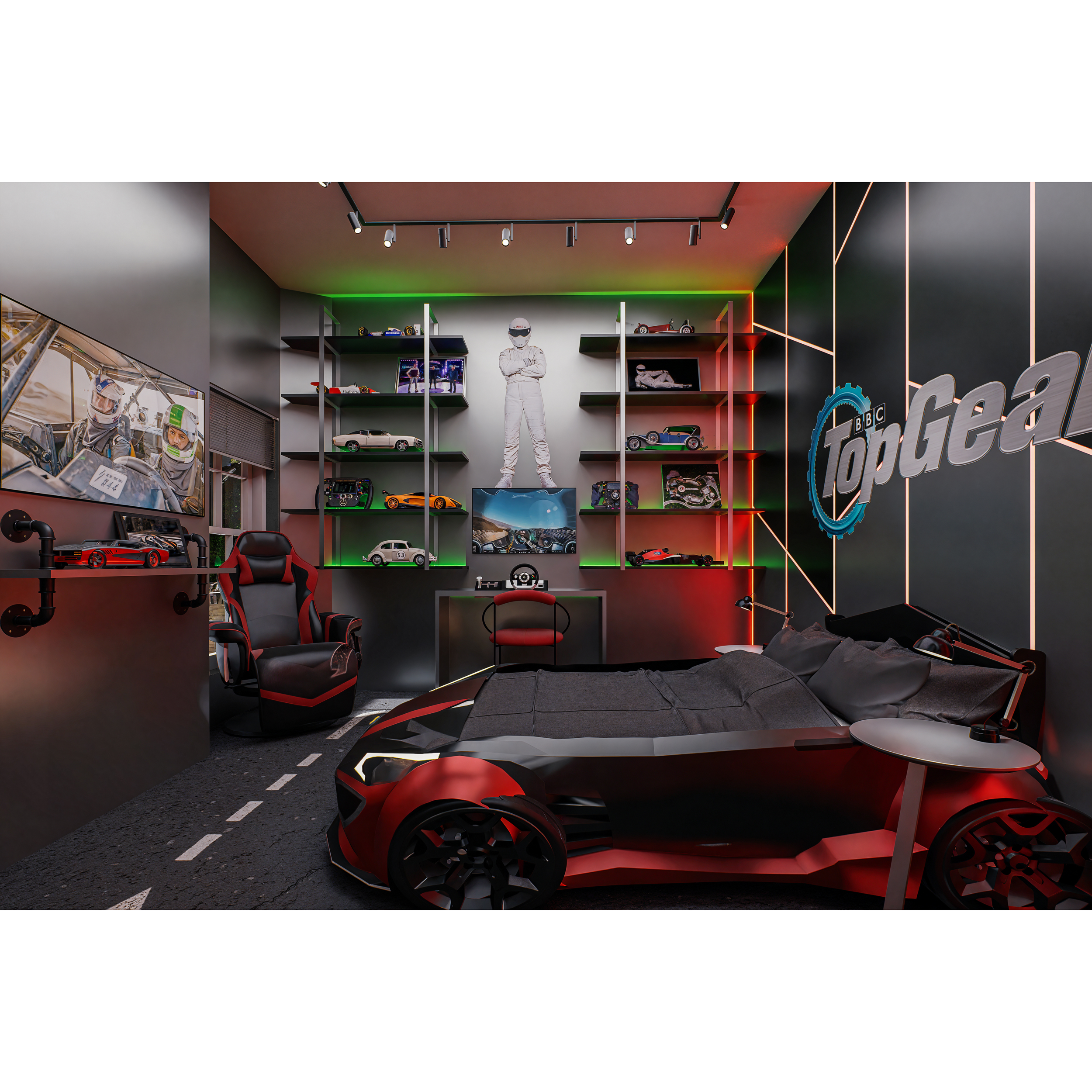
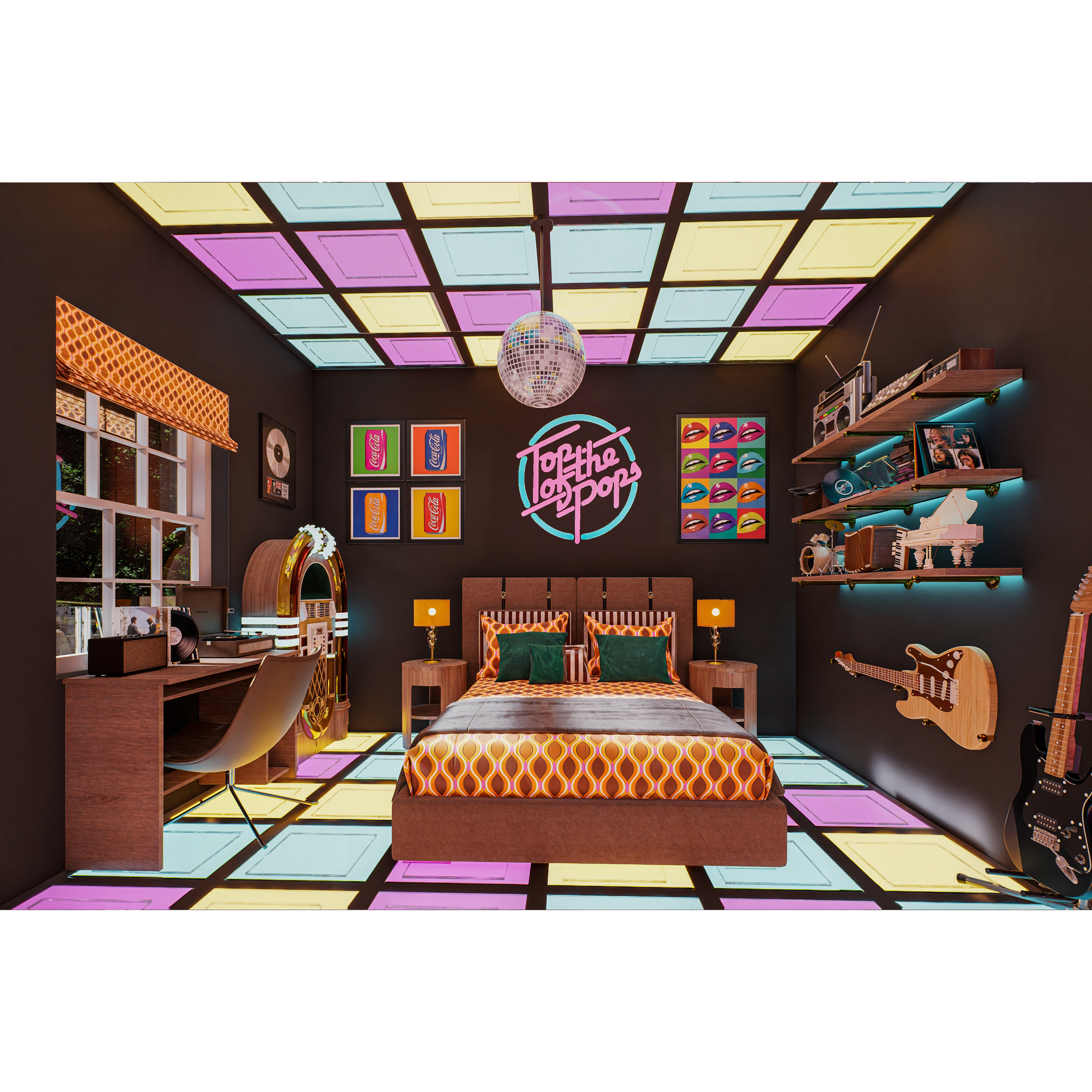
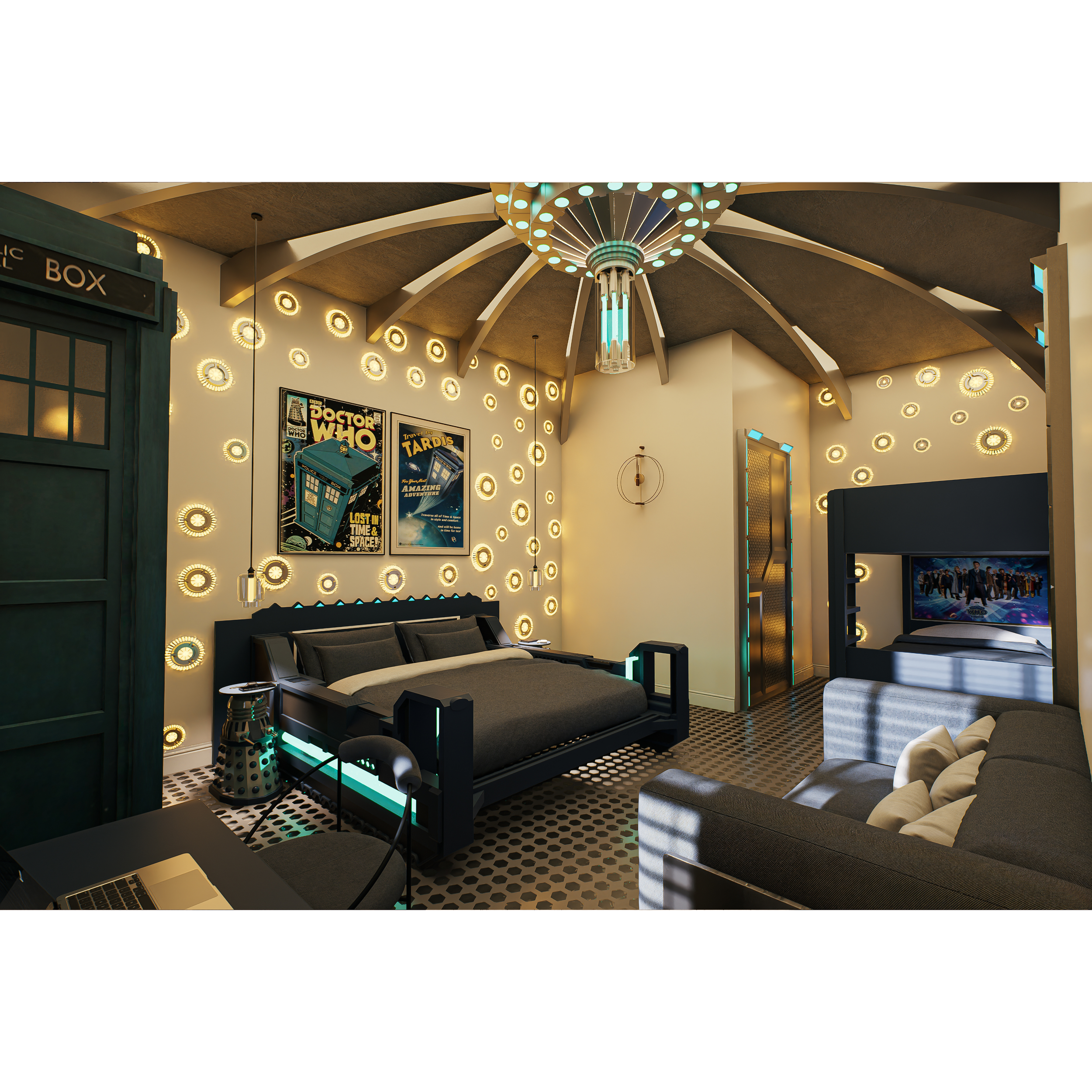
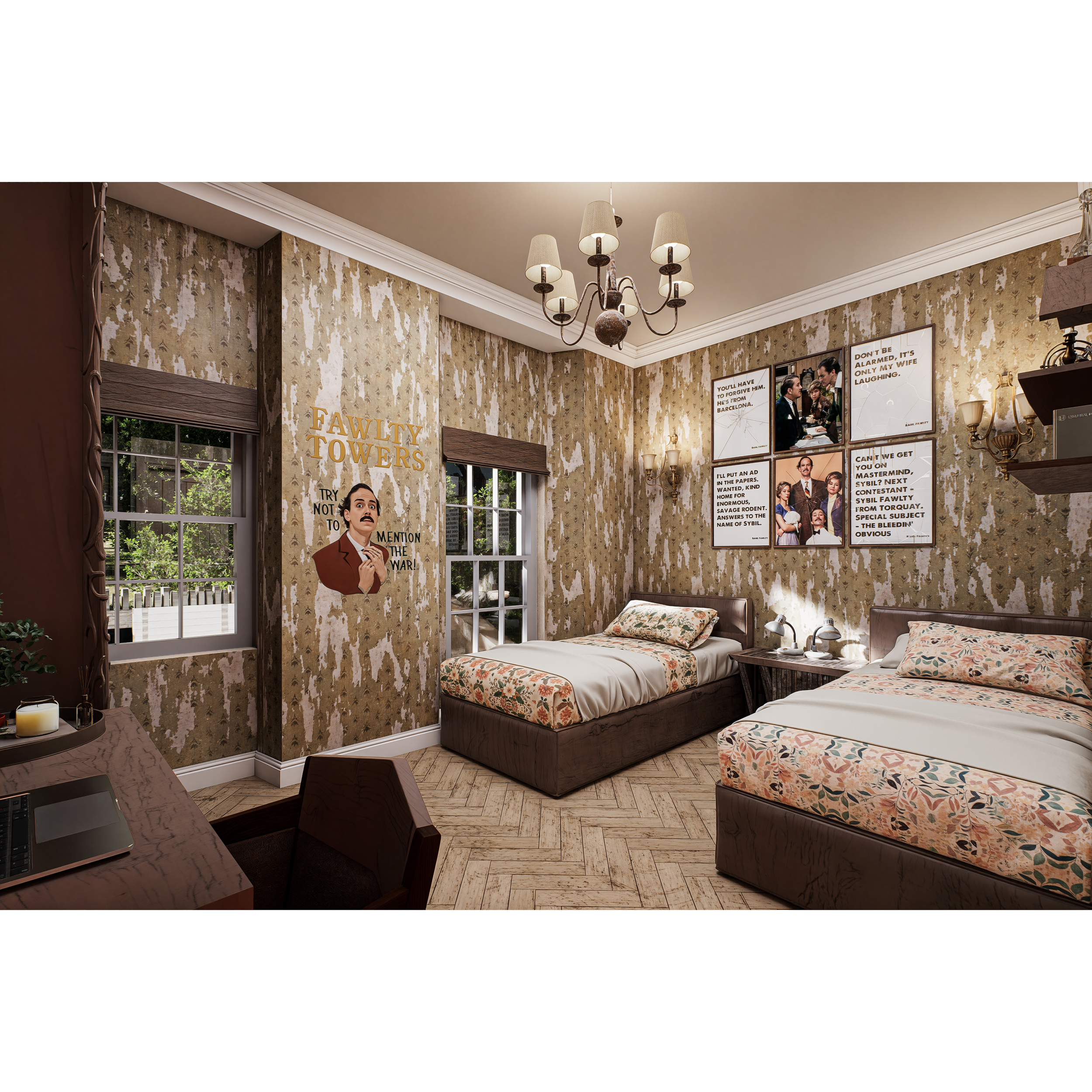
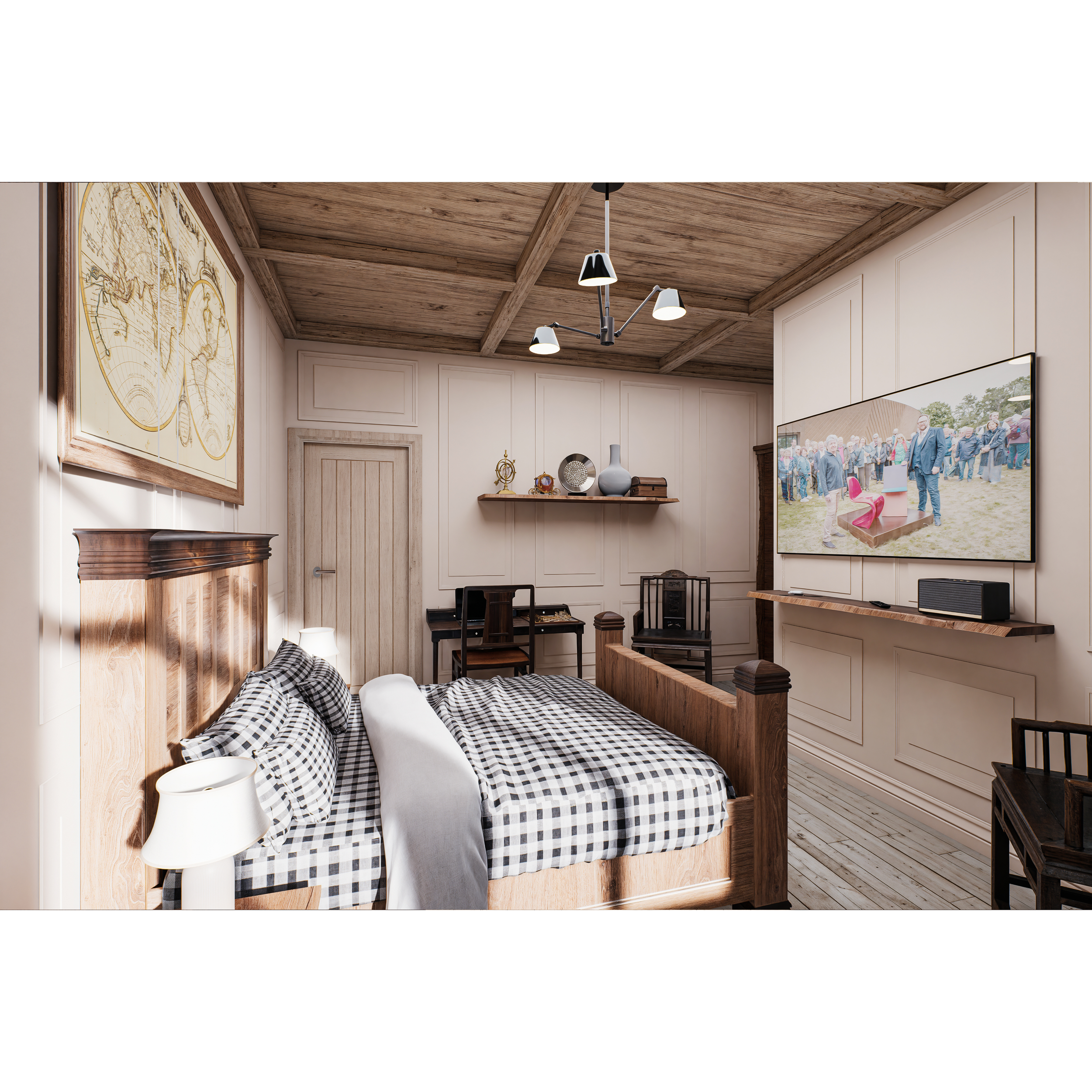
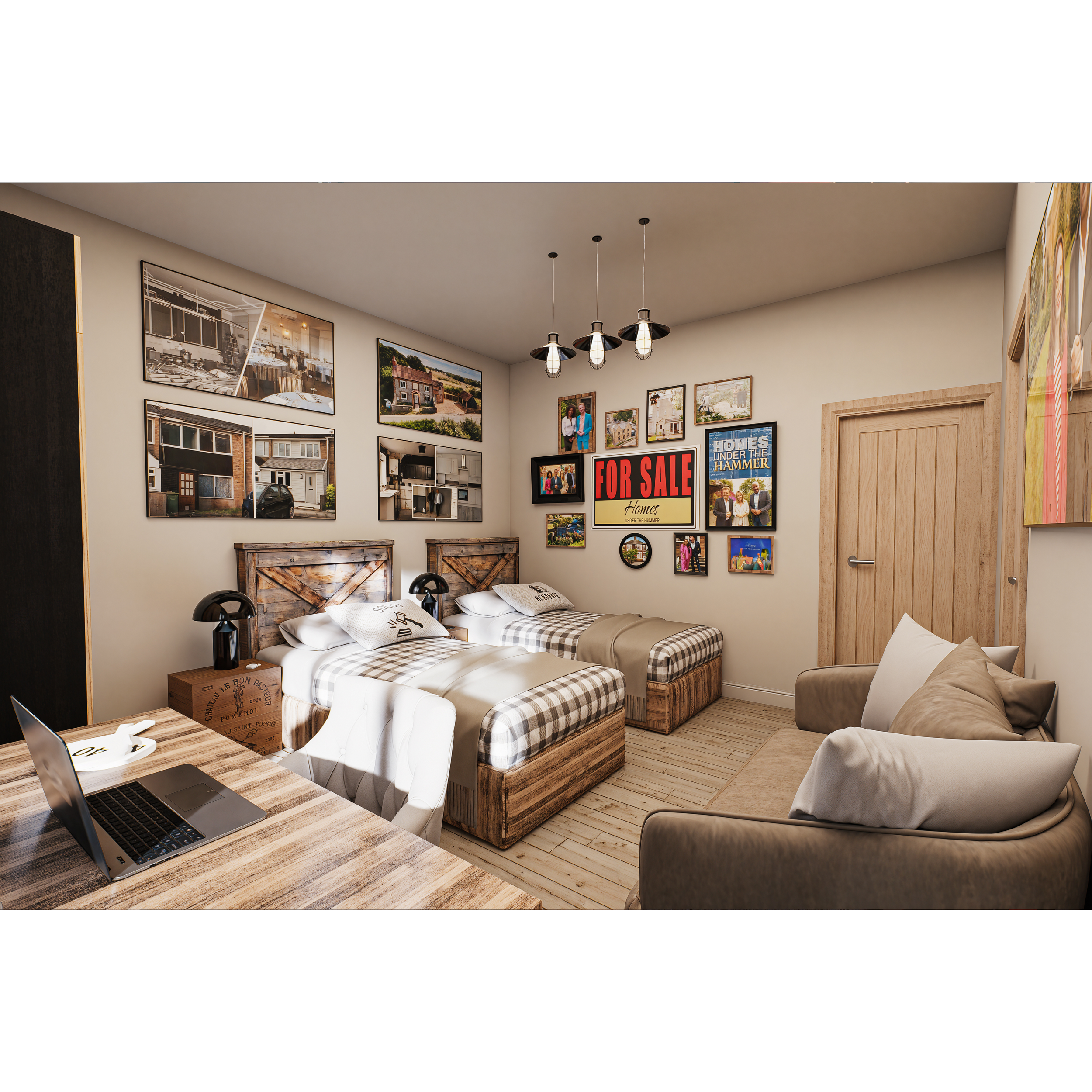
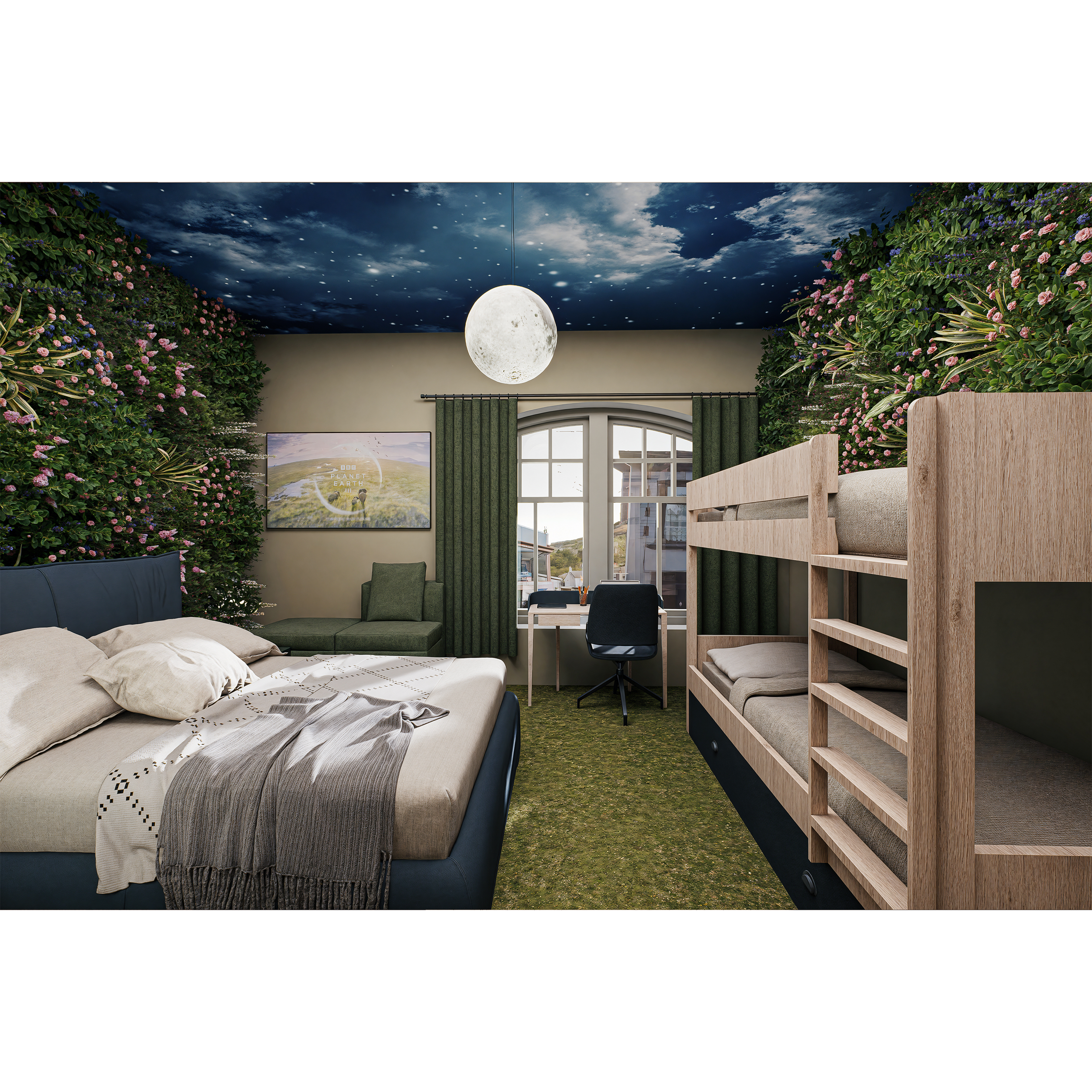
Before the project started we had a video call to go through the entire brief and make sure I understood the purpose of this project. Martin had bought the building years ago but him and his team couldn’t agree on what direction to go in. Martin and his team knew they wanted the hotel to be a hub of the local area, and most importantly somewhere that is fun for the whole family. This is why it was decided before hand to have ‘classic TV show themed’ bedrooms. For example, the Doctor Who themed bedroom was chosen to created a exciting and immersive experience for all ages.
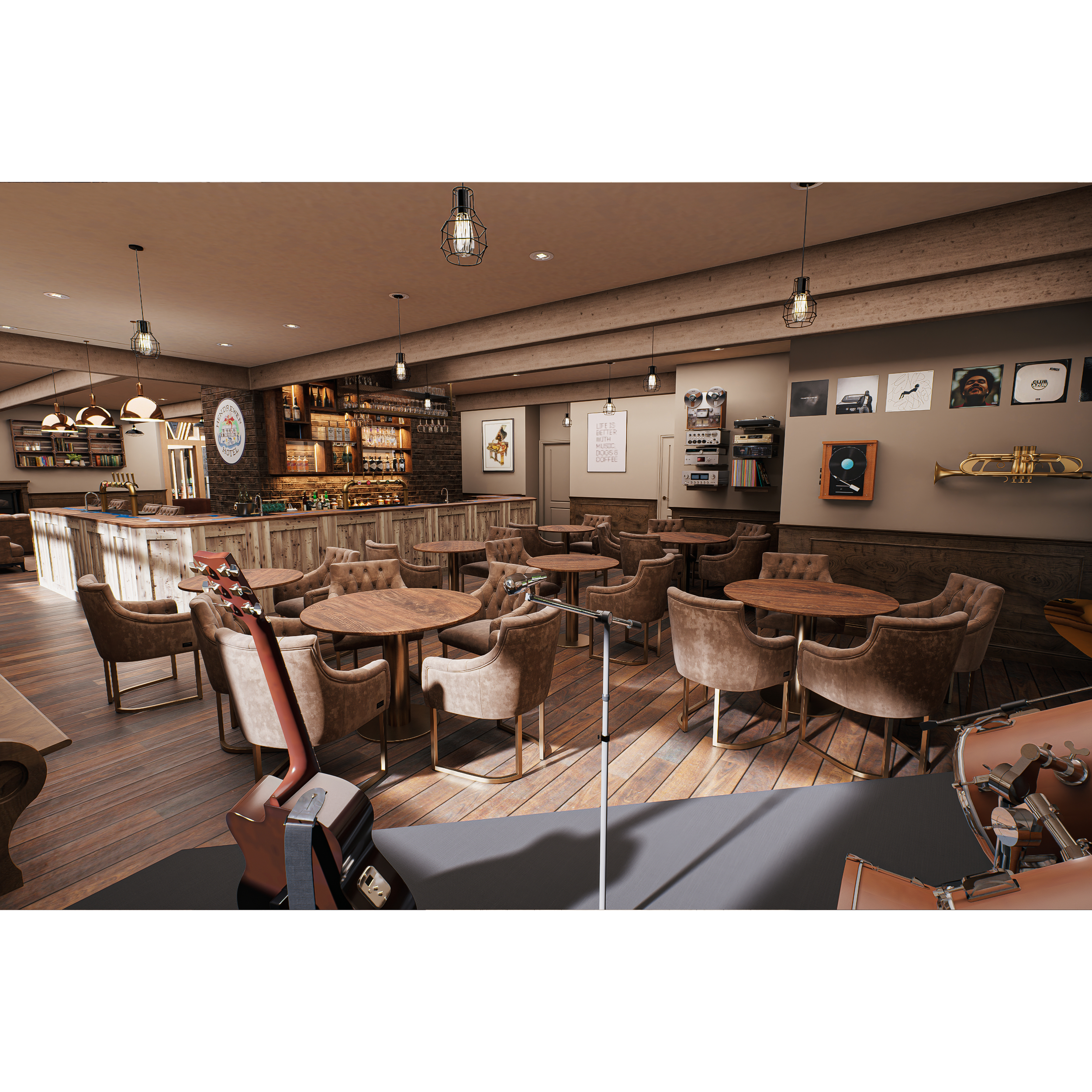
He wanted me to include all of the information on his brief (Eg: “The Bar area will be dominated by the incredible bespoke bar with resin and wood bar top, with a raised stage area for live performances.”) but also wanted me to use my design skills and intuition to do what was needed to create a comfortable, family friendly hotel, whilst including ideas from mood boards he put together. He wanted it to include the existing traditional components of the building whilst giving a nod to a new modern and quirky design.
Main changes
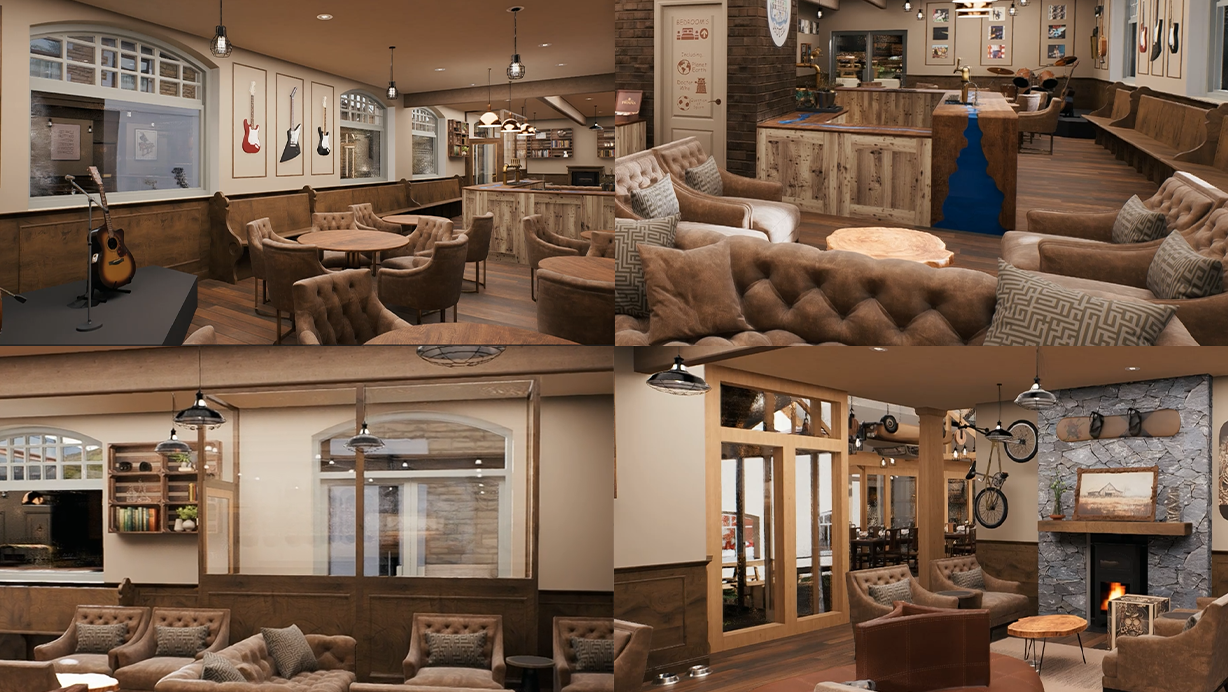
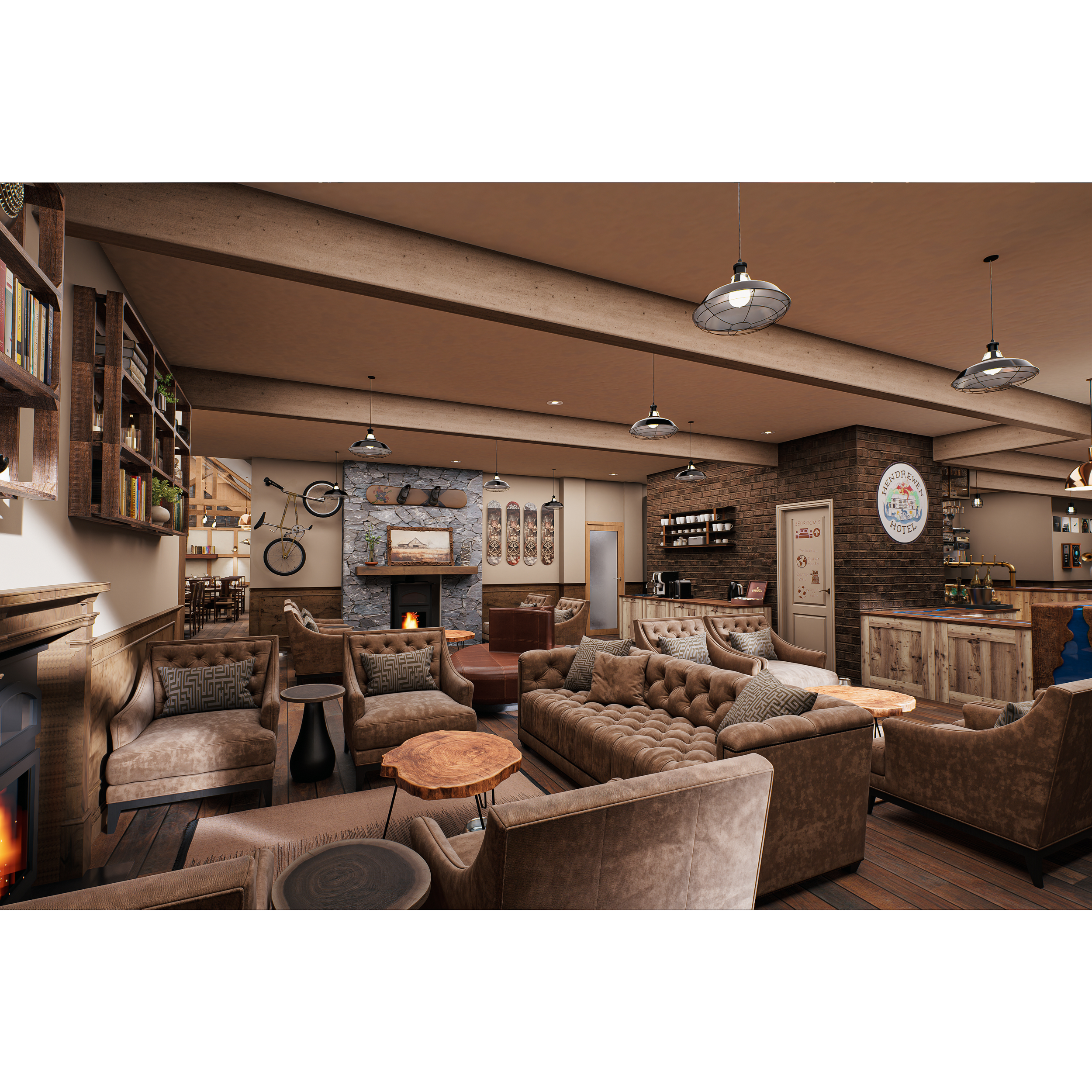
The door from the lounge area to the restaurant was removed, opened up and replaced with a vertical beam to create a more seamless journey through the ground floor.
The waterfall feature at the end of the bar was added to give a ‘wow’ factor to people when they first enter.
Existing bench seating was kept in front of the bar to allow for more seating and because the church pew styling was too nice to remove.
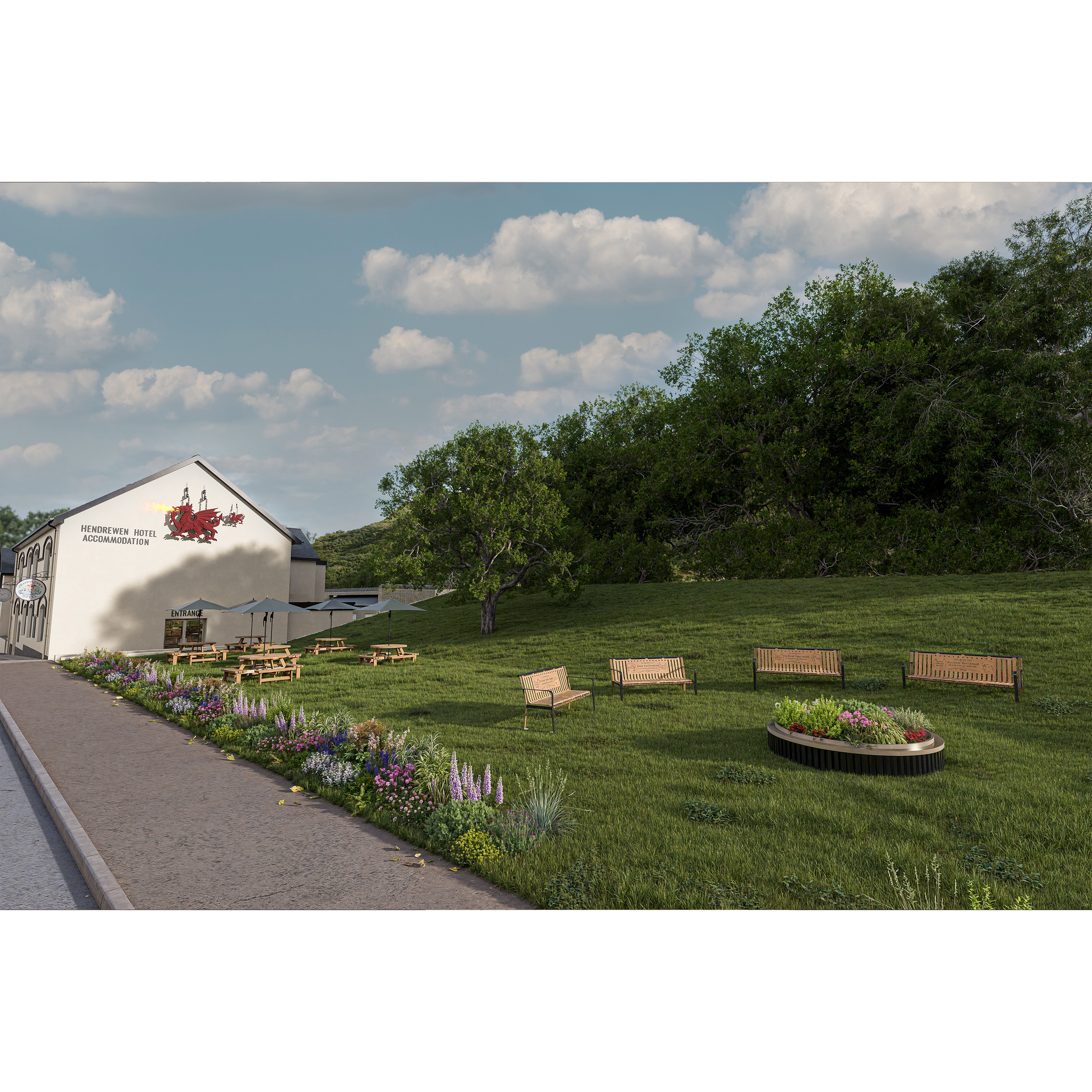
A glass entrance area was added as an extension of the front door.
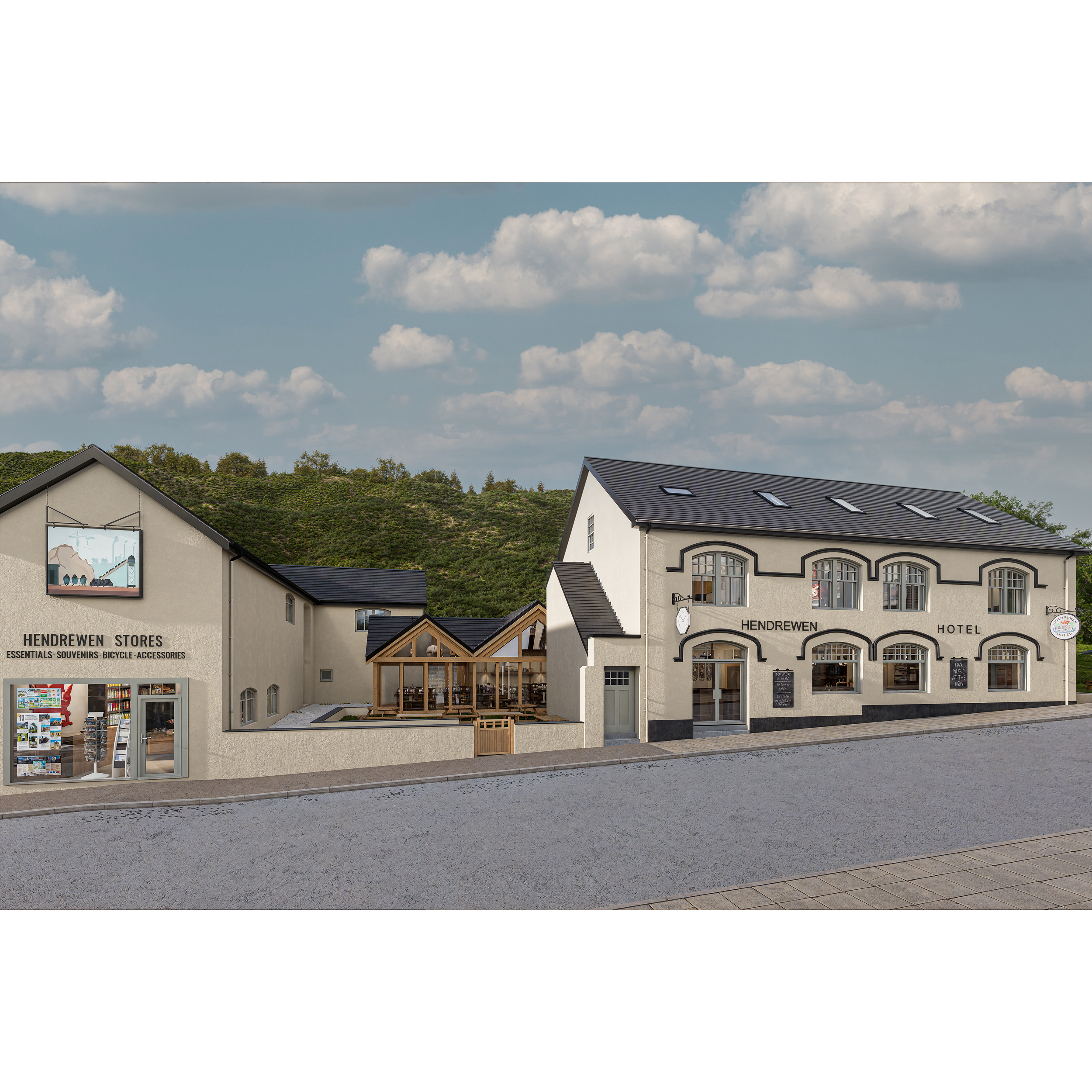
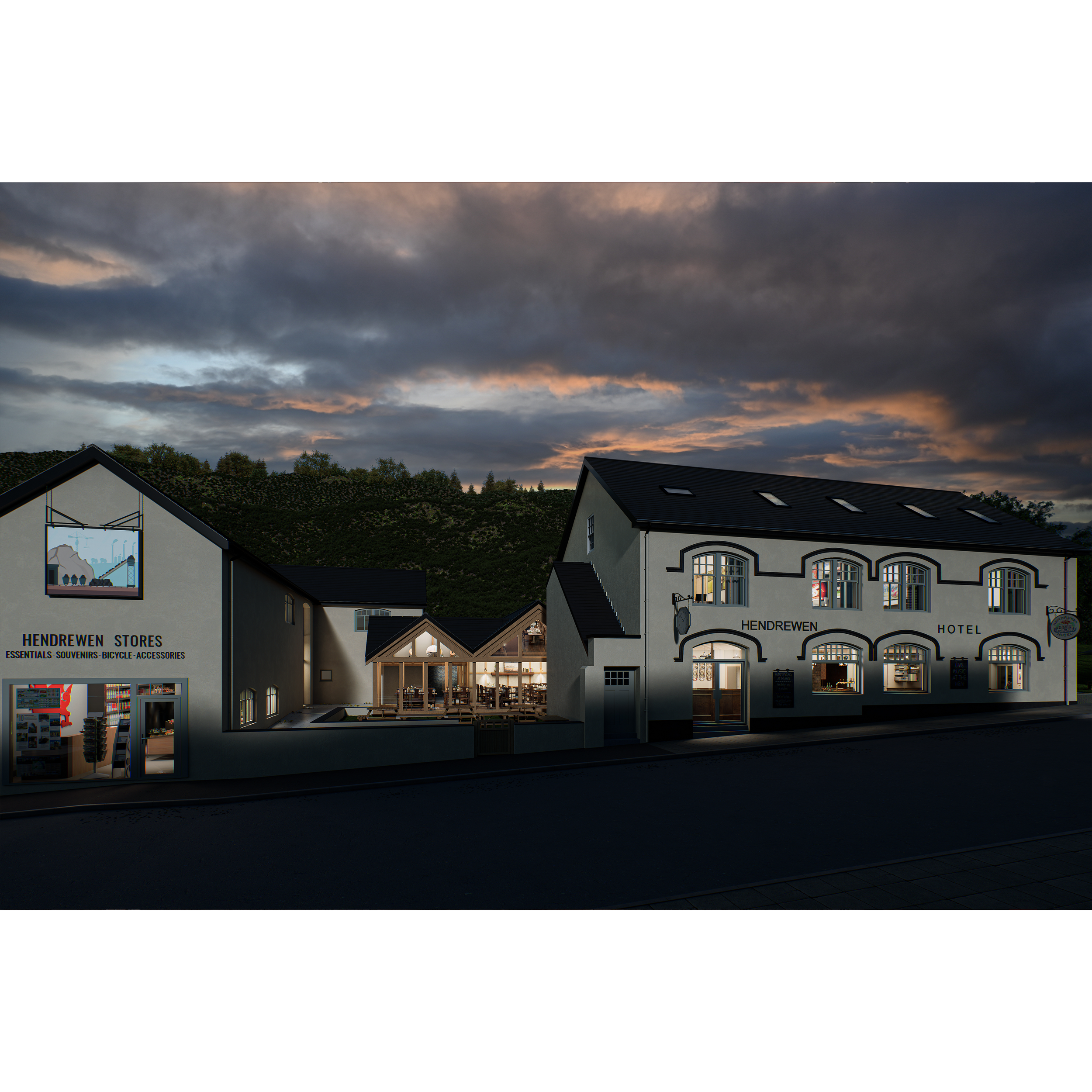
One of the last decisions was to have the dragon sign on the east elevation breathing fire, a feature Martin confirmed would be possible.
Final Deliverables
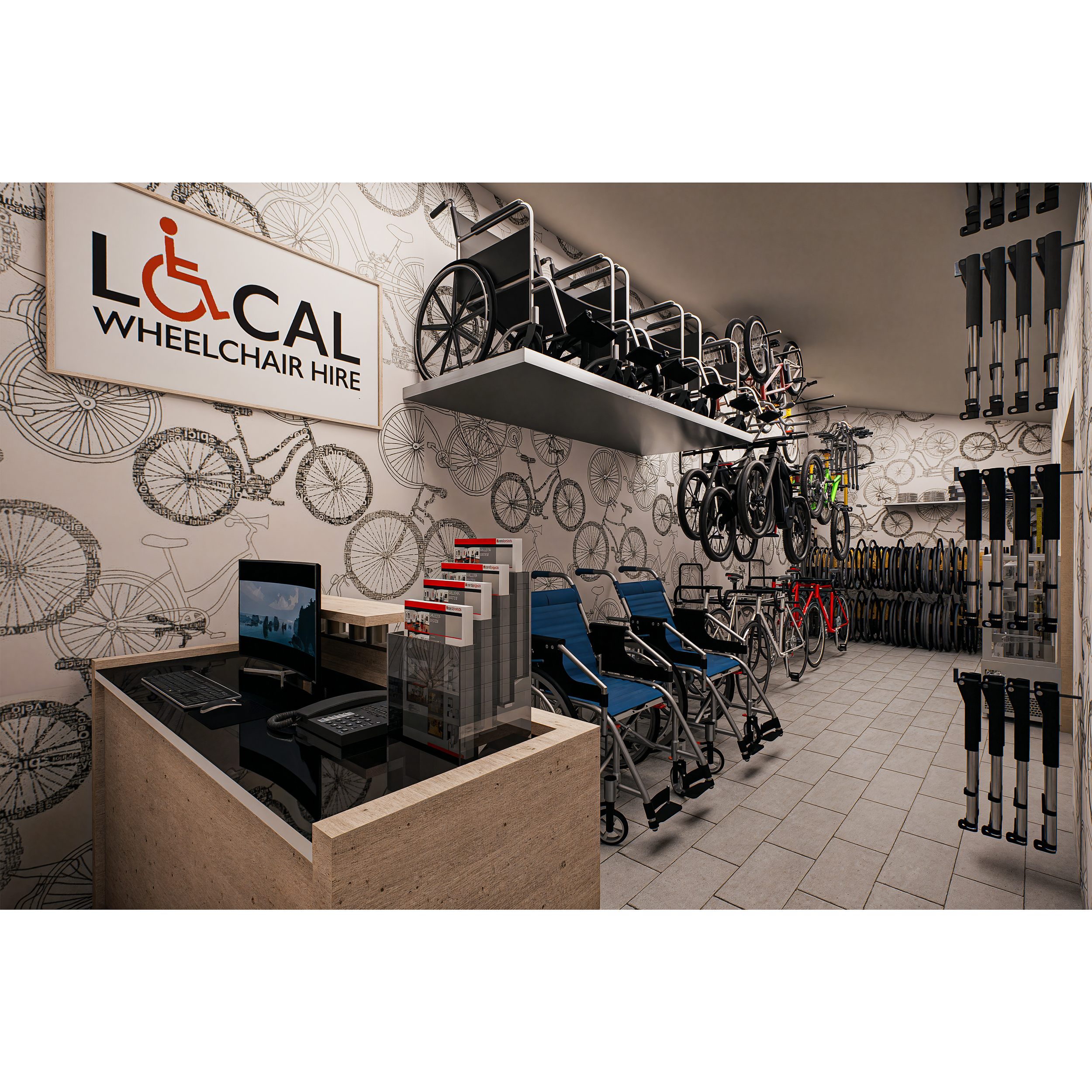
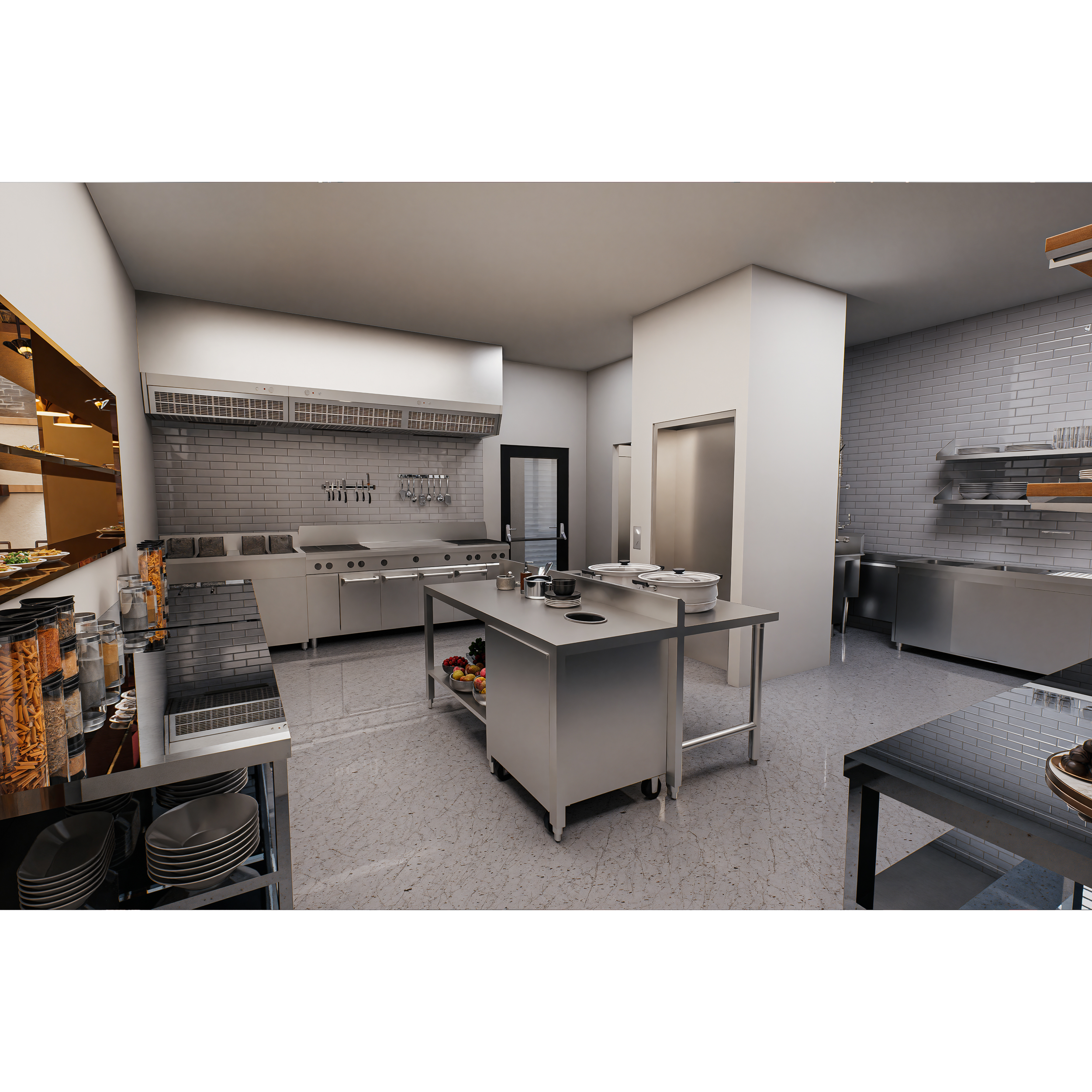
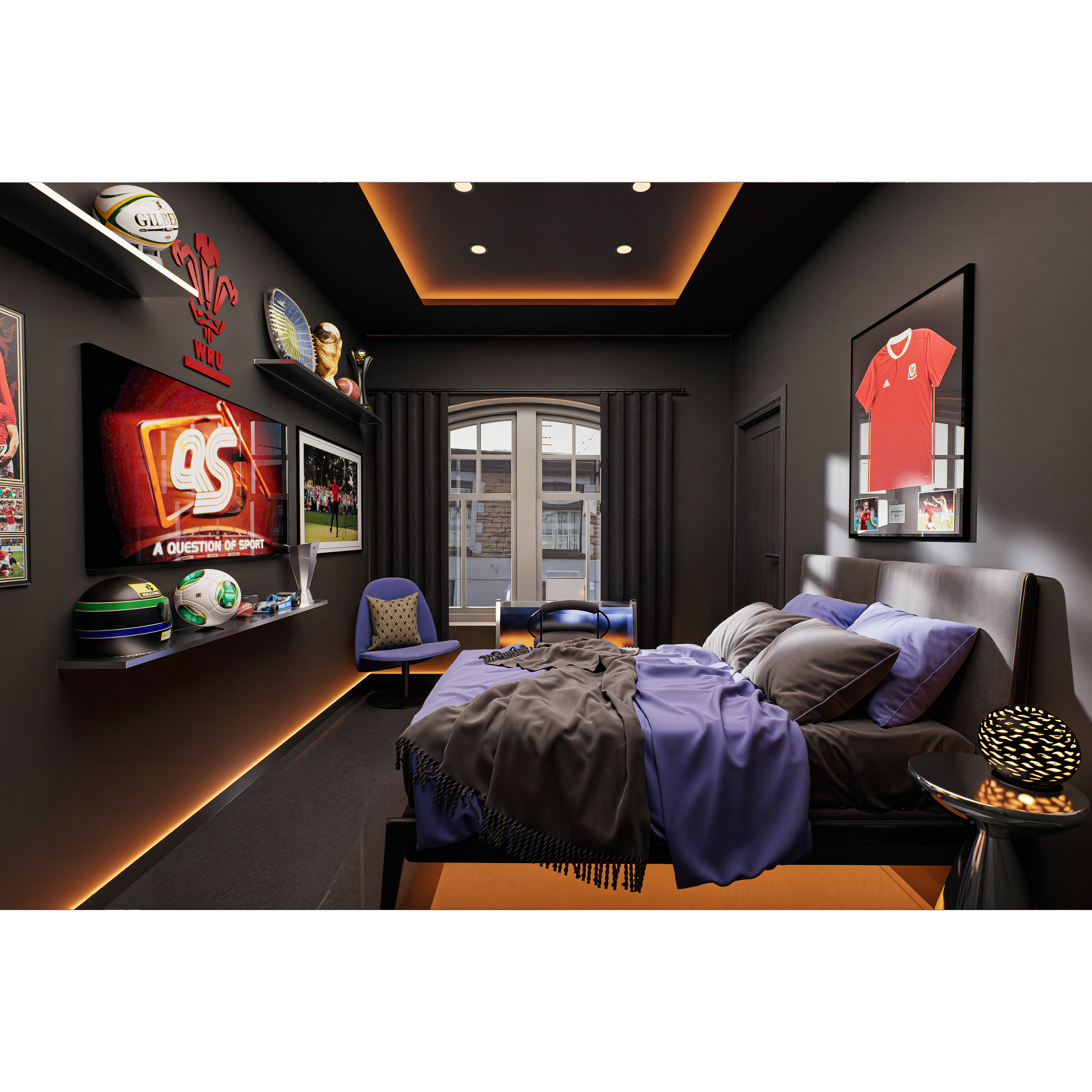
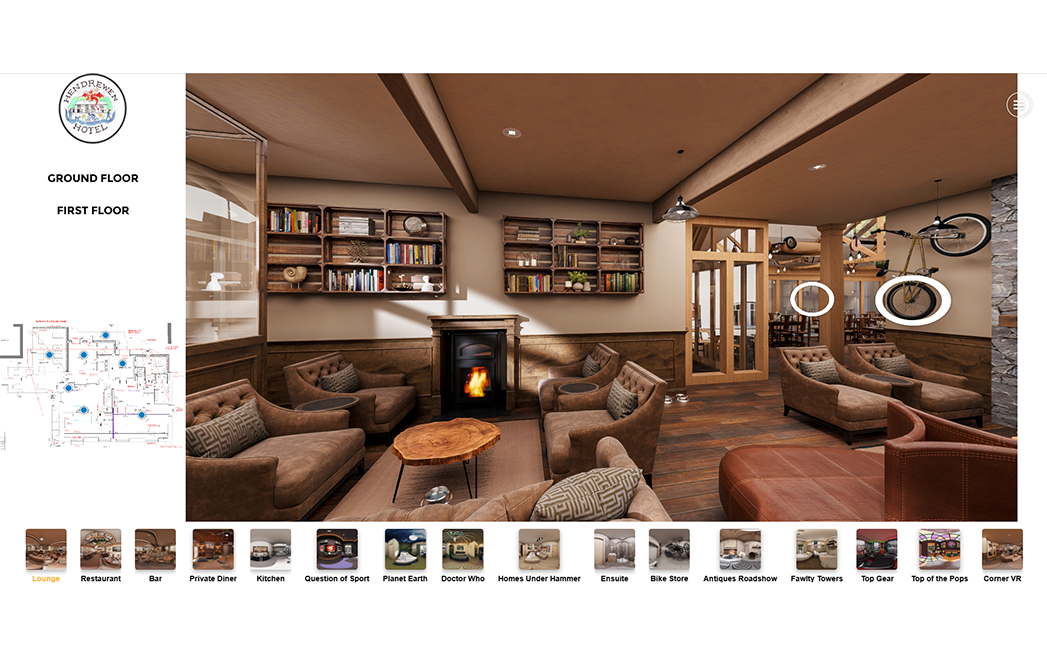
THE CATHEDRAL HOTEL
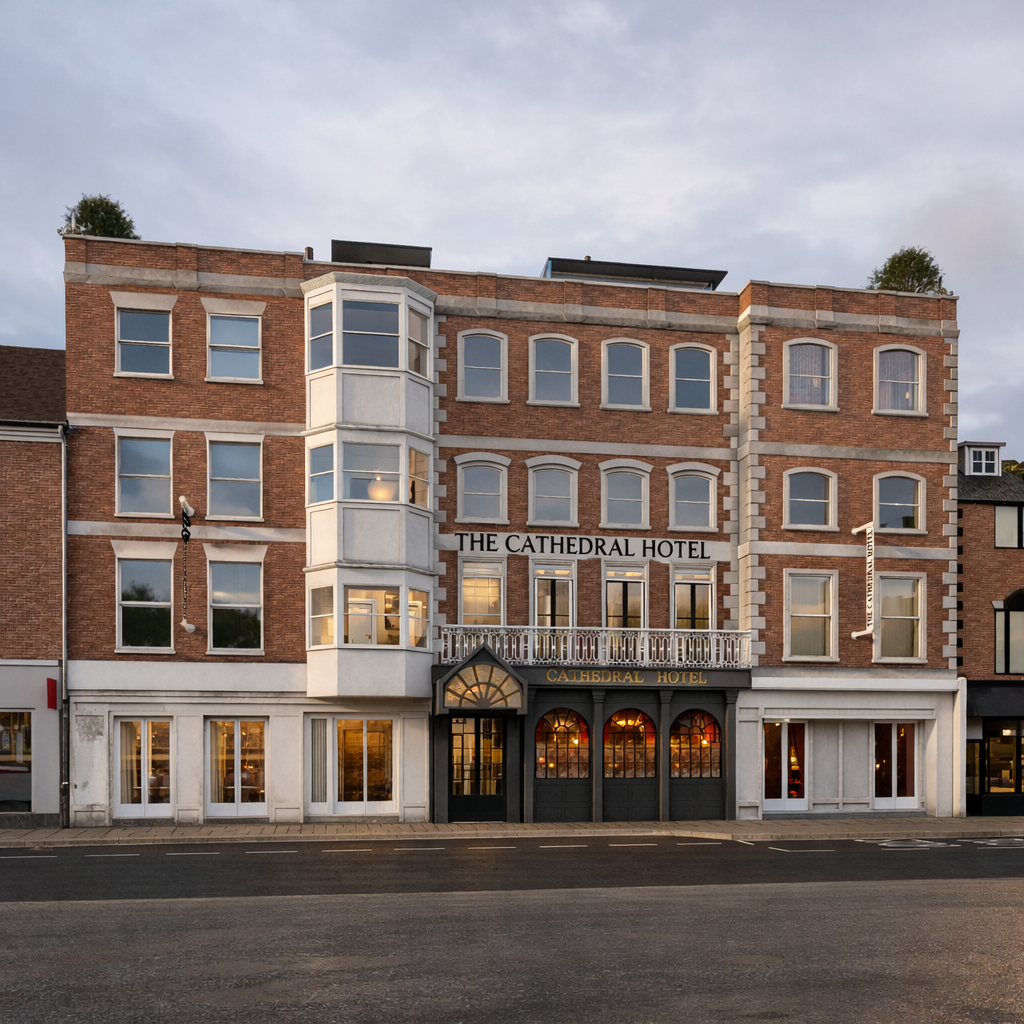
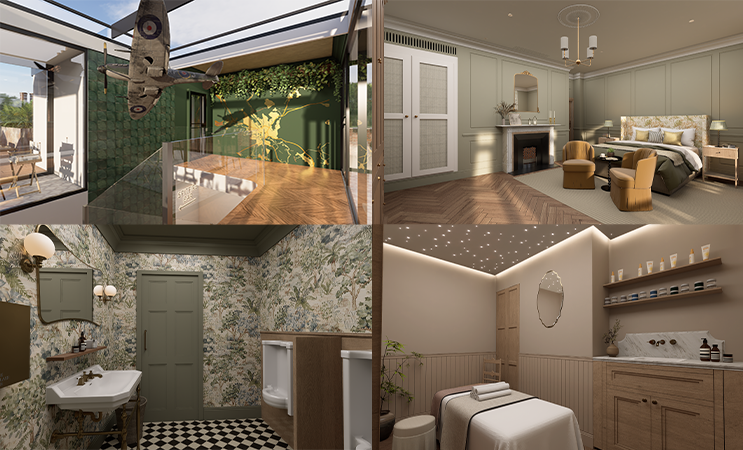
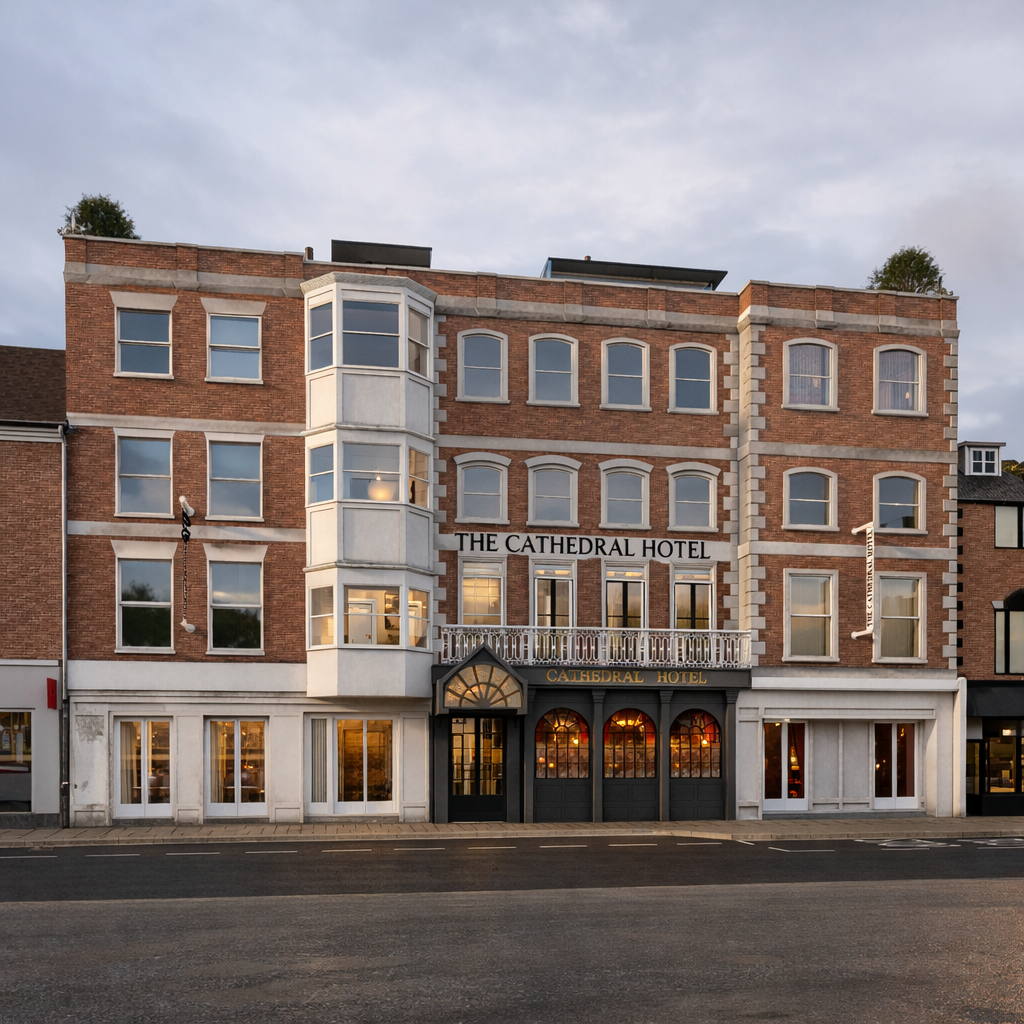
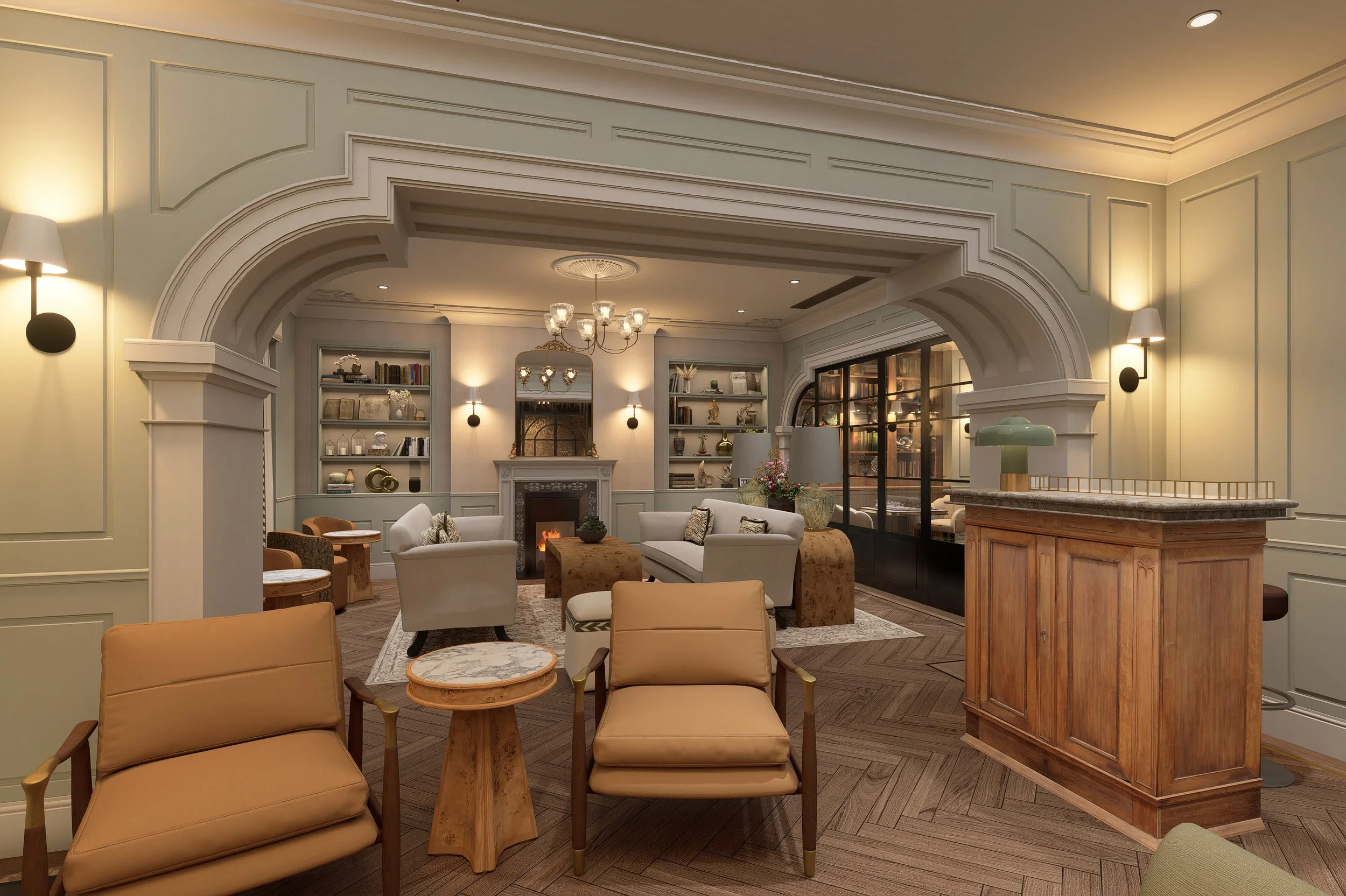
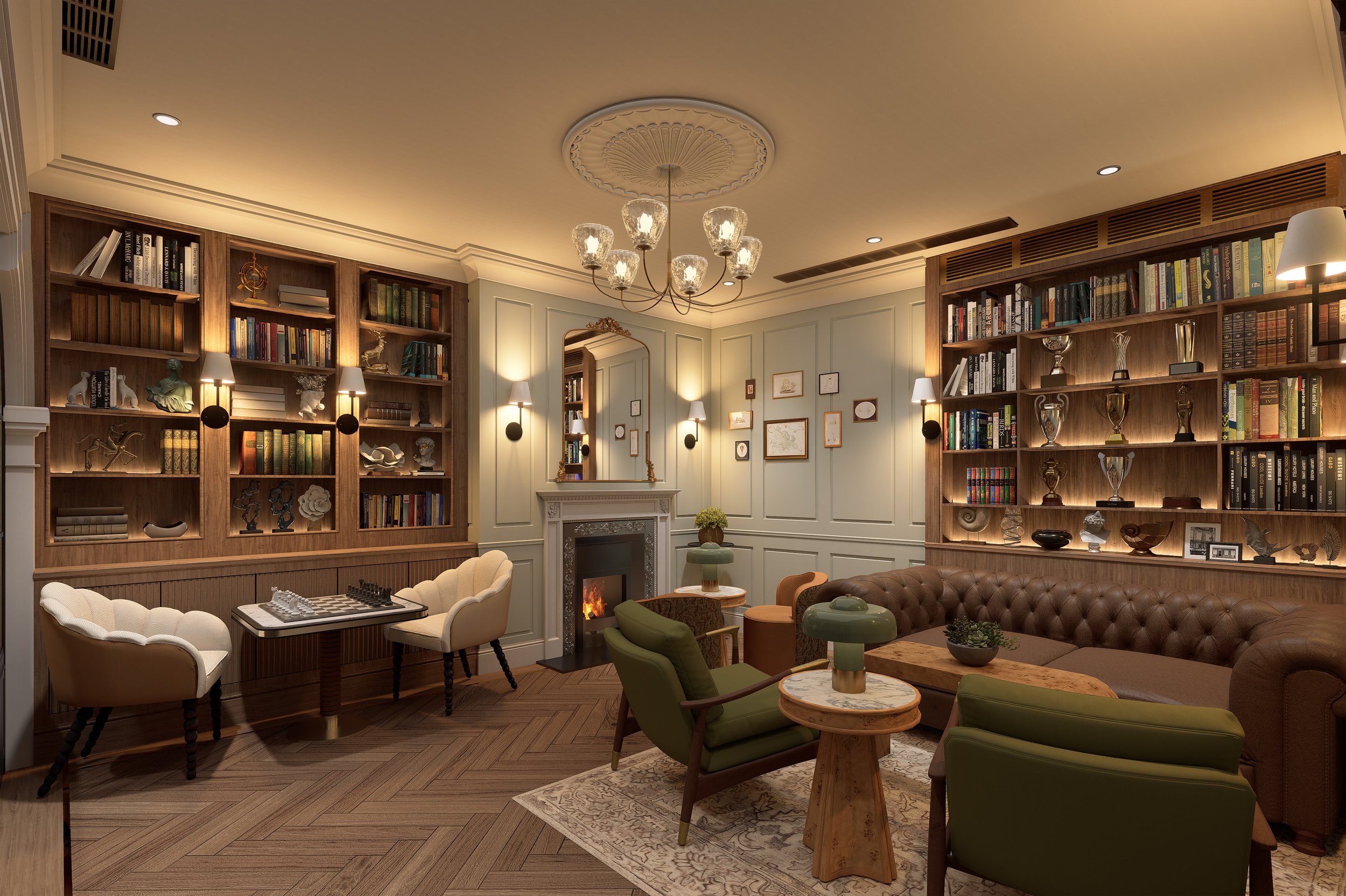
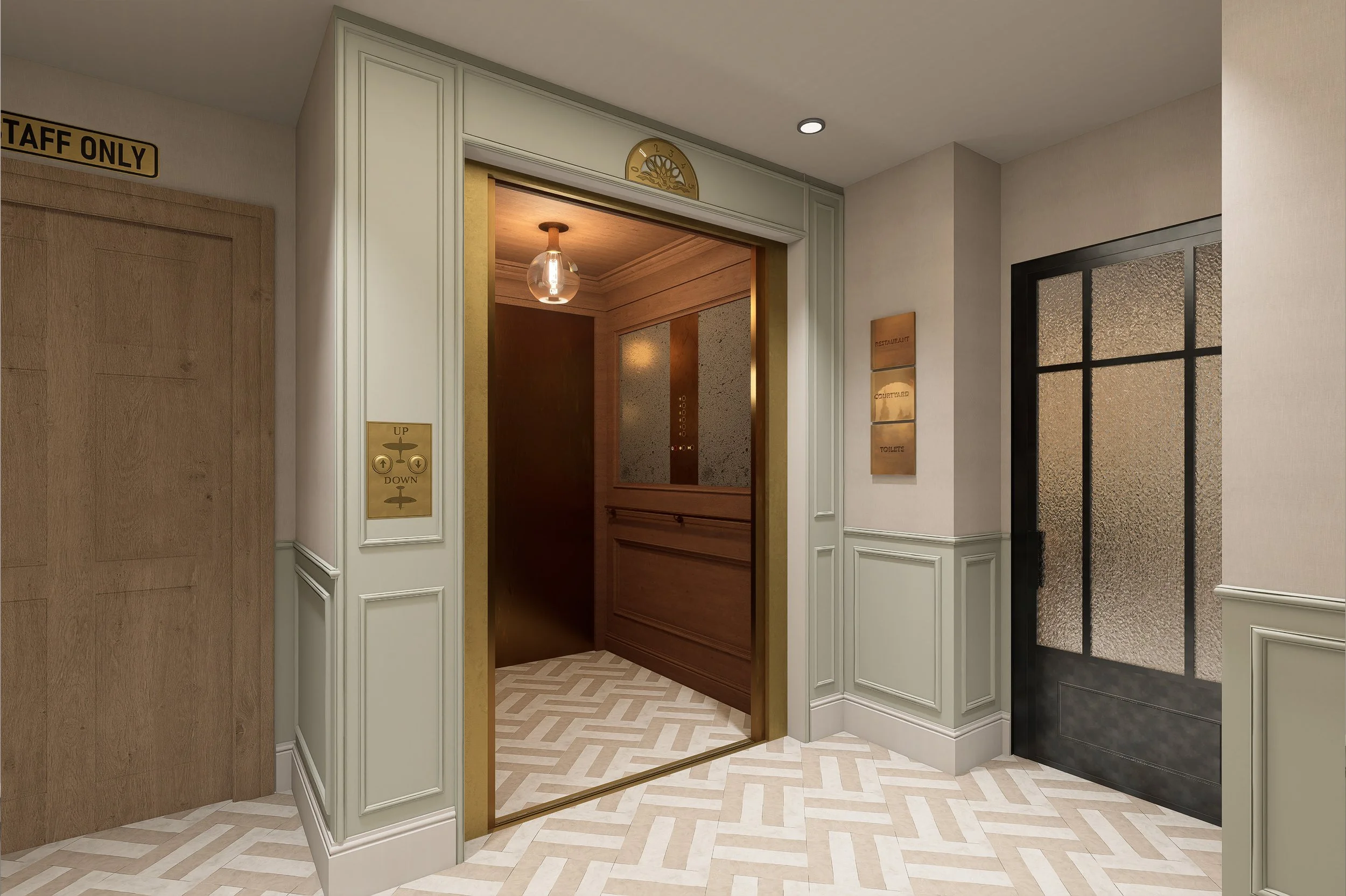
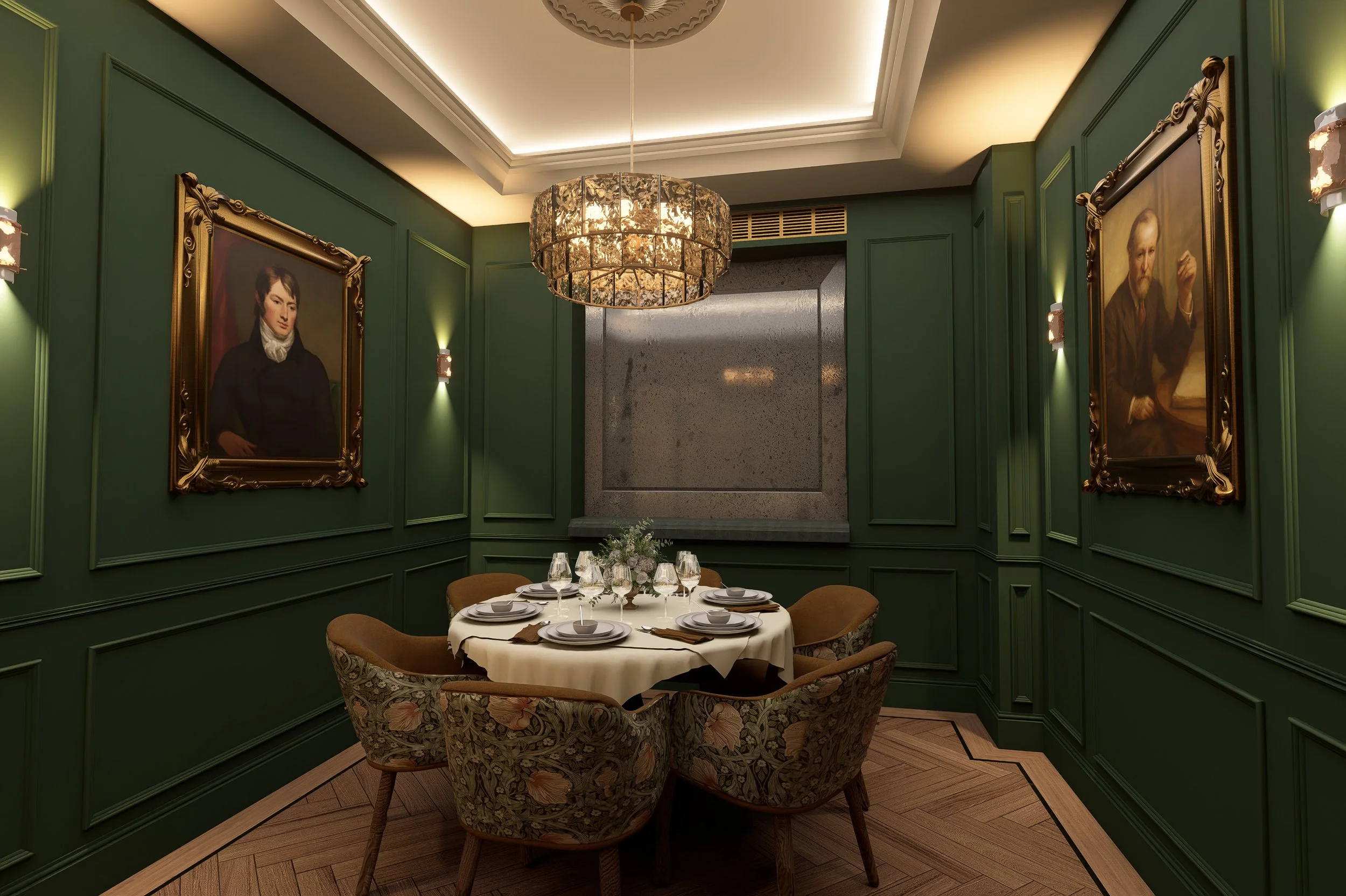
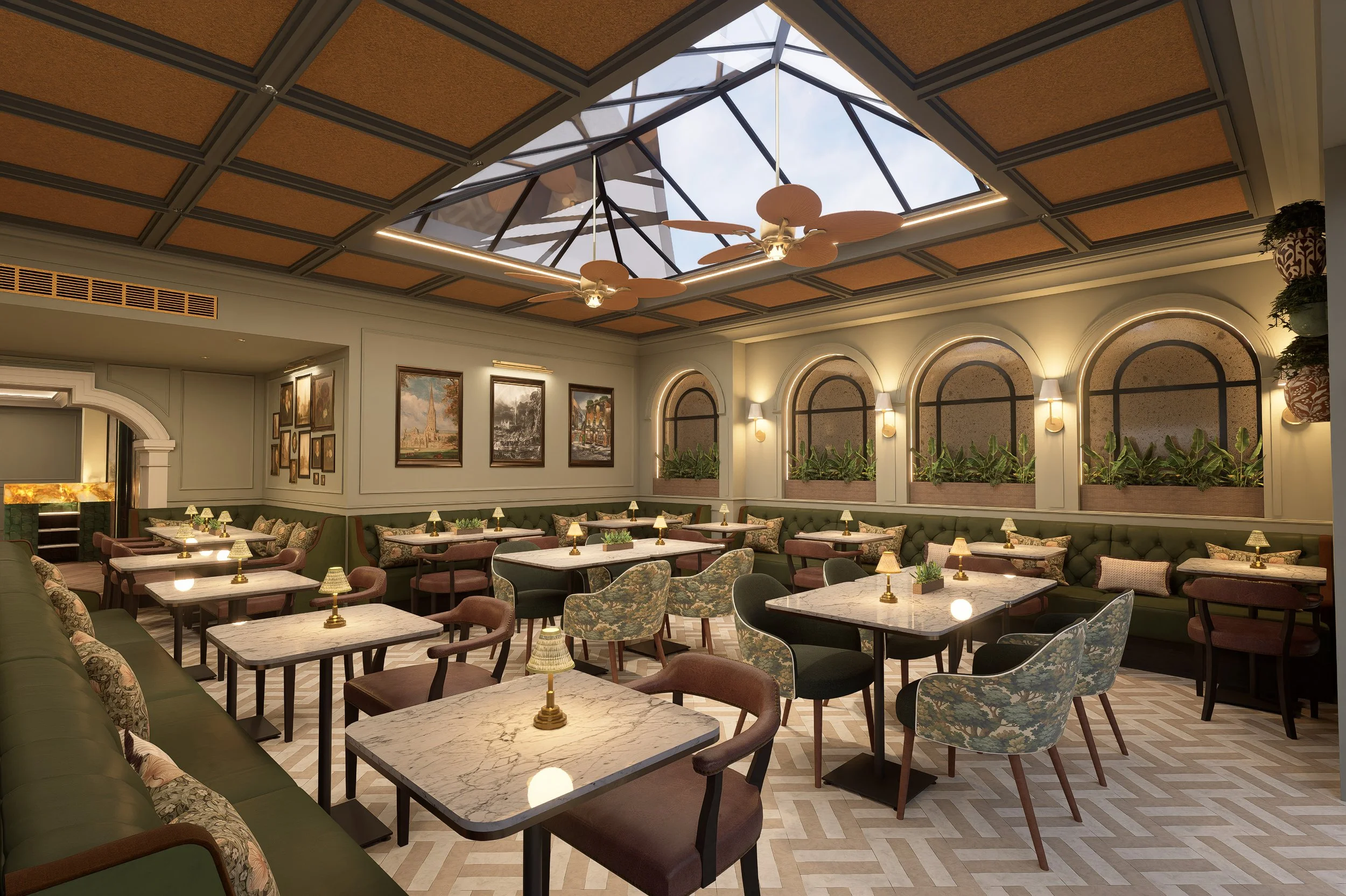
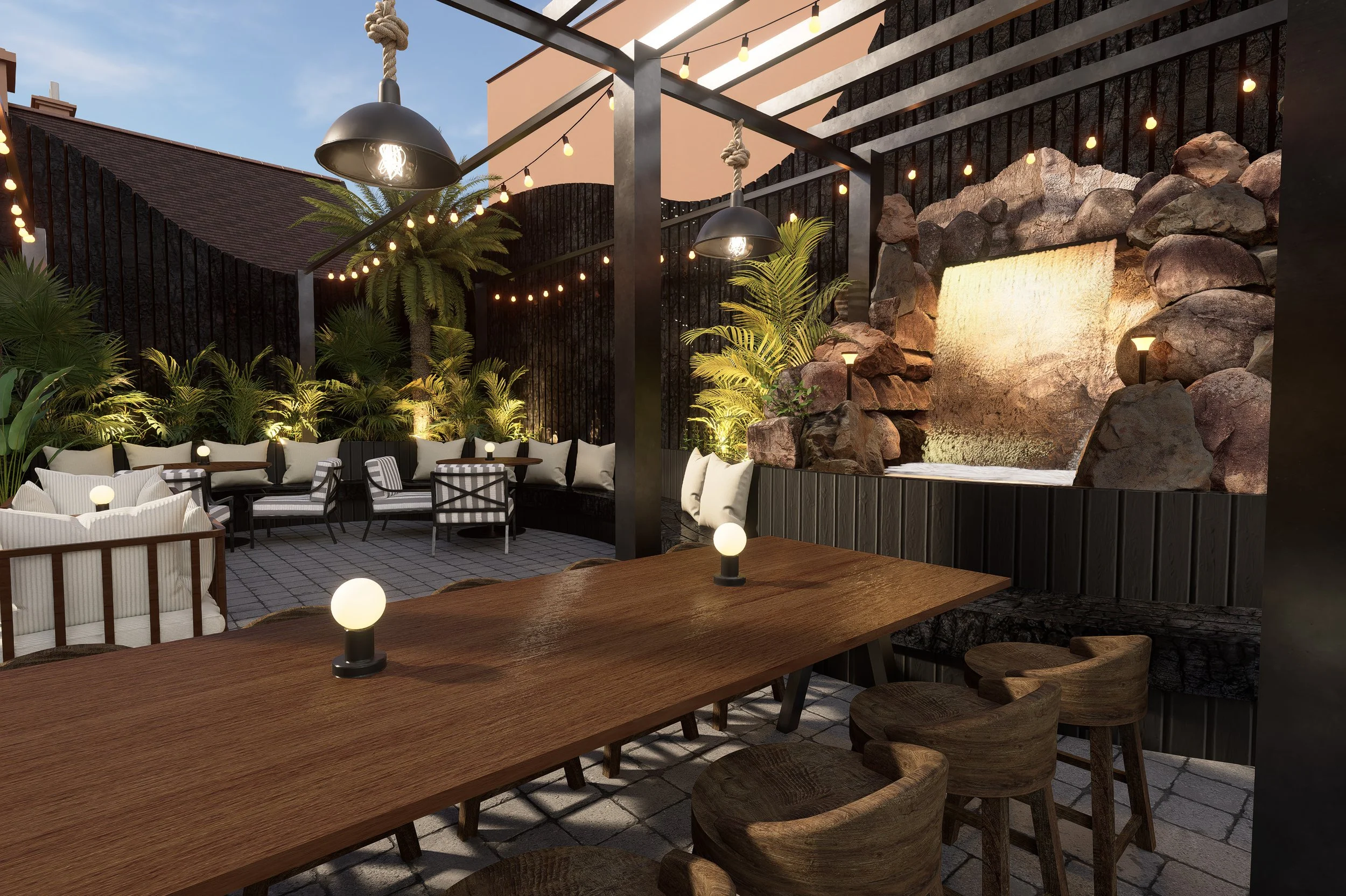
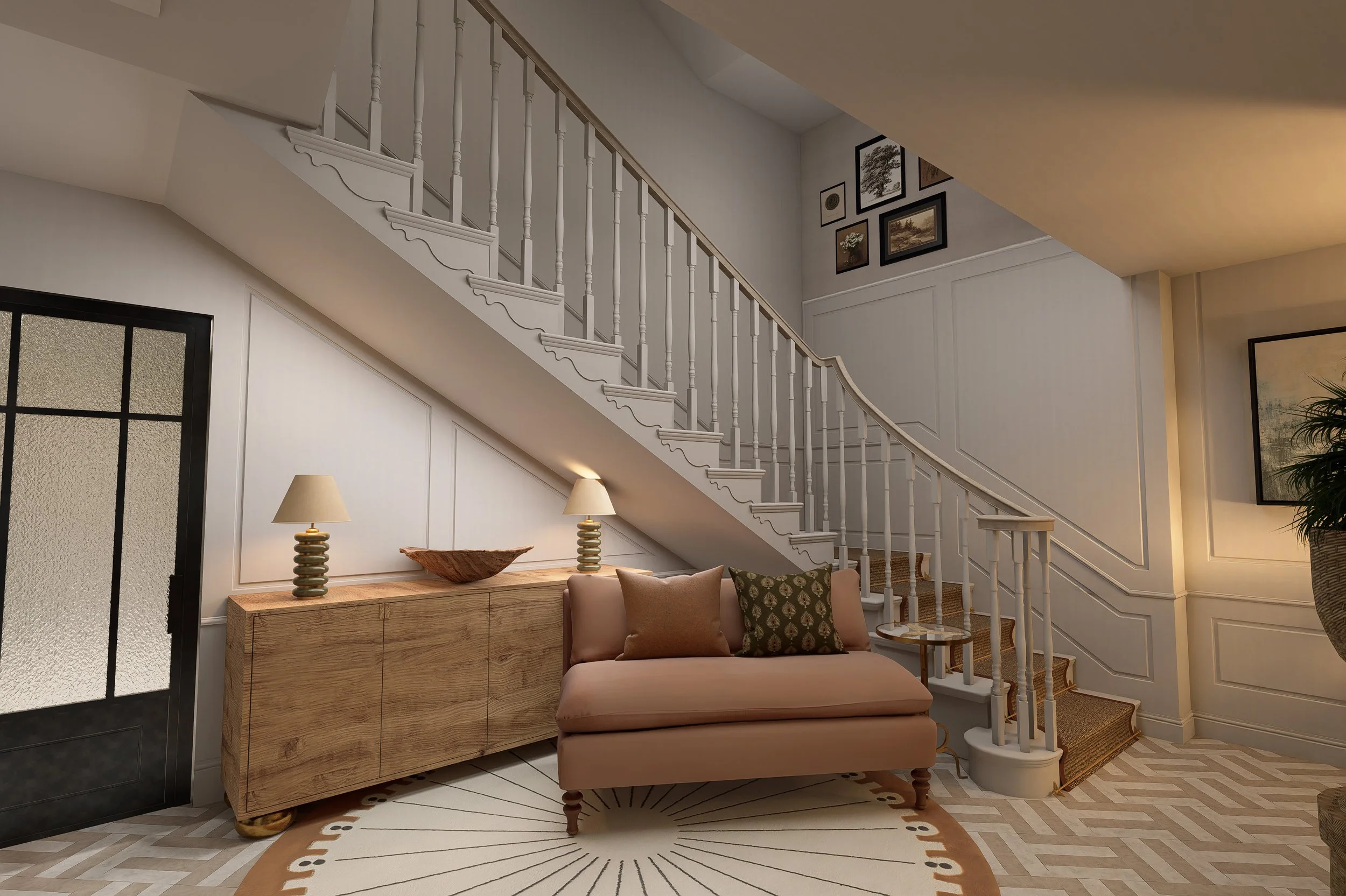
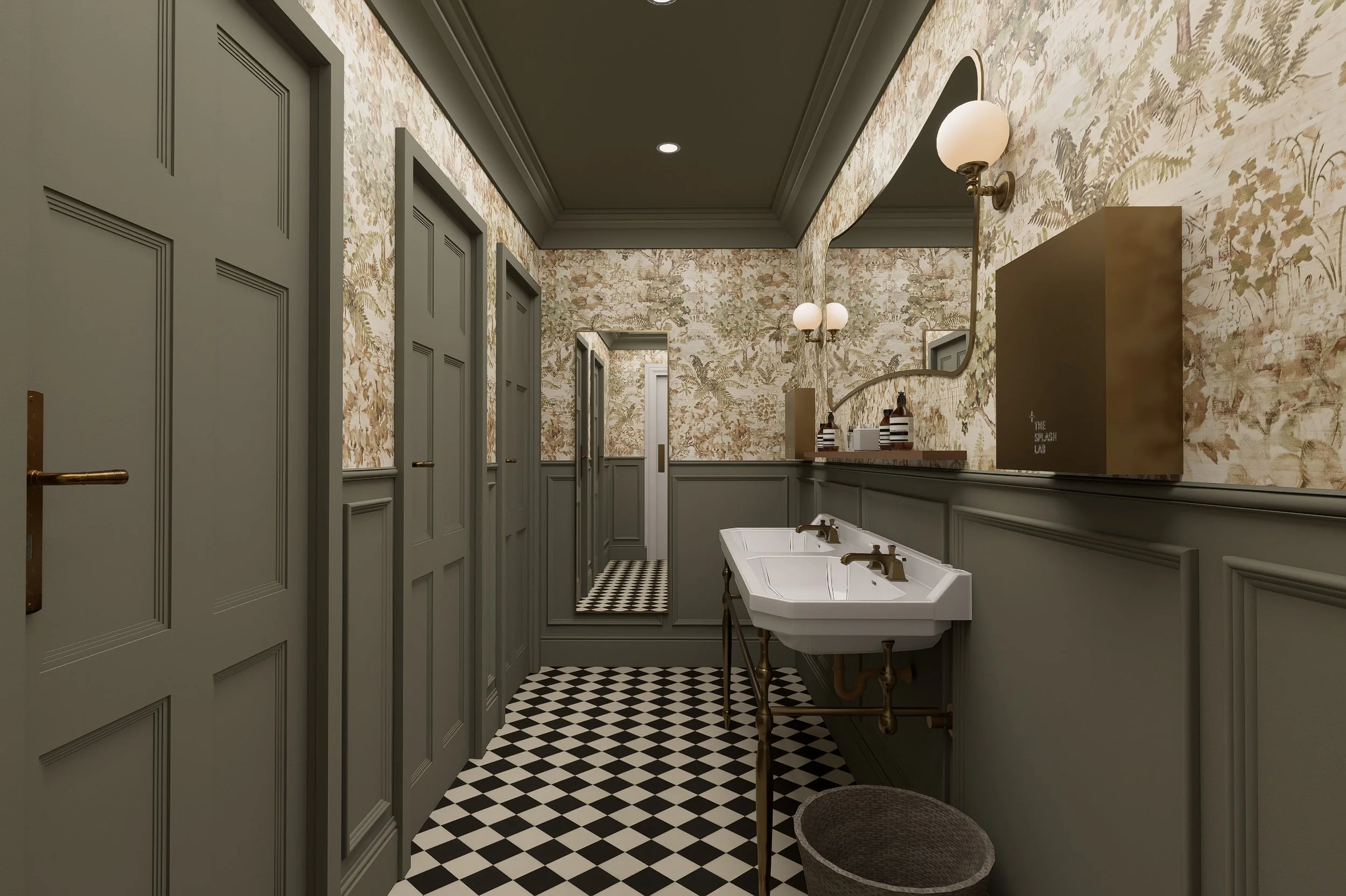
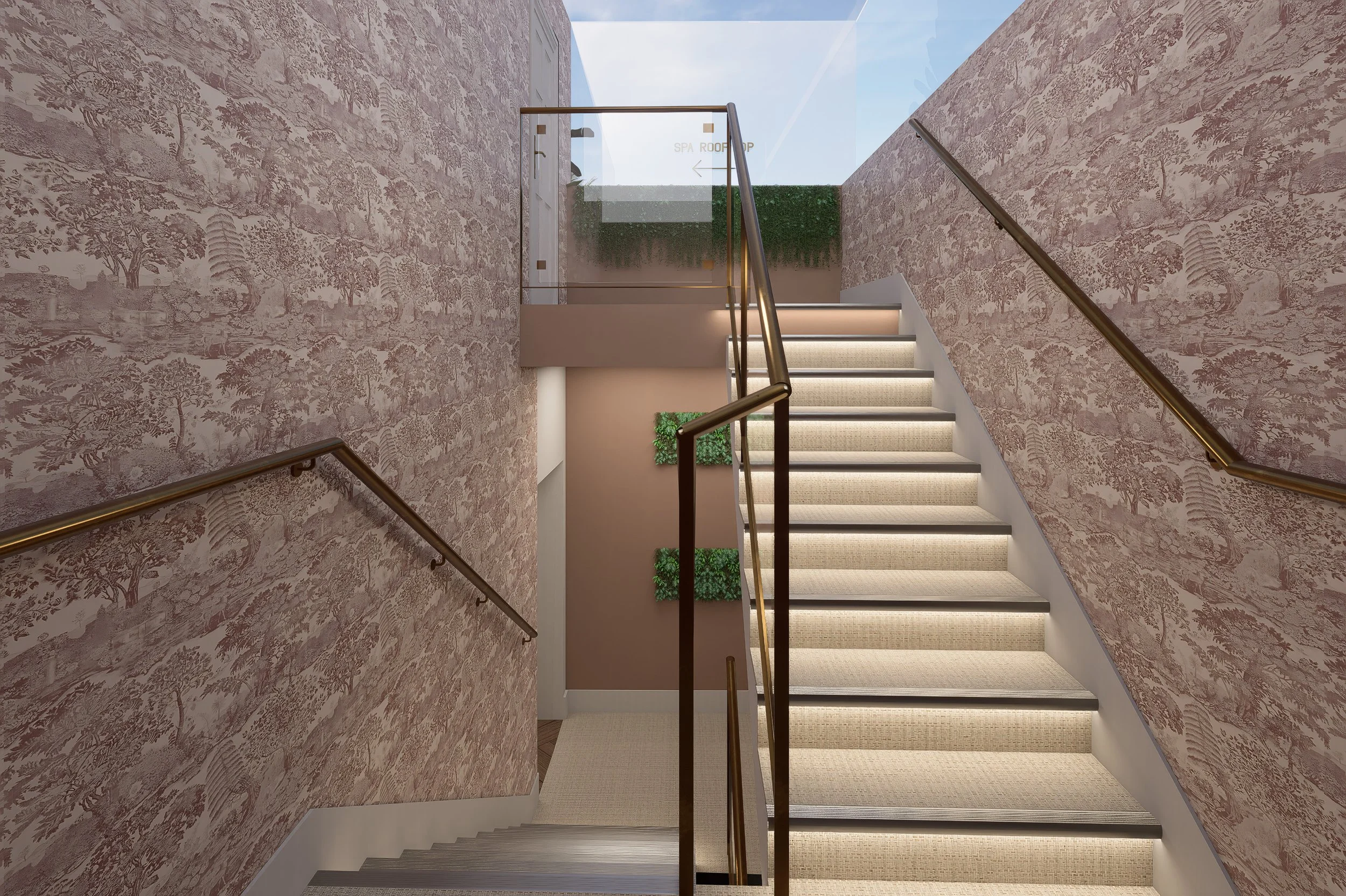
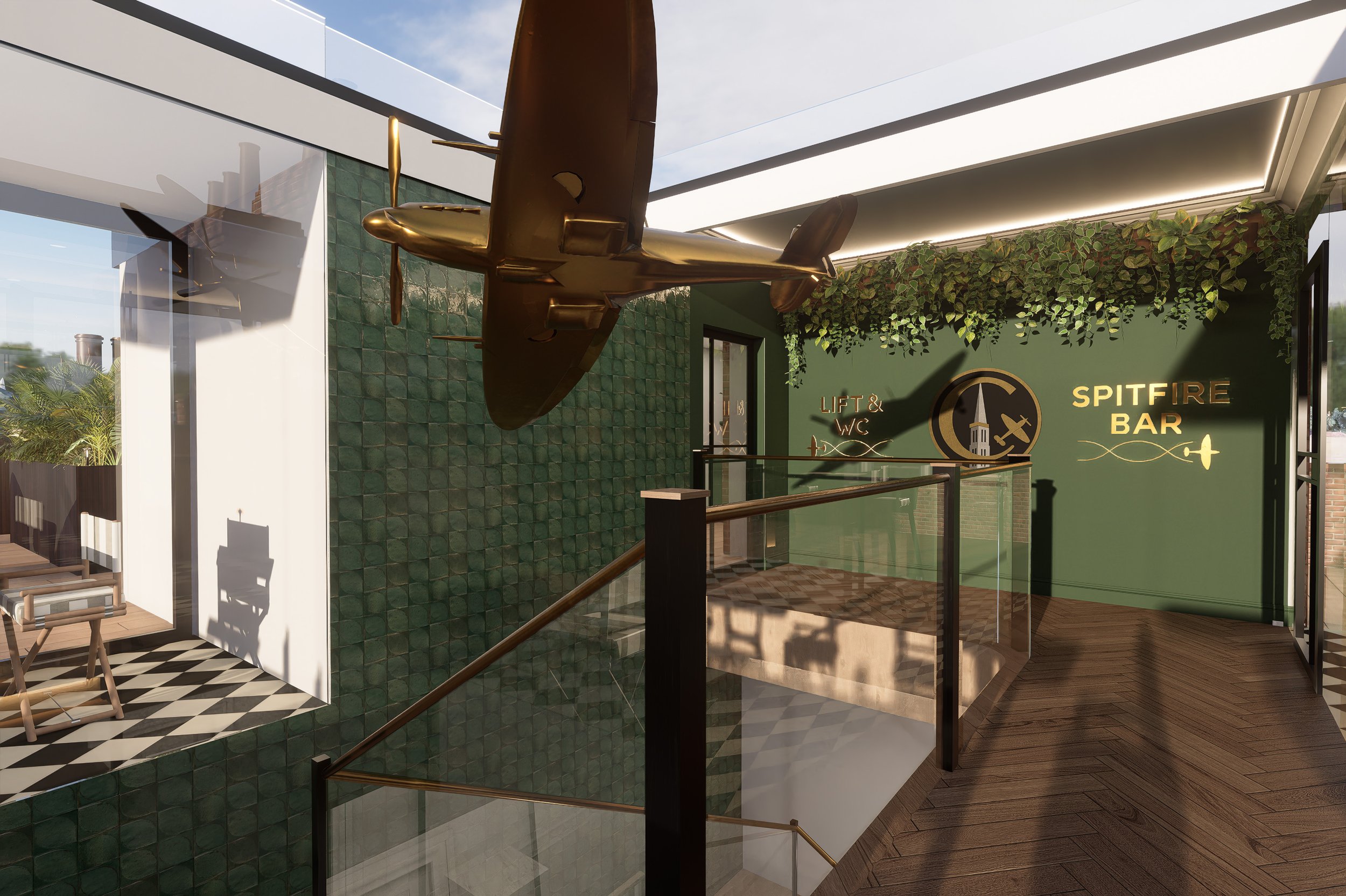
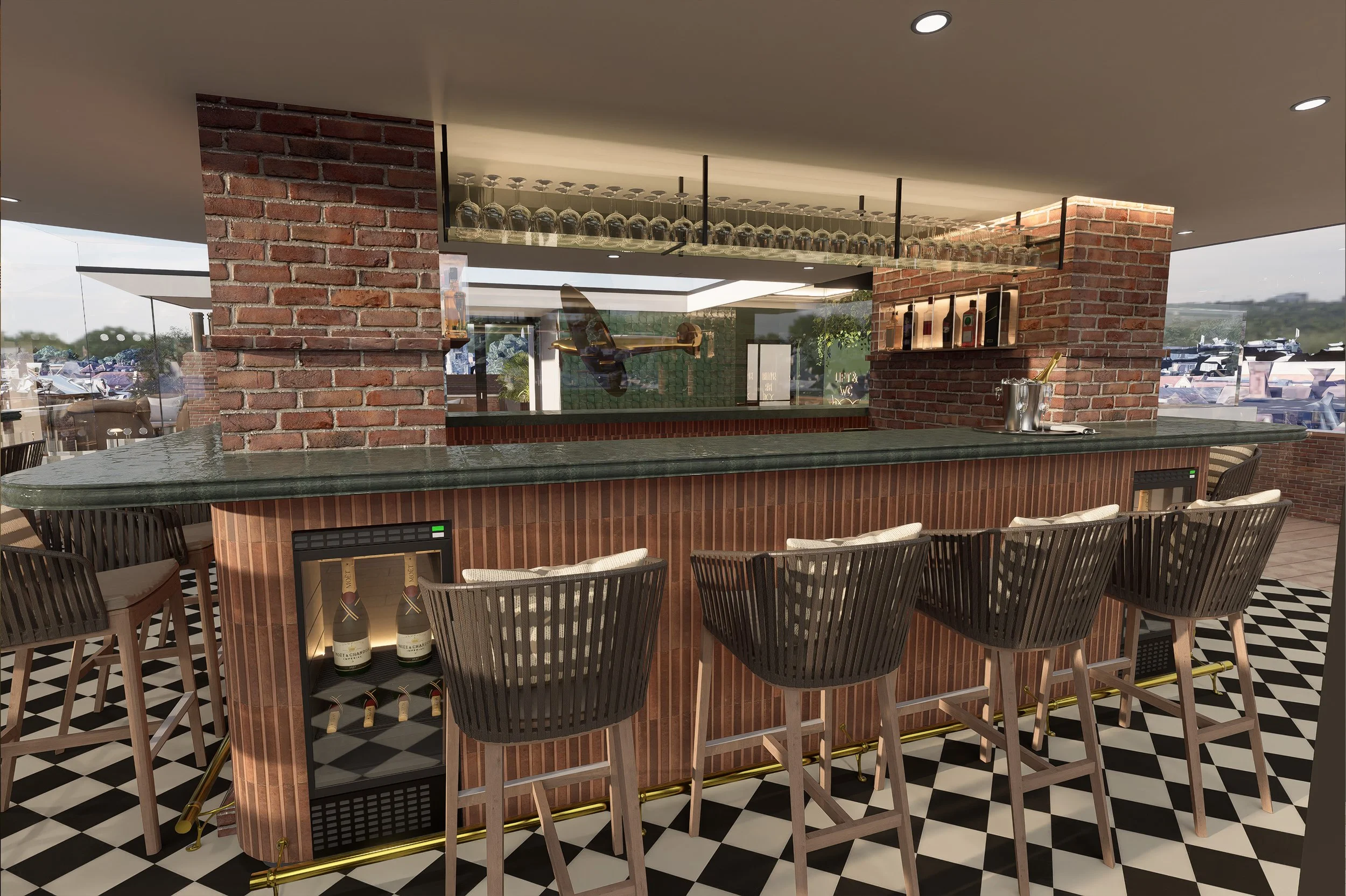
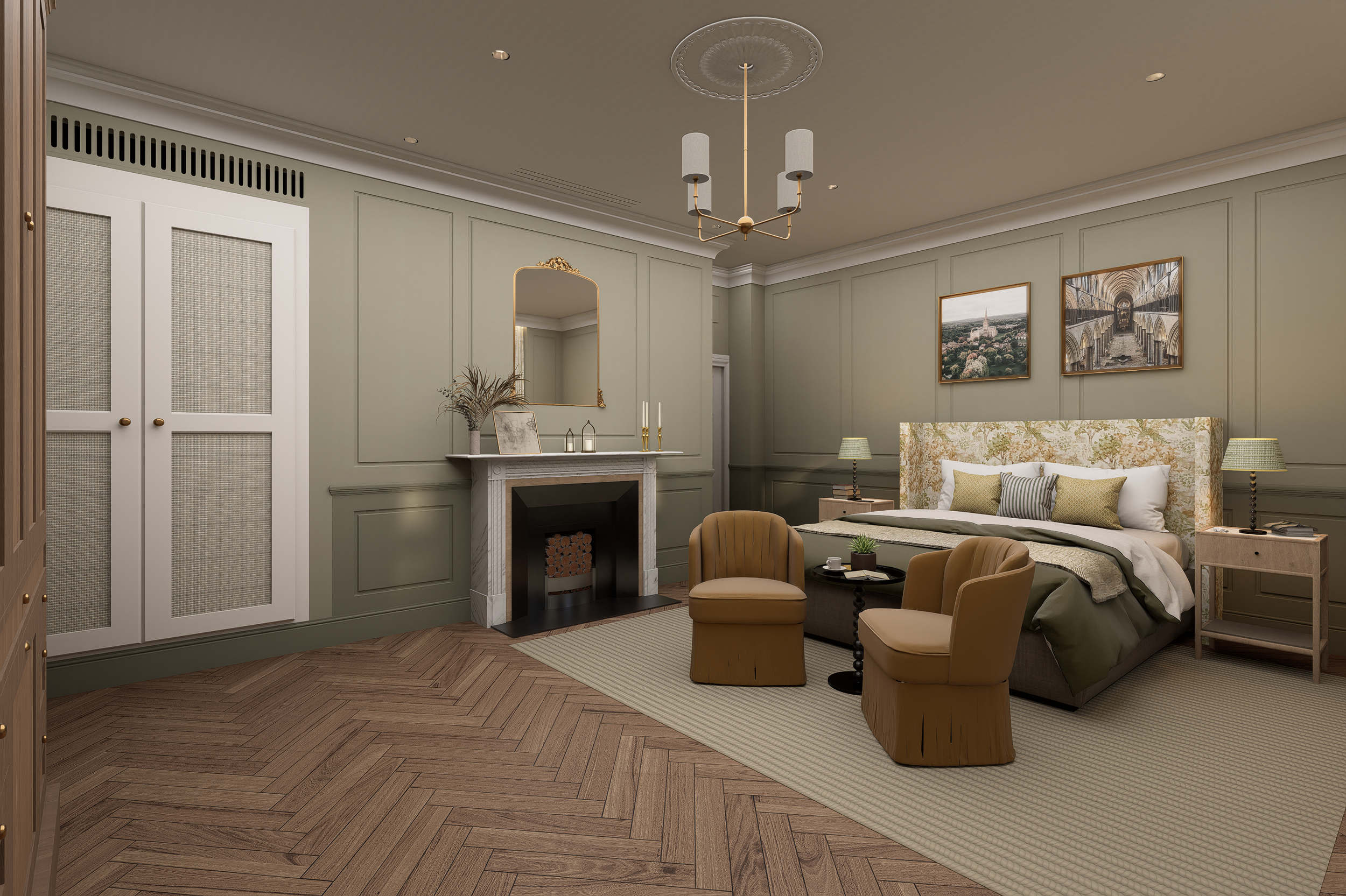
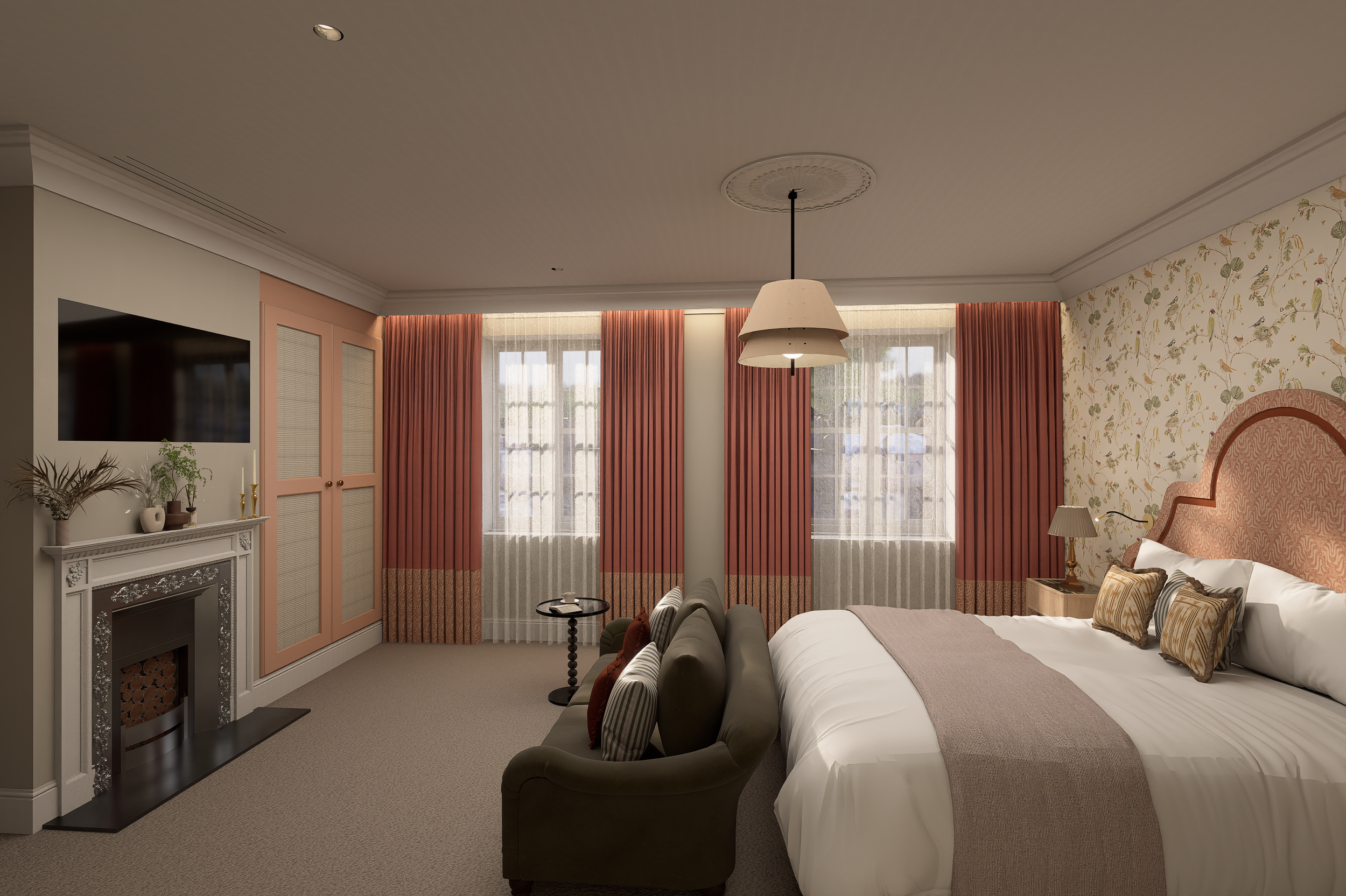
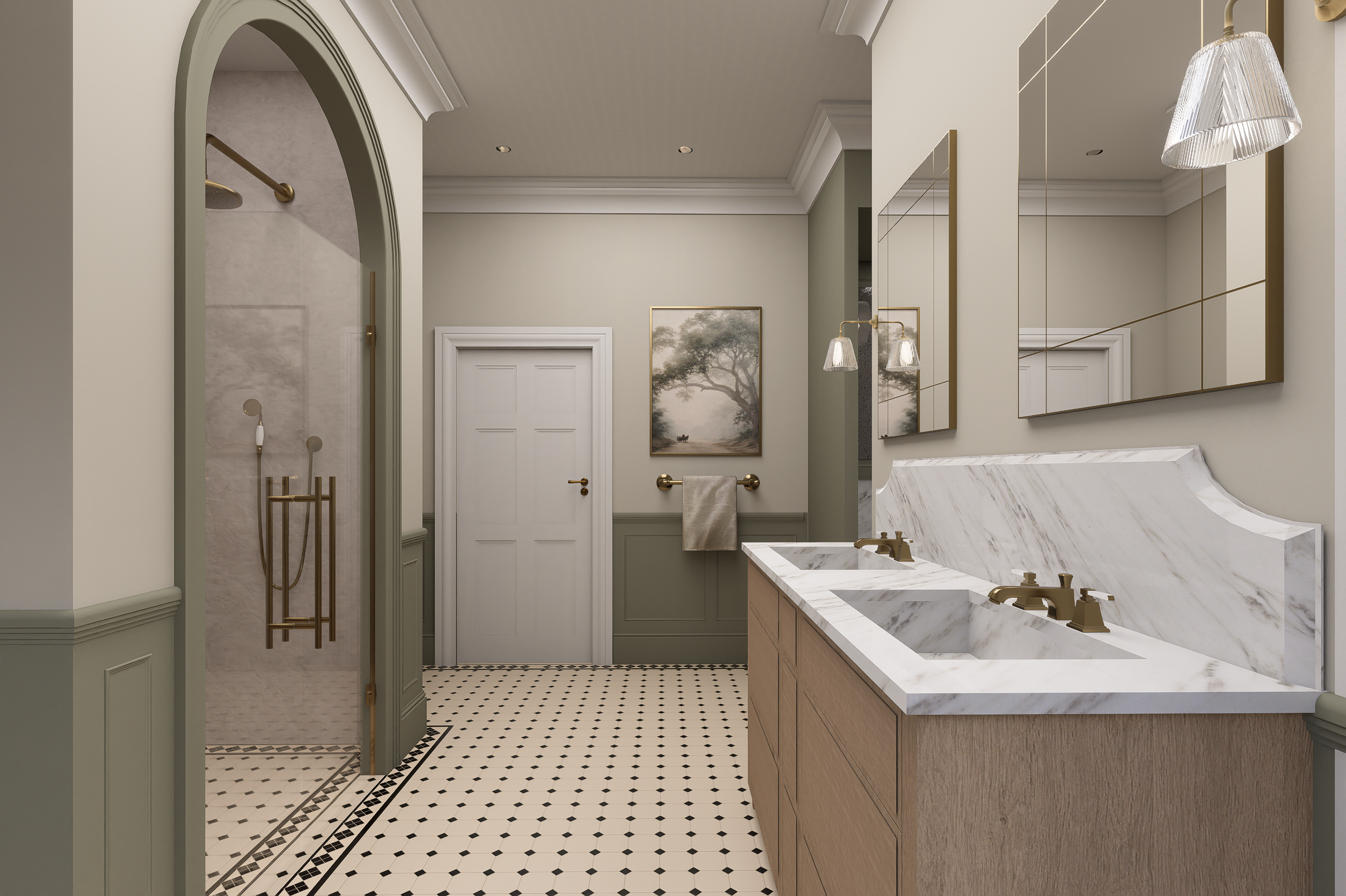
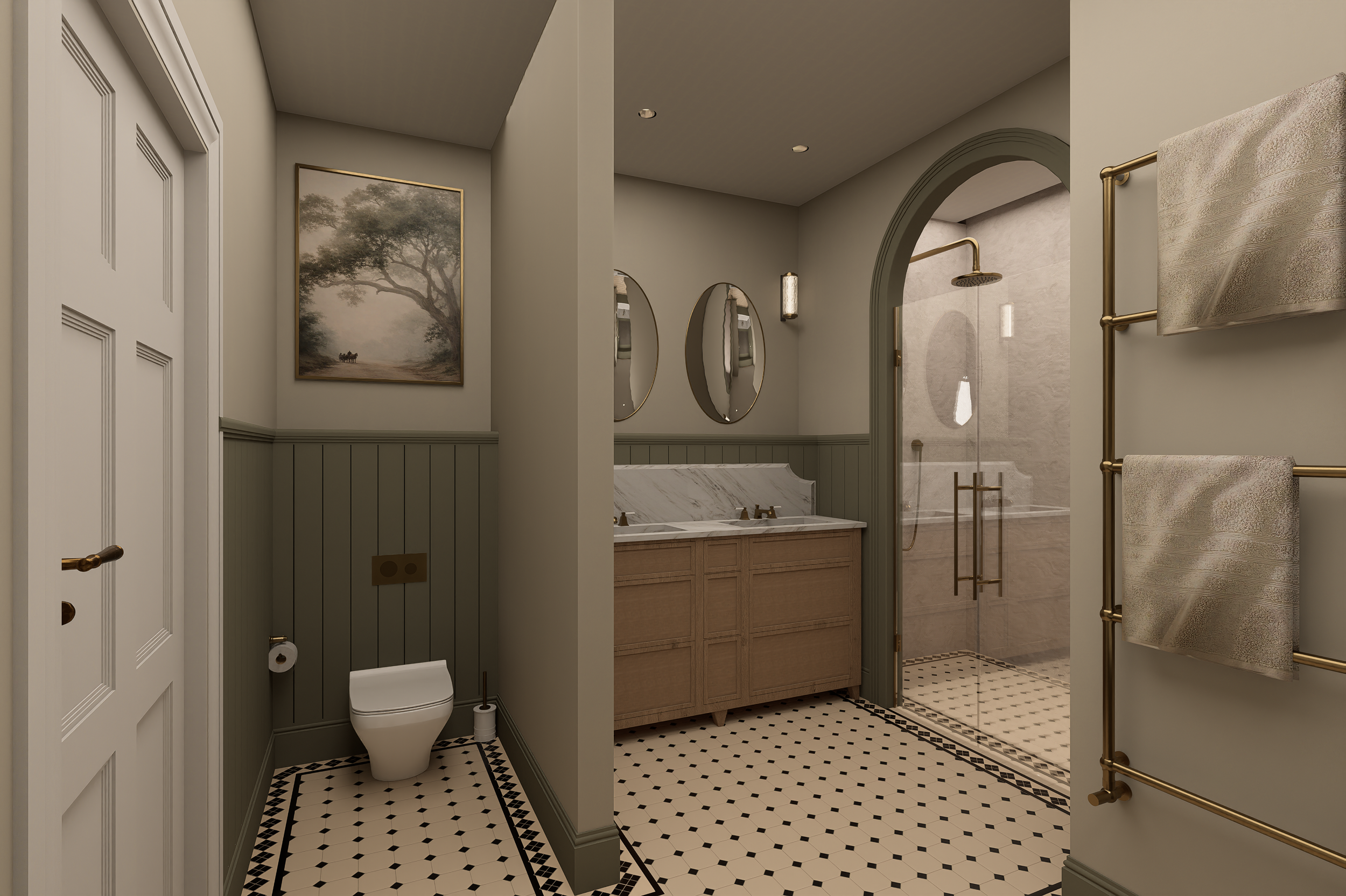
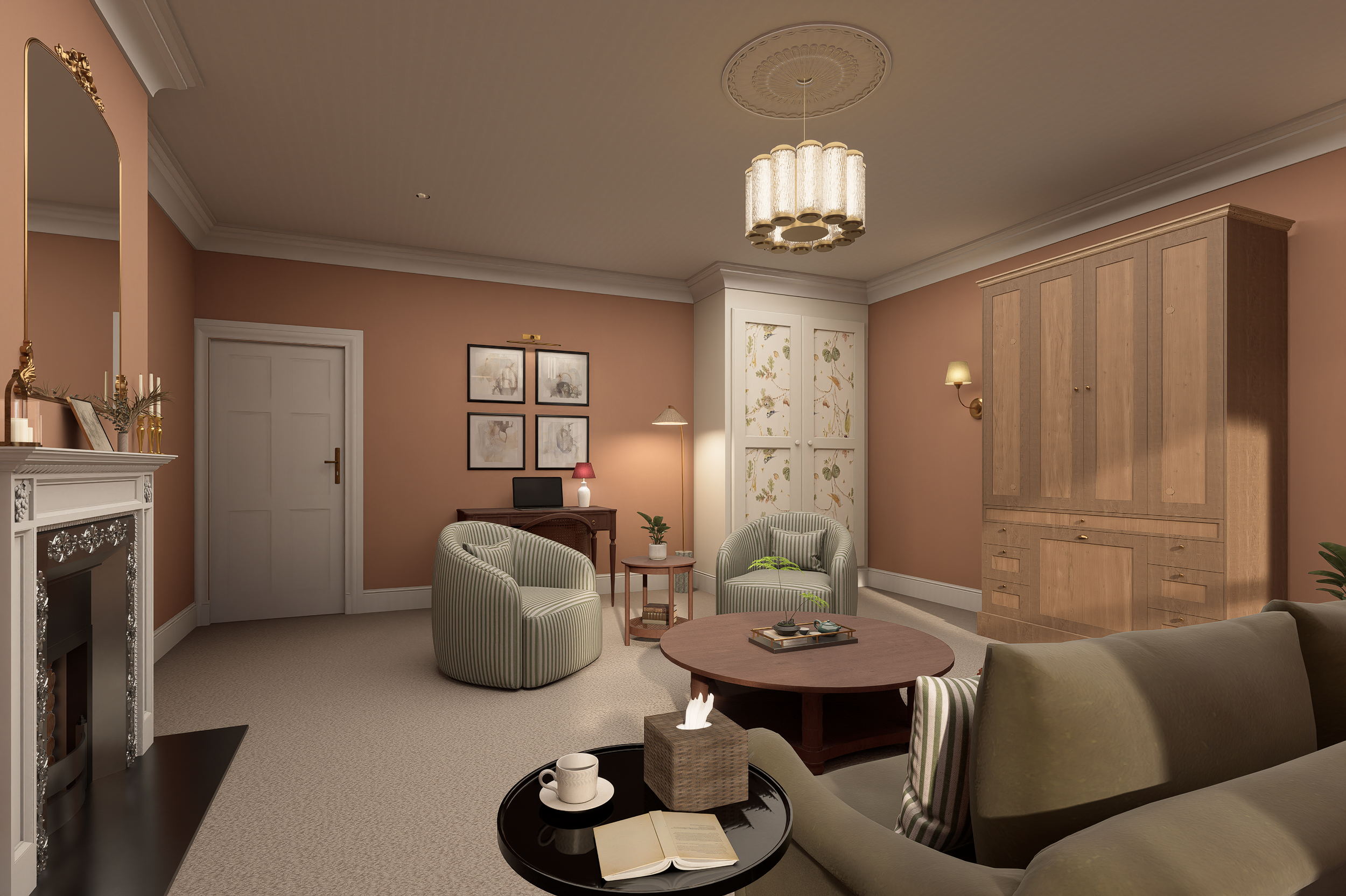
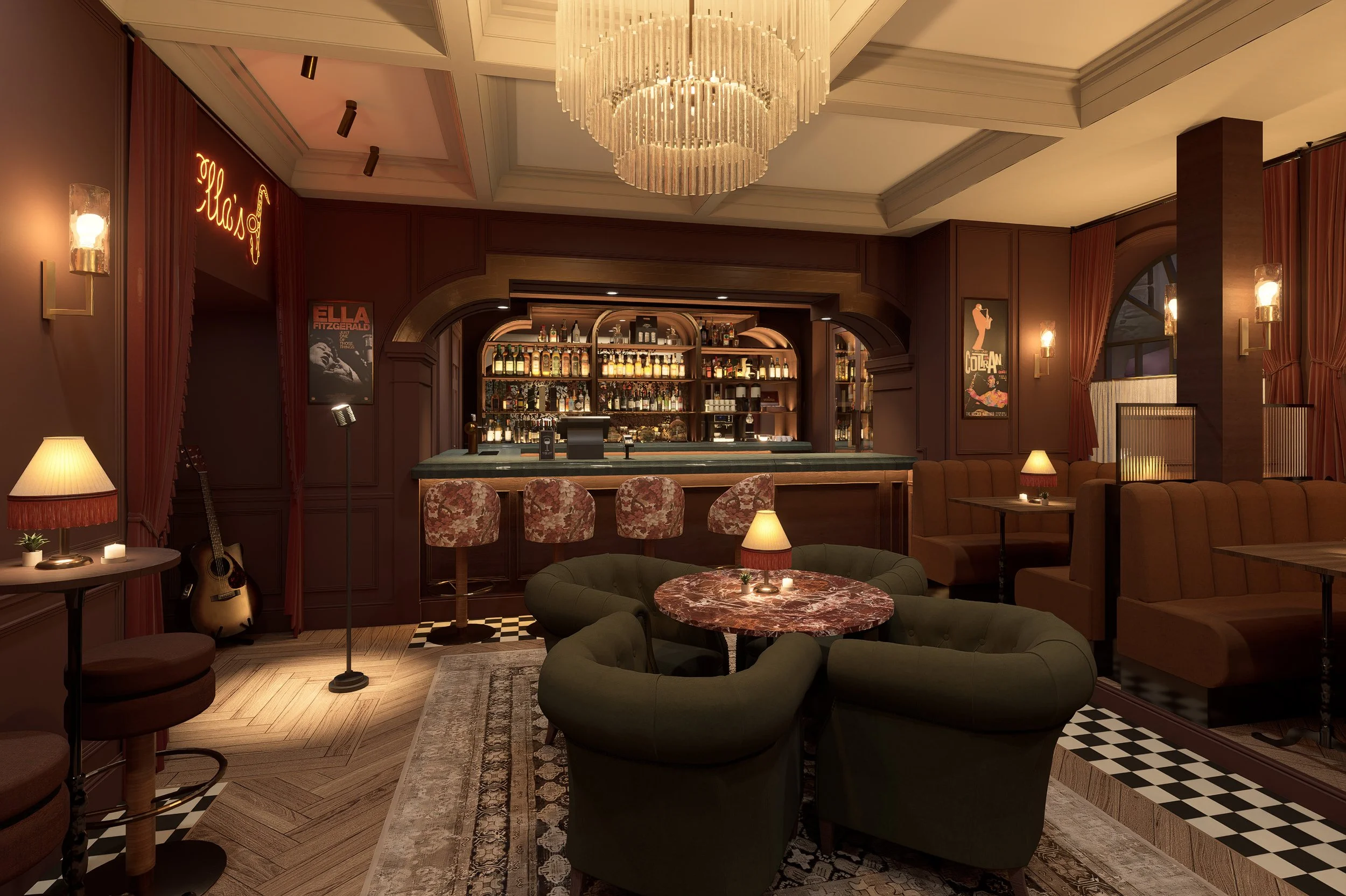
This project was a collaborative effort between the design team at Jigsaw Interiors and myself. My role focused on translating the client’s design concepts into fully realized digital models and visual outputs. The project was was highly custom.
A range of industry-standard software was used throughout the project:
Revit, SketchUp & Blender for building and asset modelling
D5 Render for high-quality visual rendering
Adobe Premiere Pro and Adobe Photoshop for post-production and video editing
The sections below outline the project workflow, detailing how the collaboration was structured and how the process was streamlined to ensure efficiency and consistency throughout.
Client
Jigsaw Interiors
Year
01/2026
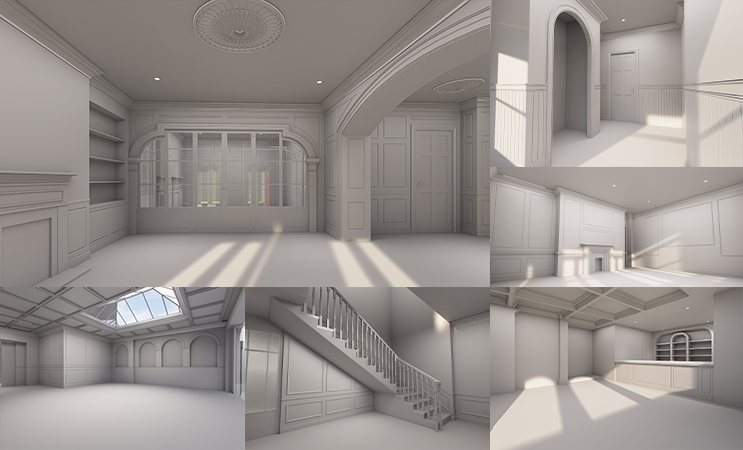
Clay Models
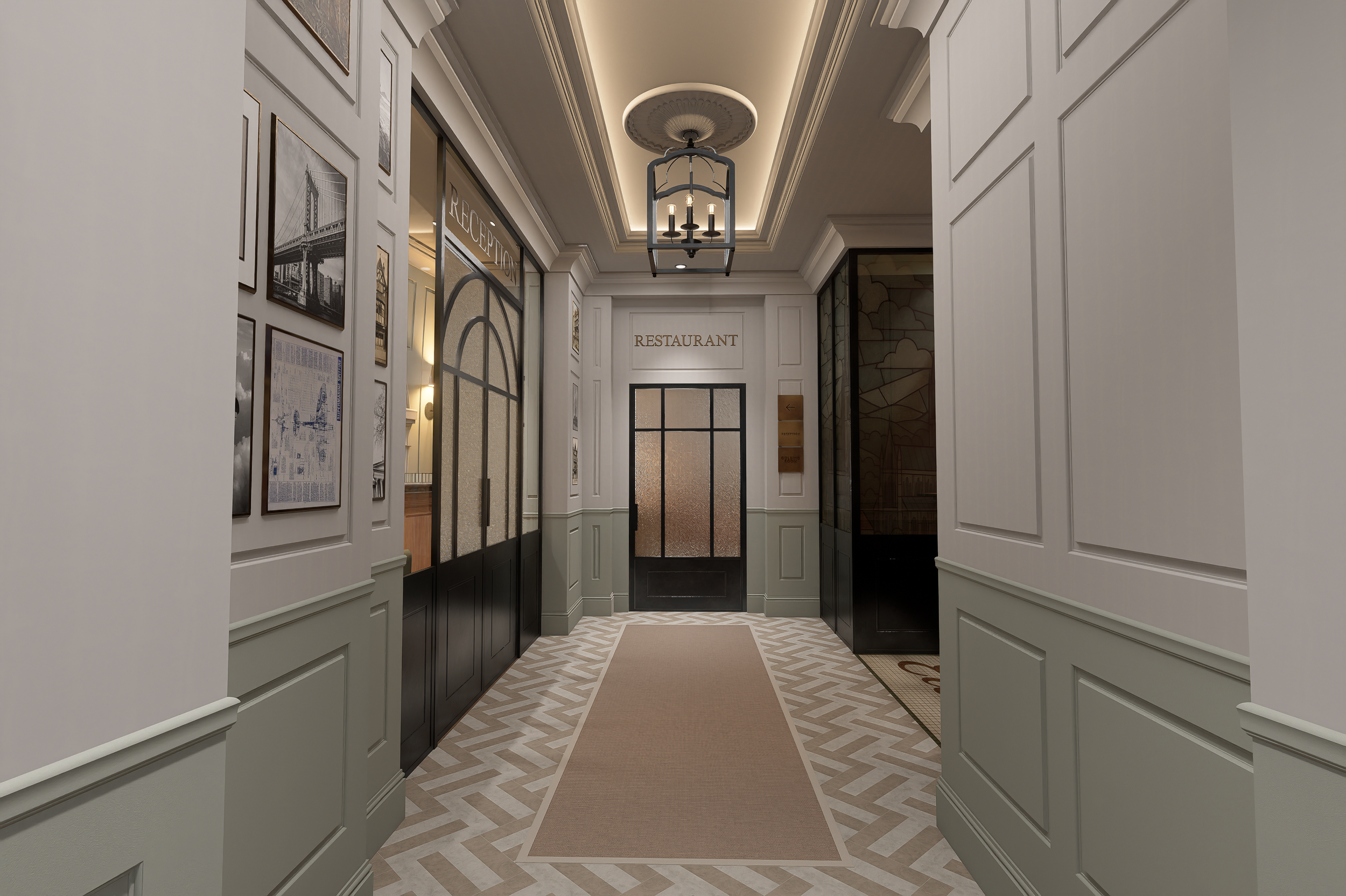
I understood this was a work in progress for the client and that there would be many live alterations, so we agreed that my first step would be to create the model of the exterior and interior rooms, including joinery such as doors, architraves, ceiling coving and which were all custom.
The client then reviewed the ‘clay models’ of these spaces so any alterations to the model could be made before the FF&E and textures were added. This meant we were working through the project incrementally and could spot any issues early on.
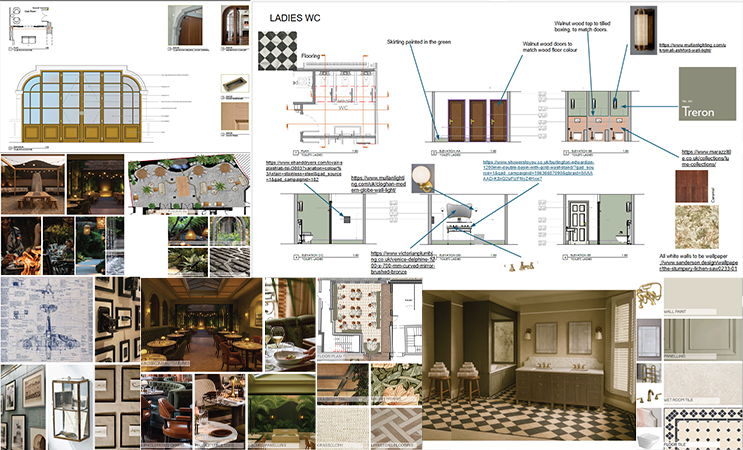
Fit out
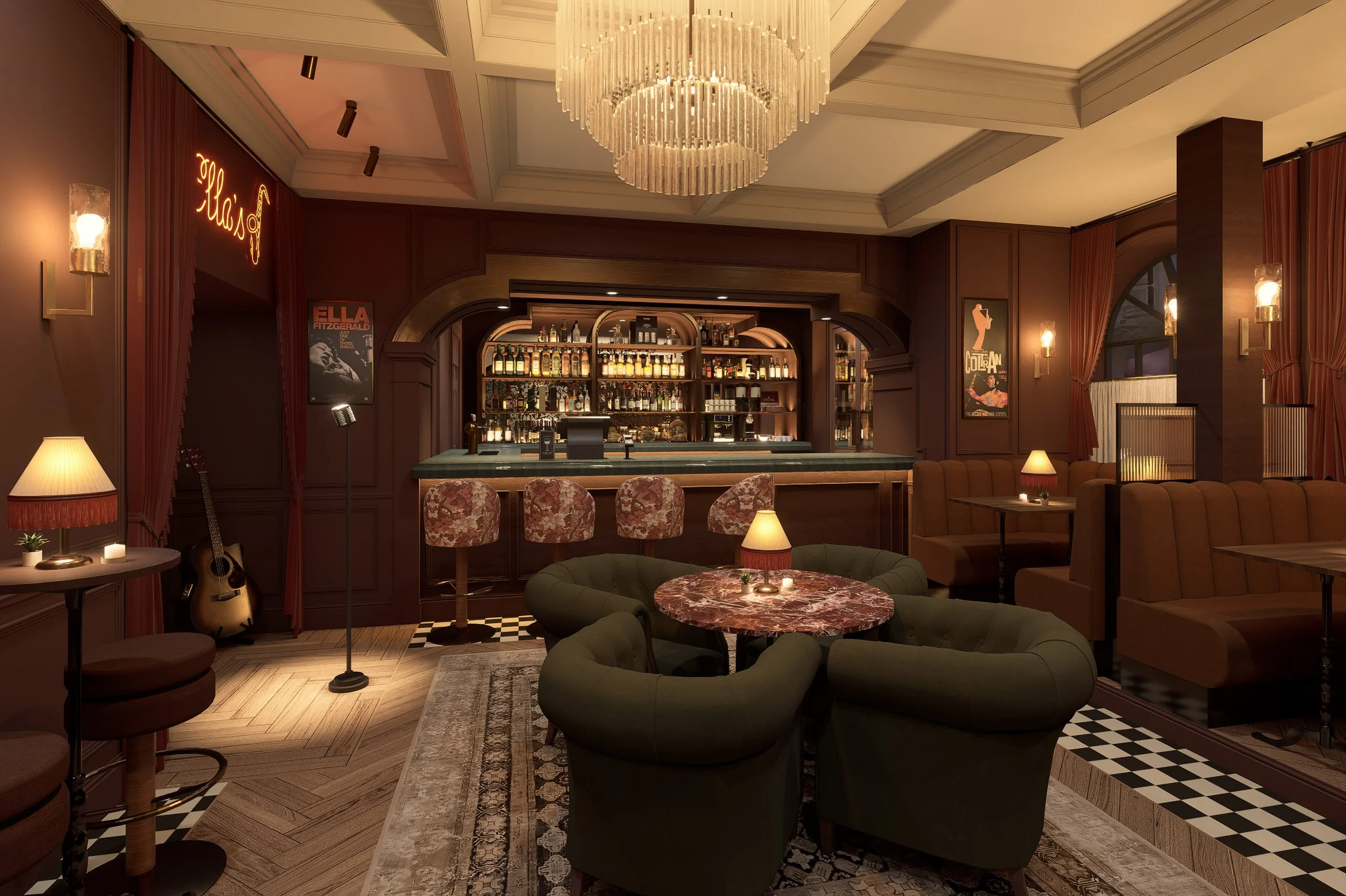
The next step was to follow their mood boards and FF&E documents to the millimetre. During this stage the client and I went back and forth a few times, as some aspects changed when the designers saw what it looked like in the draft renders. That highlights the benefit of the interior CGIs as the designers had numerous ideas, but after seeing the ideas come to life they would go in a different direction or just flat out say their initial idea doesn’t look like they thought it would.
This allowed for some creative direction from me to give my input. I have done so many projects and worked with many designers that I can help interior designers make the correct decisions when choosing textures or furniture.
Stills
The agreed deliverables for this project at the start was for a video walkthrough of the Ground floor, a couple of the bedroom suites, spa and rooftop bar. I had to adapt how I sent drafts over as videos take hours to export, especially on a large project file, so in order for Jigsaw to be able to present in meetings I exported still images in 2k.
This was also done because if they had more comments then the hours of export time would eat into the time I can actively edit the project.
Final Deliverables
PRIORITY PASS
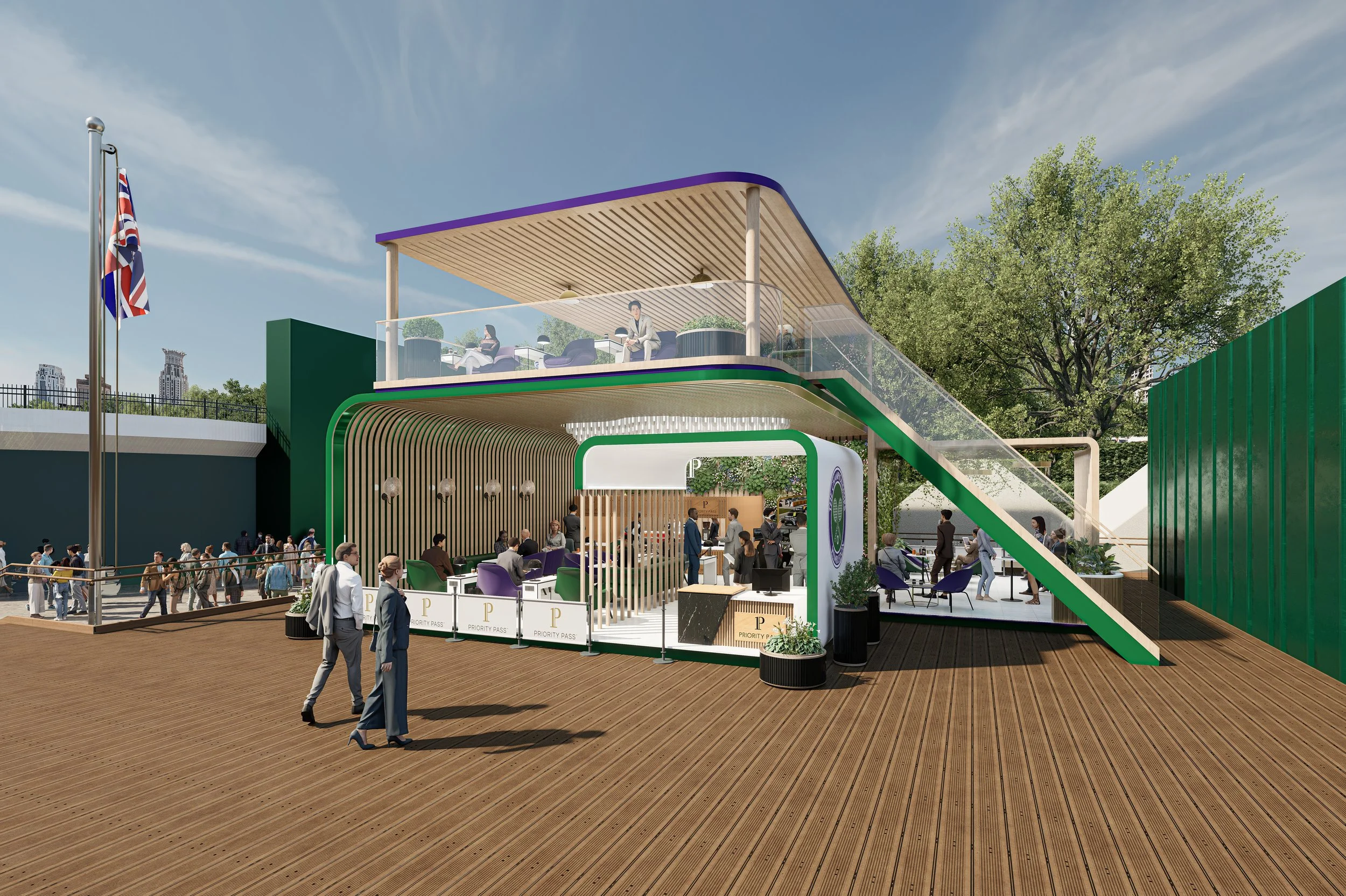
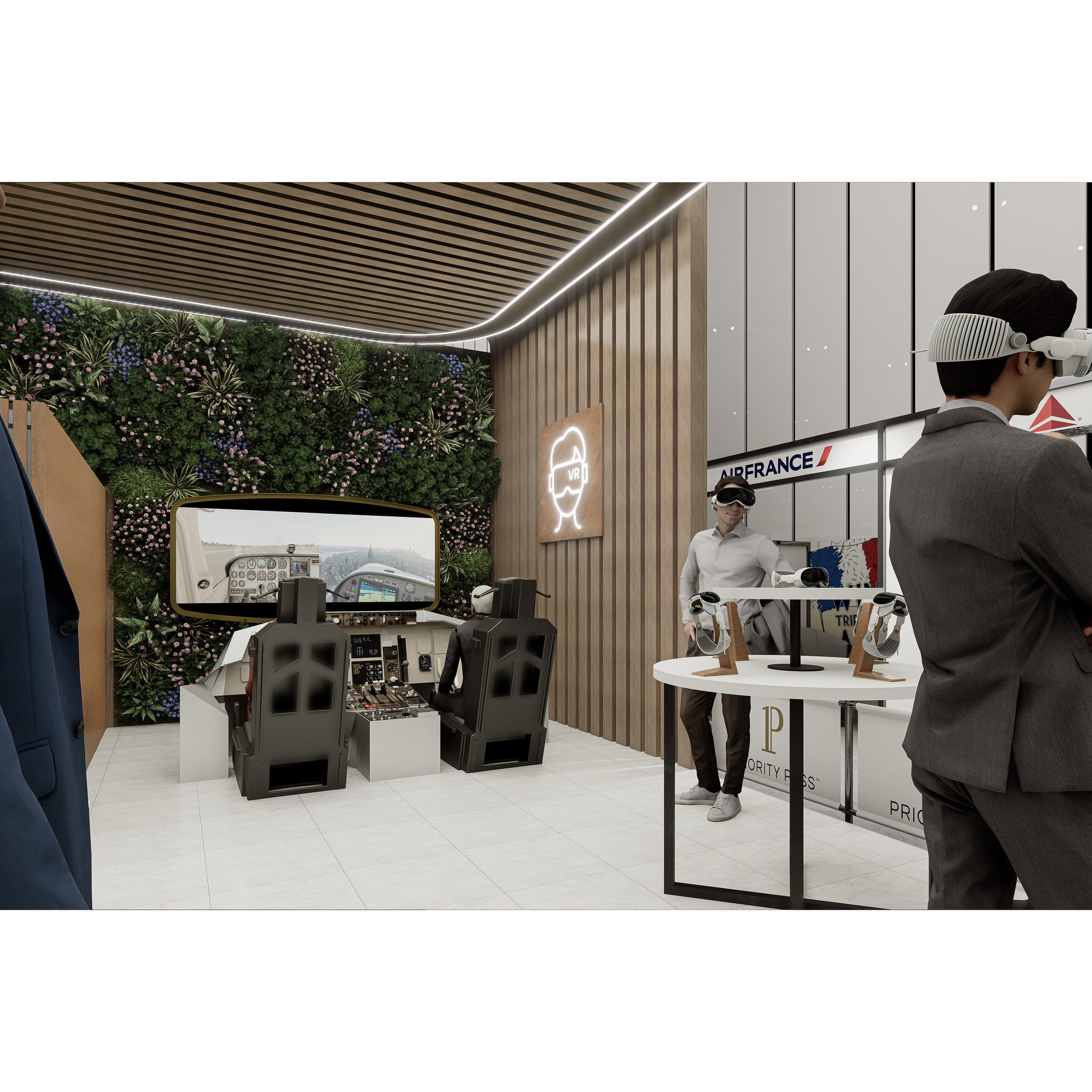
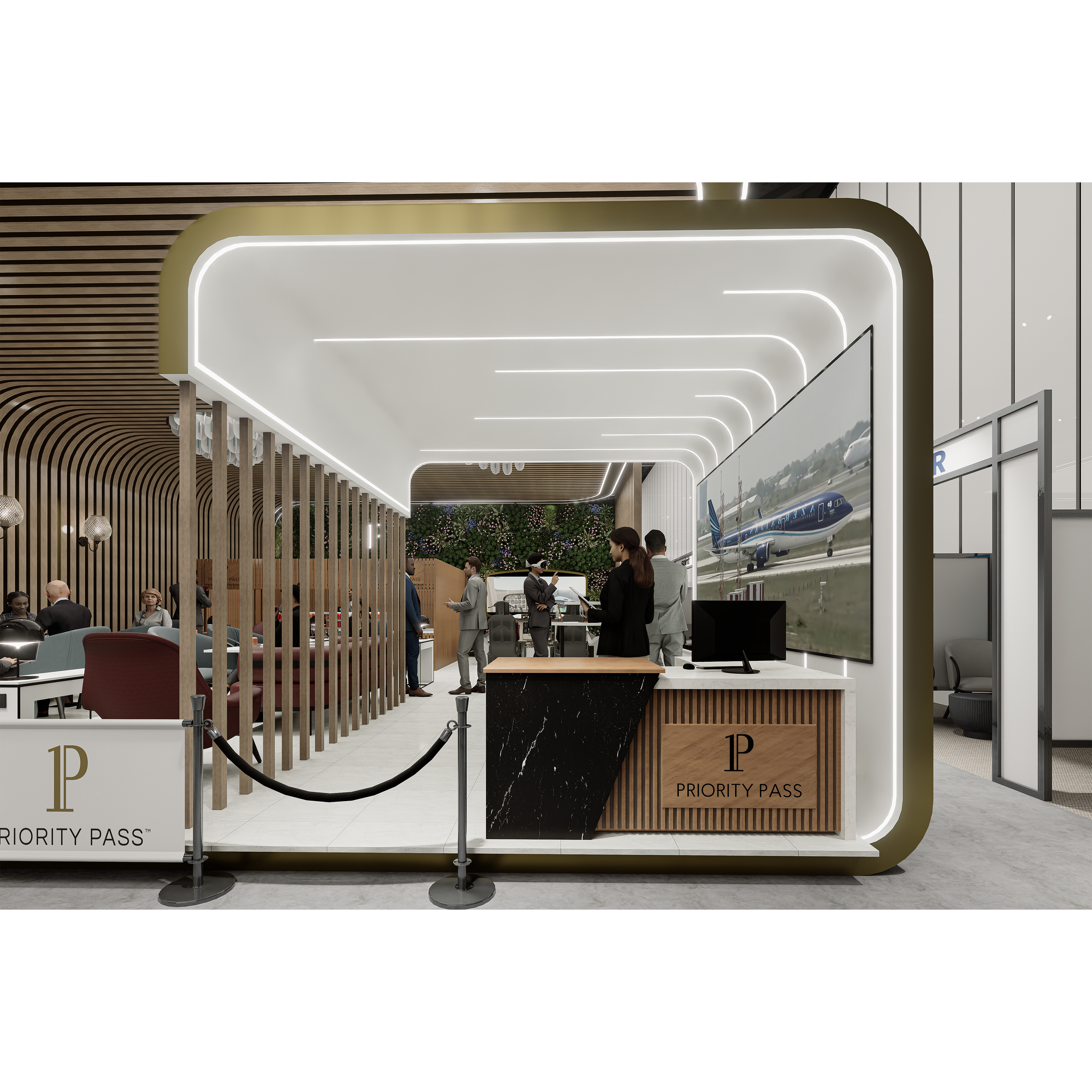
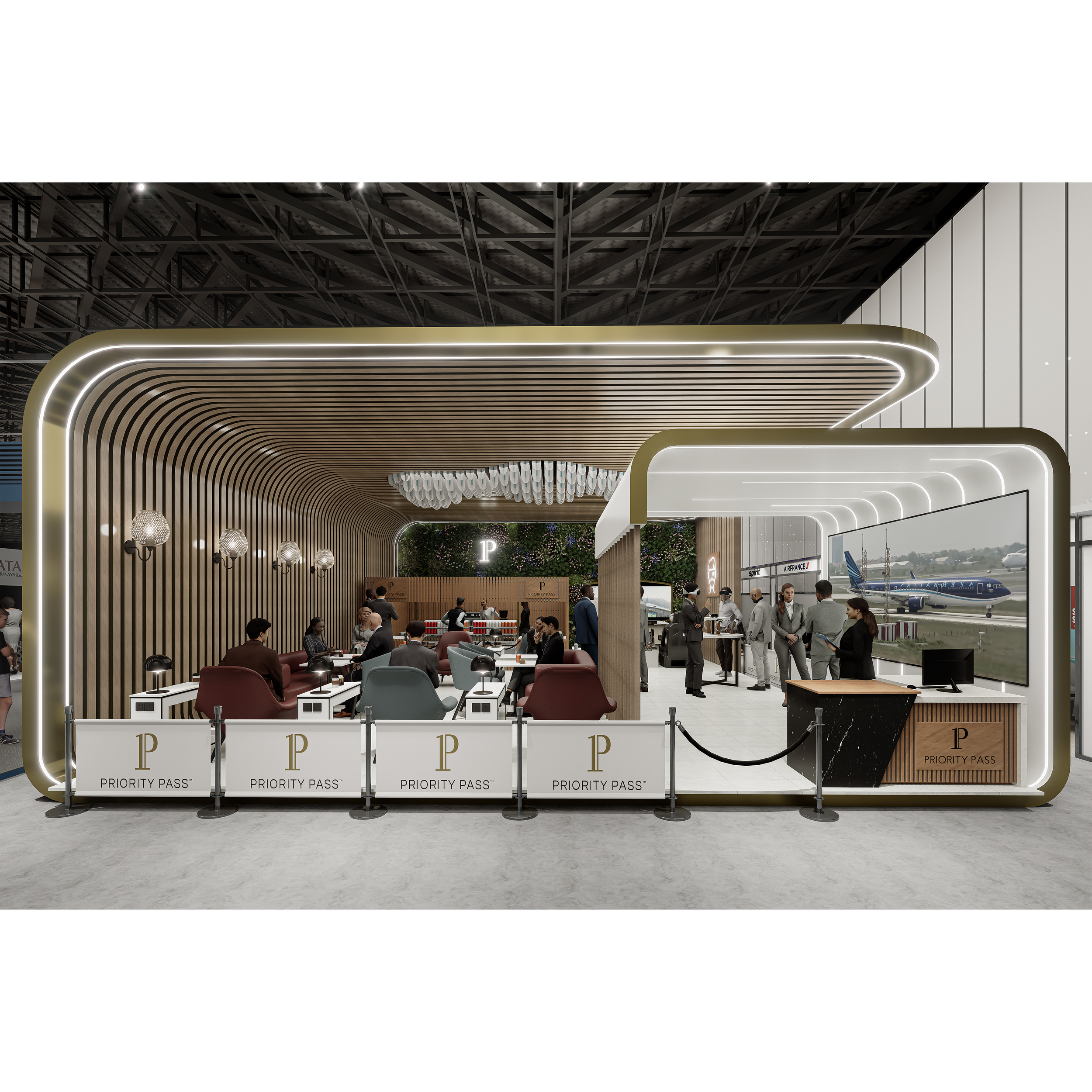
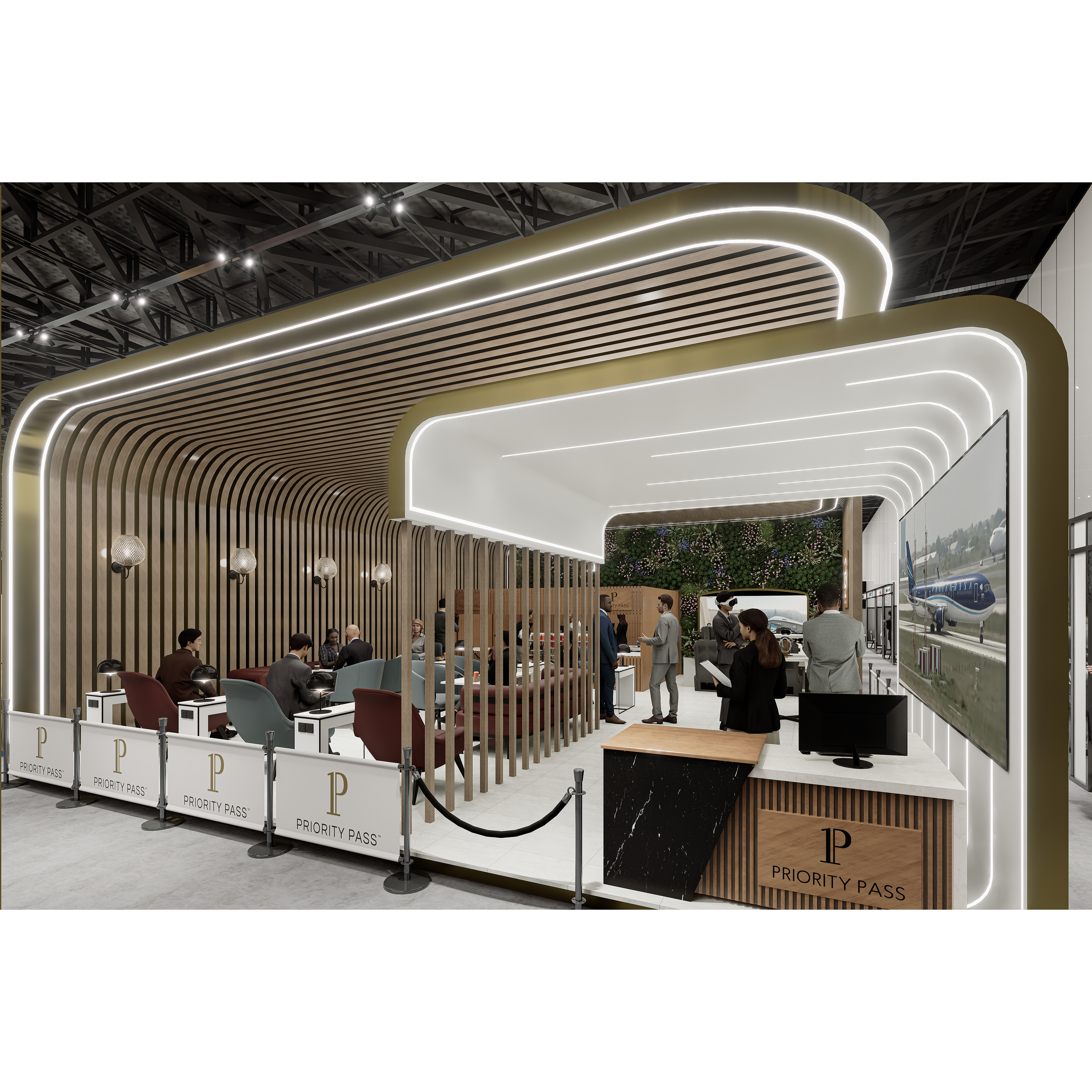
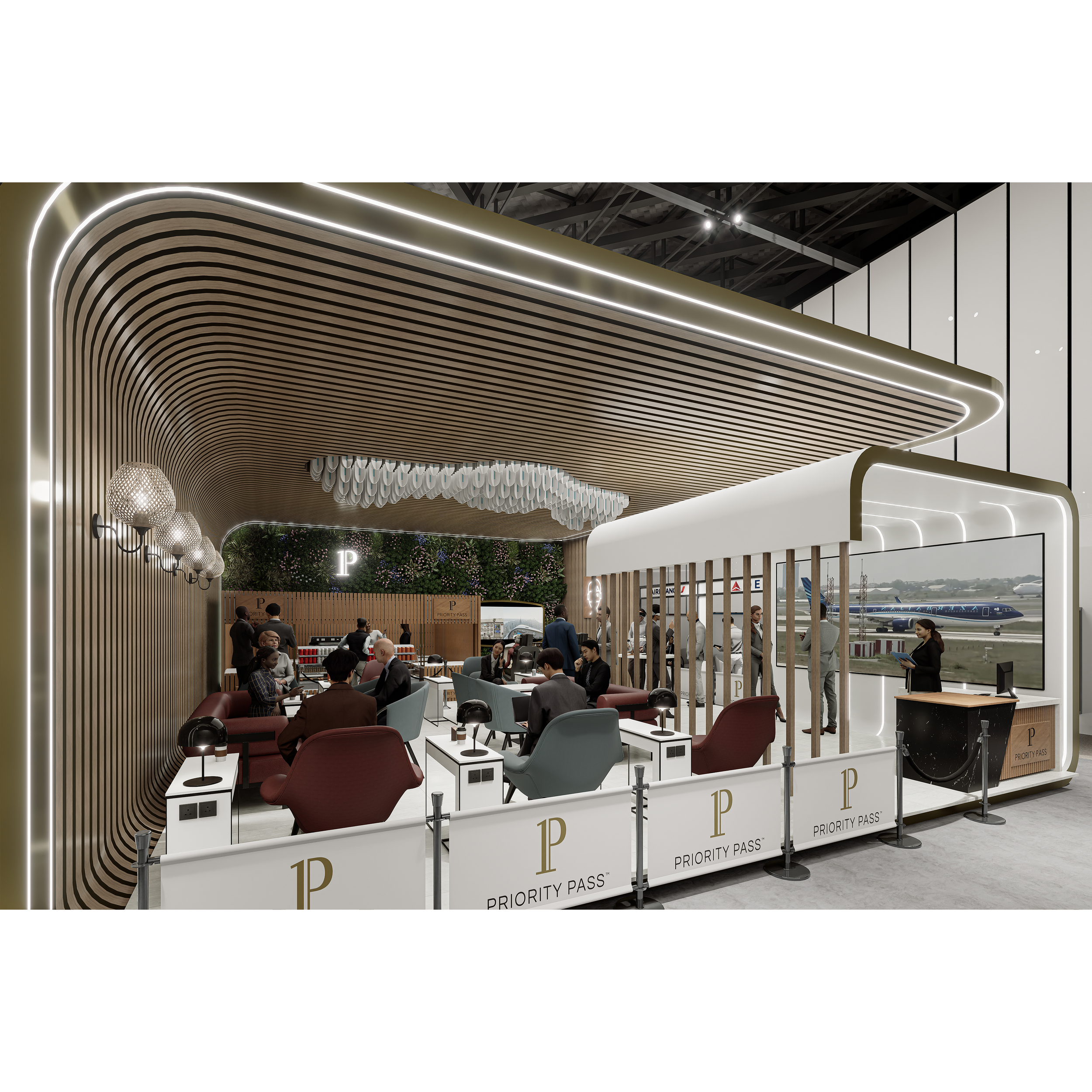
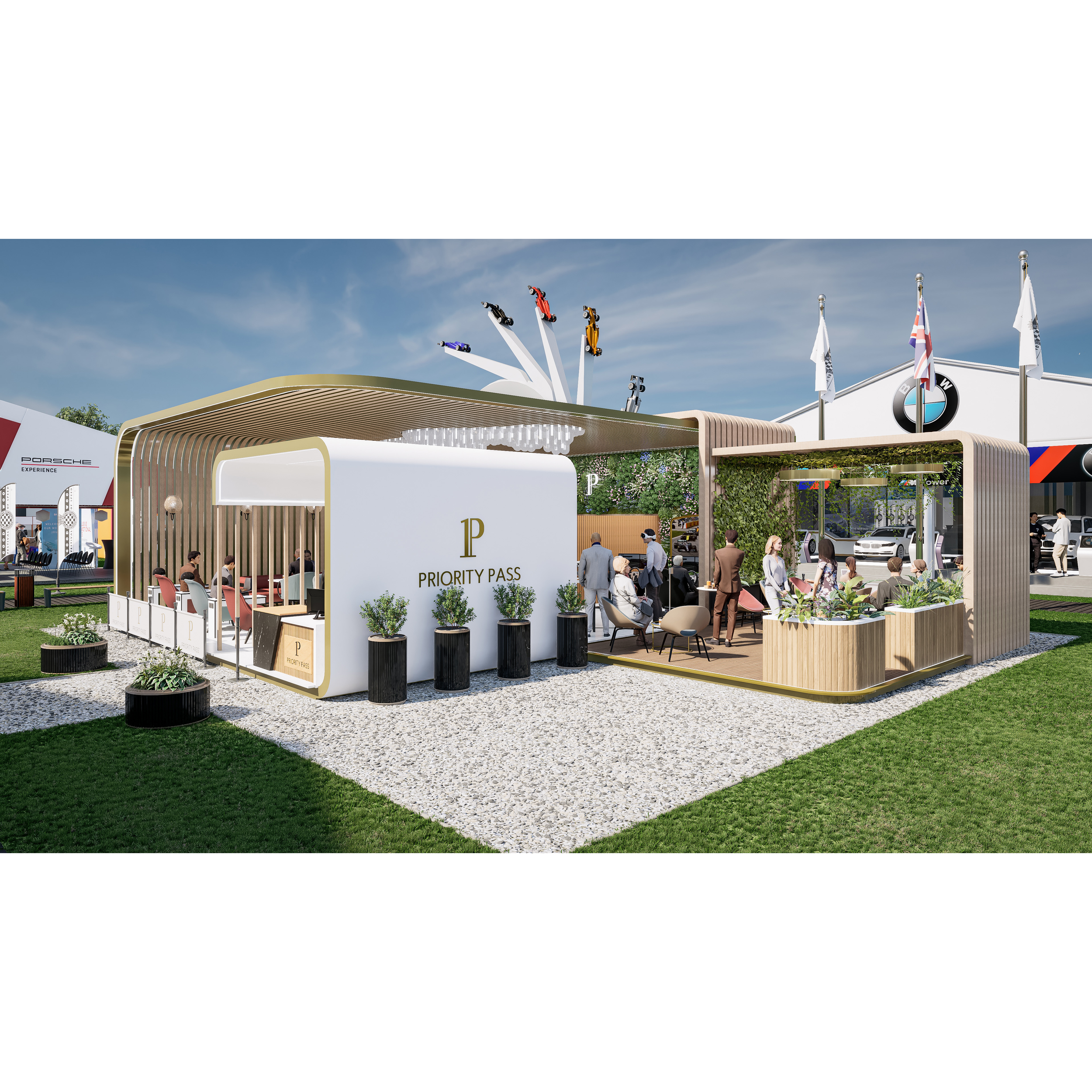
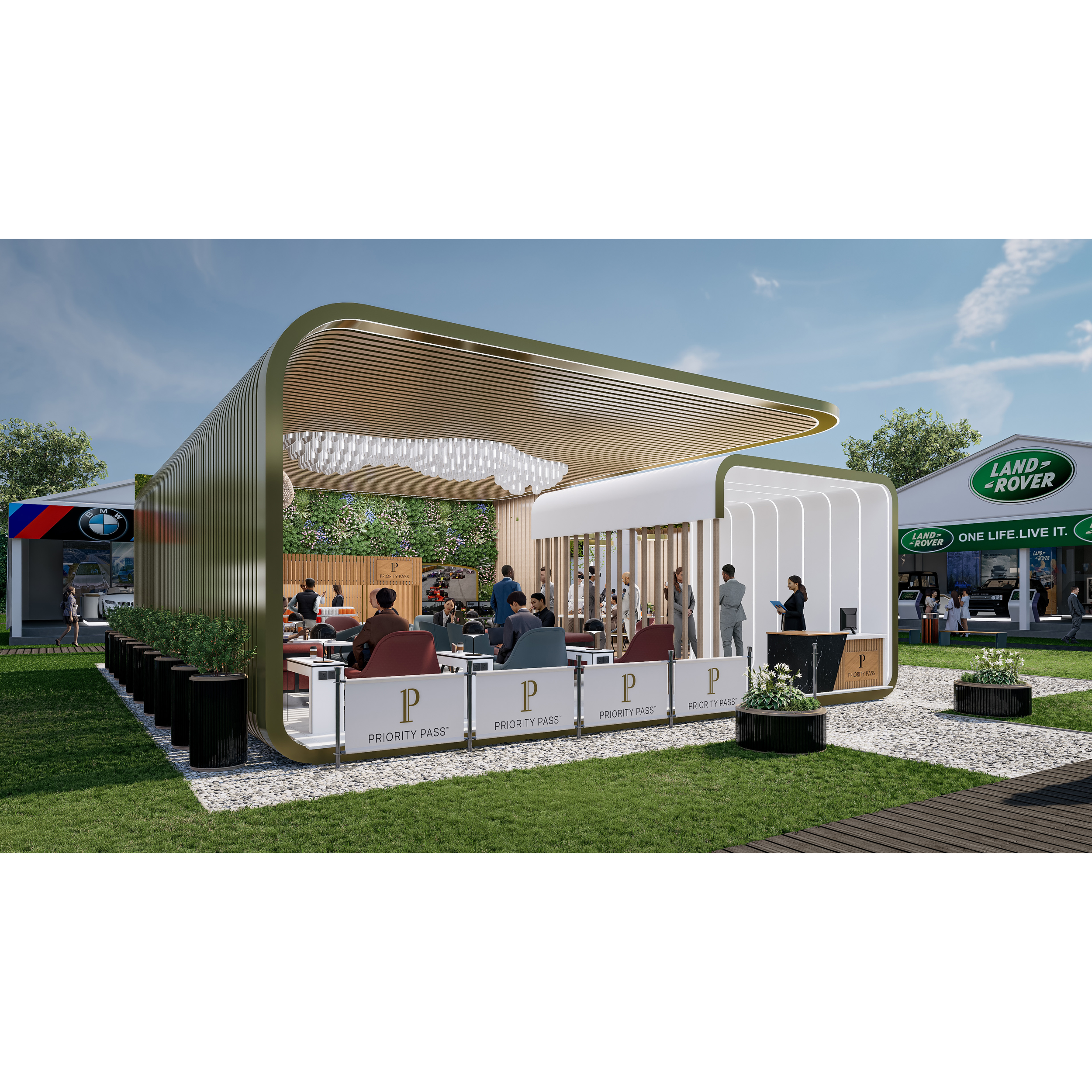
The Collinson Group Ltd was looking to showcase the Priority Pass brand outside of the airport in a unique way that highlights their brand experience and provides an opportunity for face-to-face engagement. They wanted the output to transform the airport lounges experience into a mobile roadshow concept, that could be executed at any event space and captivate new potential customers, reaching a broader audience across the industry by exhibiting at trade shows, lifestyle, entertainment and sporting events through a pop-up lounge concept.
A range of industry-standard software was used throughout the project:
Revit for building and asset modelling
D5 Render for high-quality visual rendering
Adobe Photoshop for post-production
The sections below outline the stages of the project and the various environments that Collinson wanted to see their
Client
Collinson
Year
09/2024
Kiosk Modelling
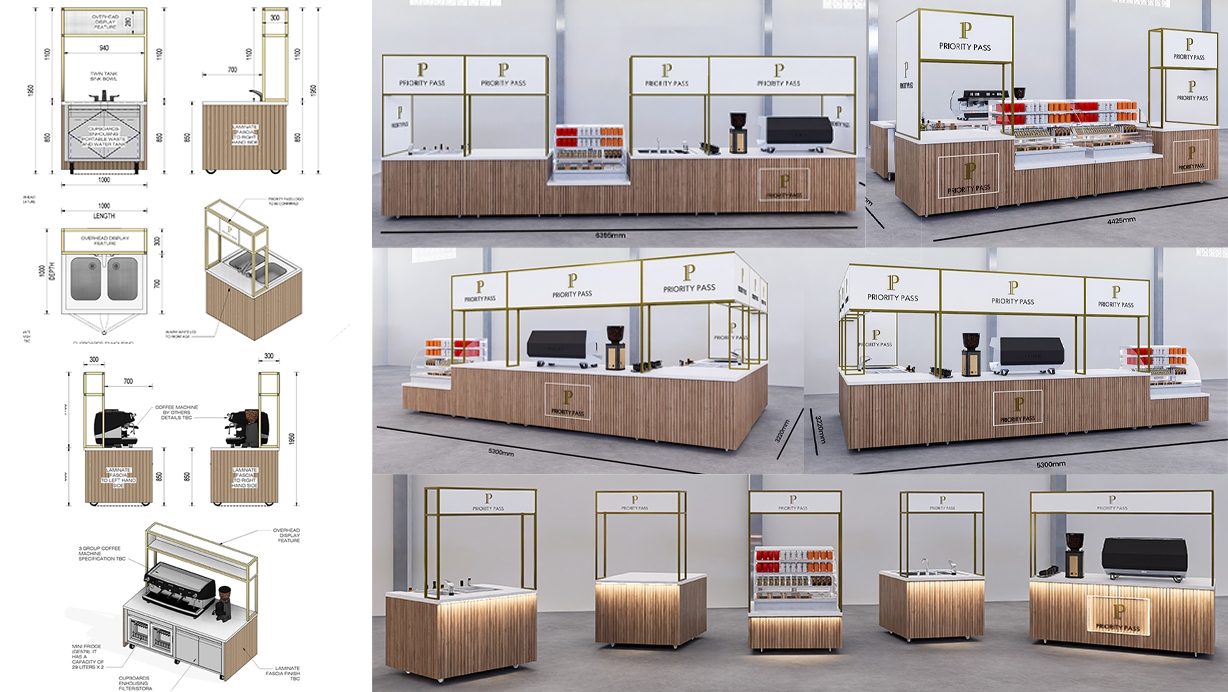
The first step was to make sure that the kiosk modules were the correct sizes and was the design that the client wanted.
Collinson provided detailed measurements of each modules which made it easy for me to model. I then presented different options (see images on the right) so they could choose which one was best suited to be used during these pop-up experiences.
Setting 1 - Airline Expo
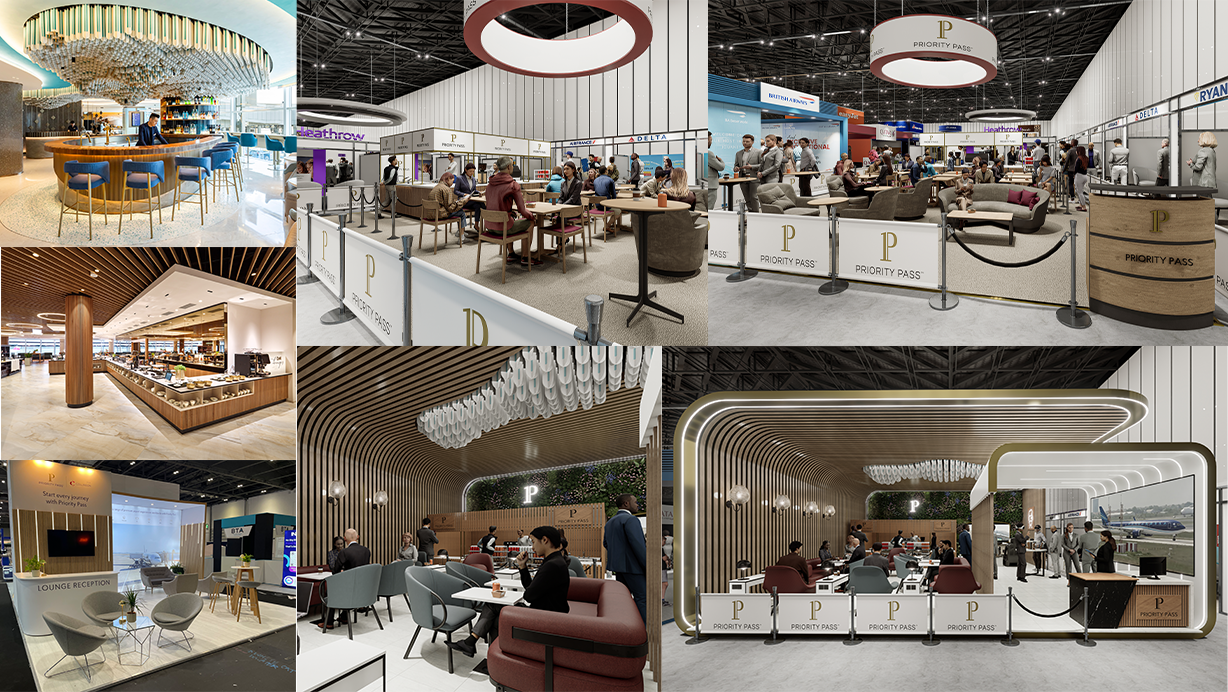
Once the shape of the kiosks were decided. The first requested setting was to be an airline expo to see what their pop up lounge would look like outside of an airport setting and in a new environment.
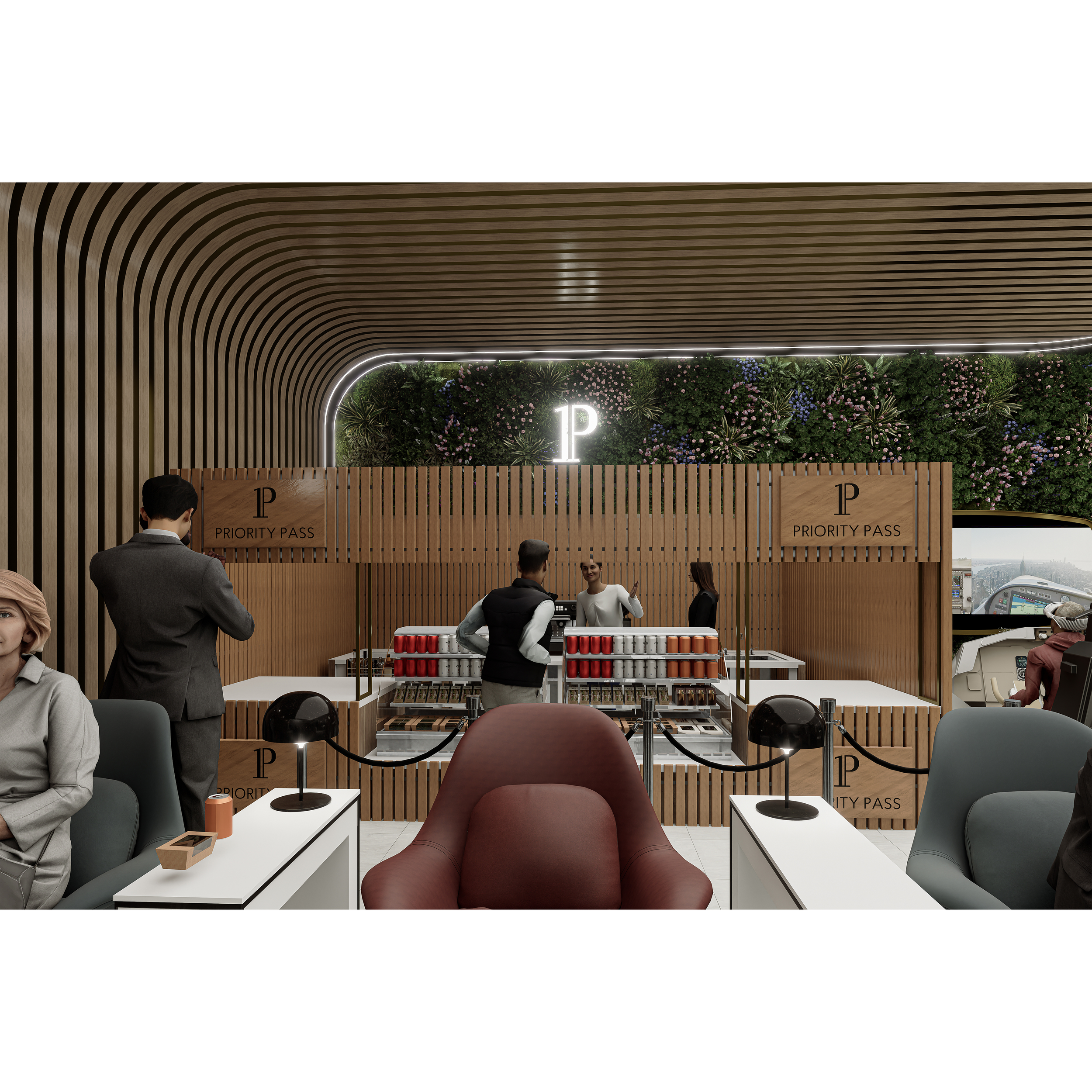
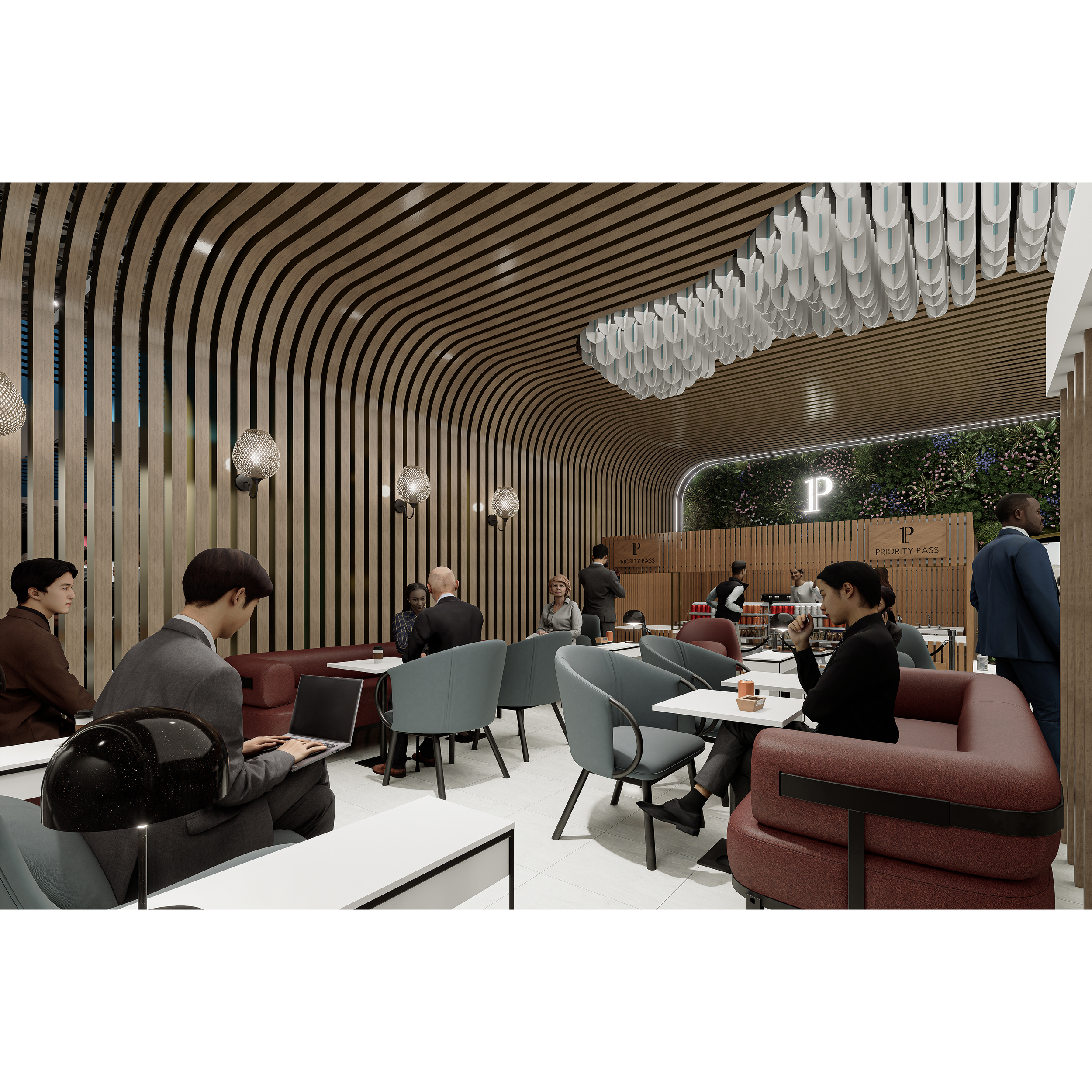
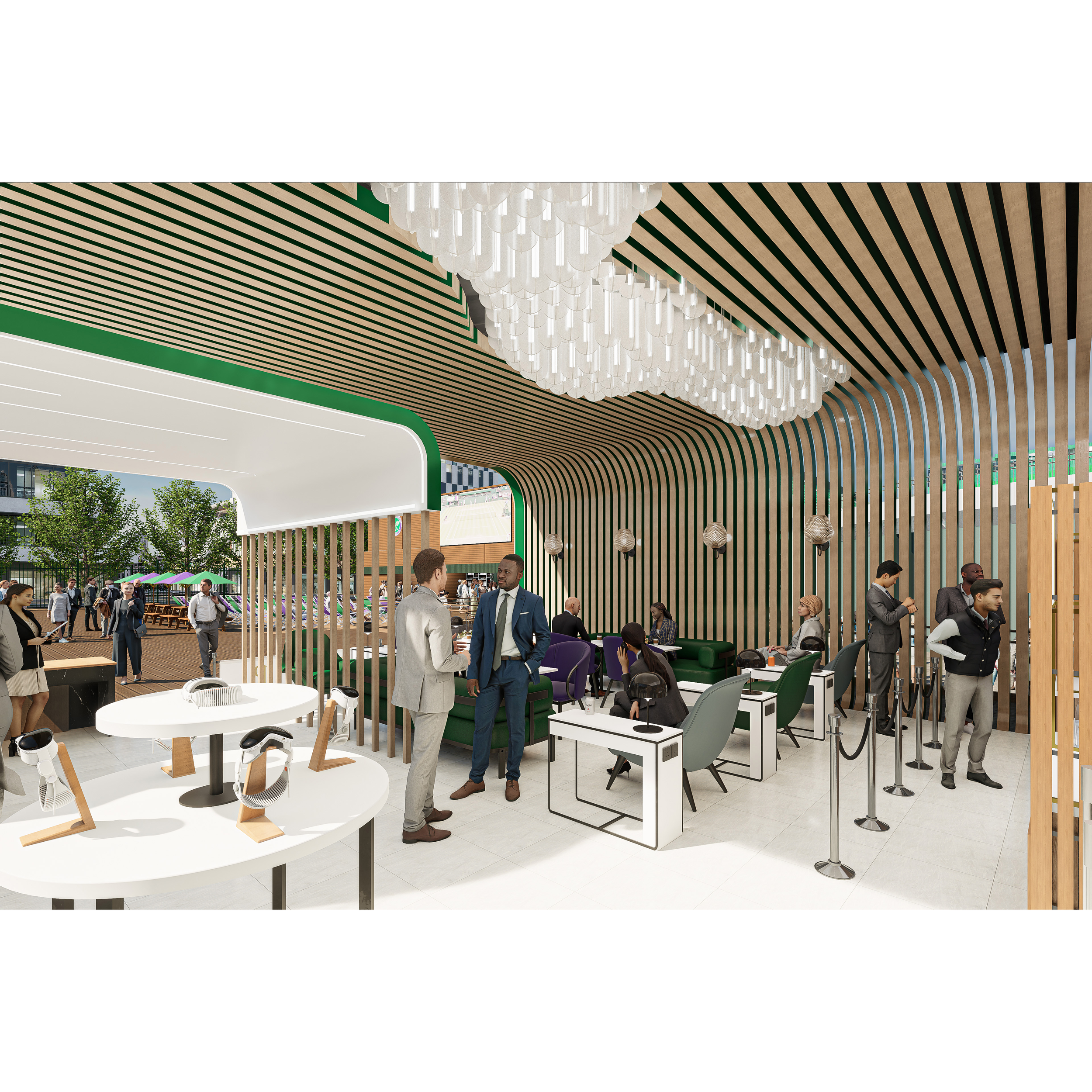
After it was reviewed by the client it was agreed something was missing. I was to create a modern lounge setting based on existing airport lounges that were sent over by the client (see image on the left), incorporating key characteristics like LED underlighting, customs ceiling and wooden cladding, which they loved!
Setting 2 - Goodwood
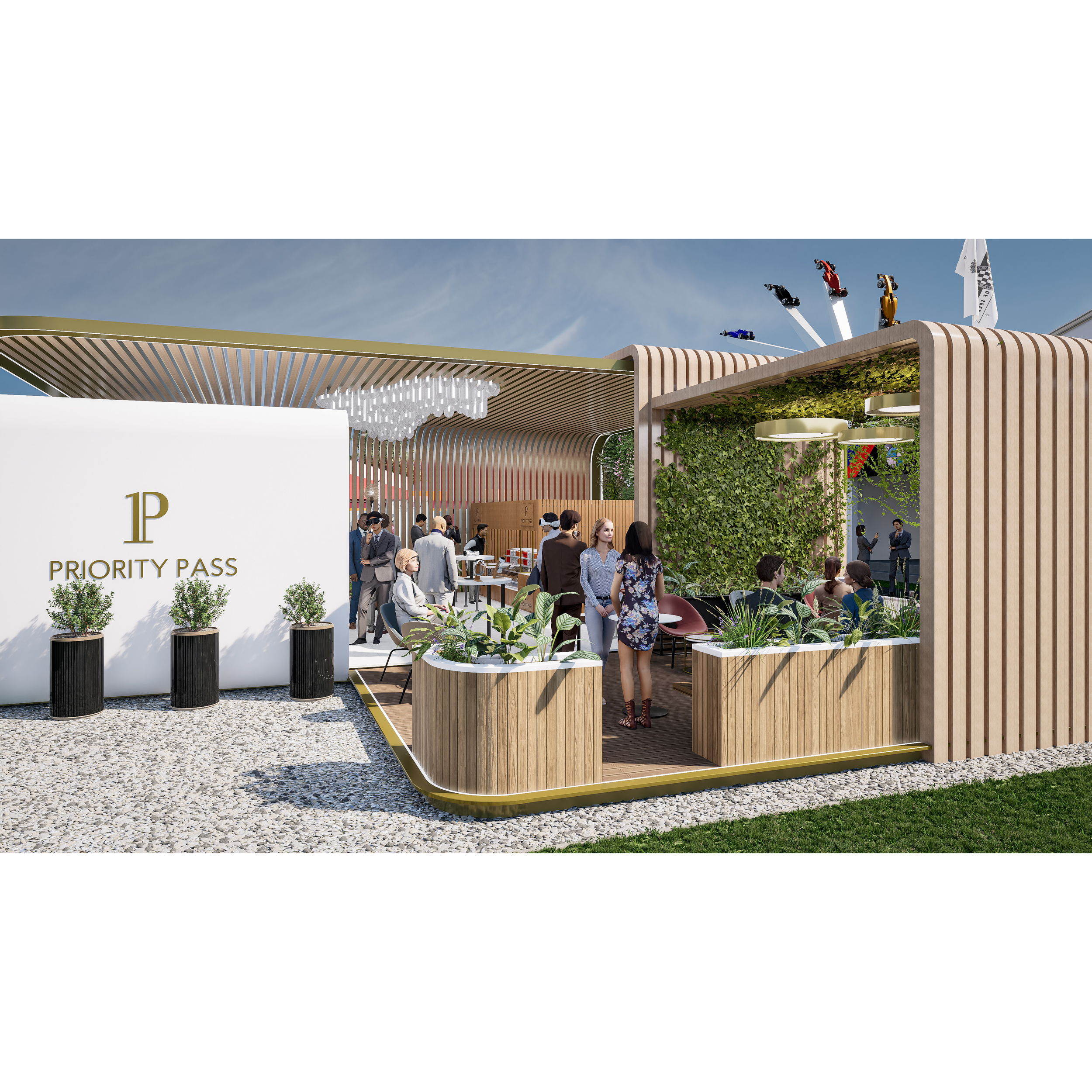
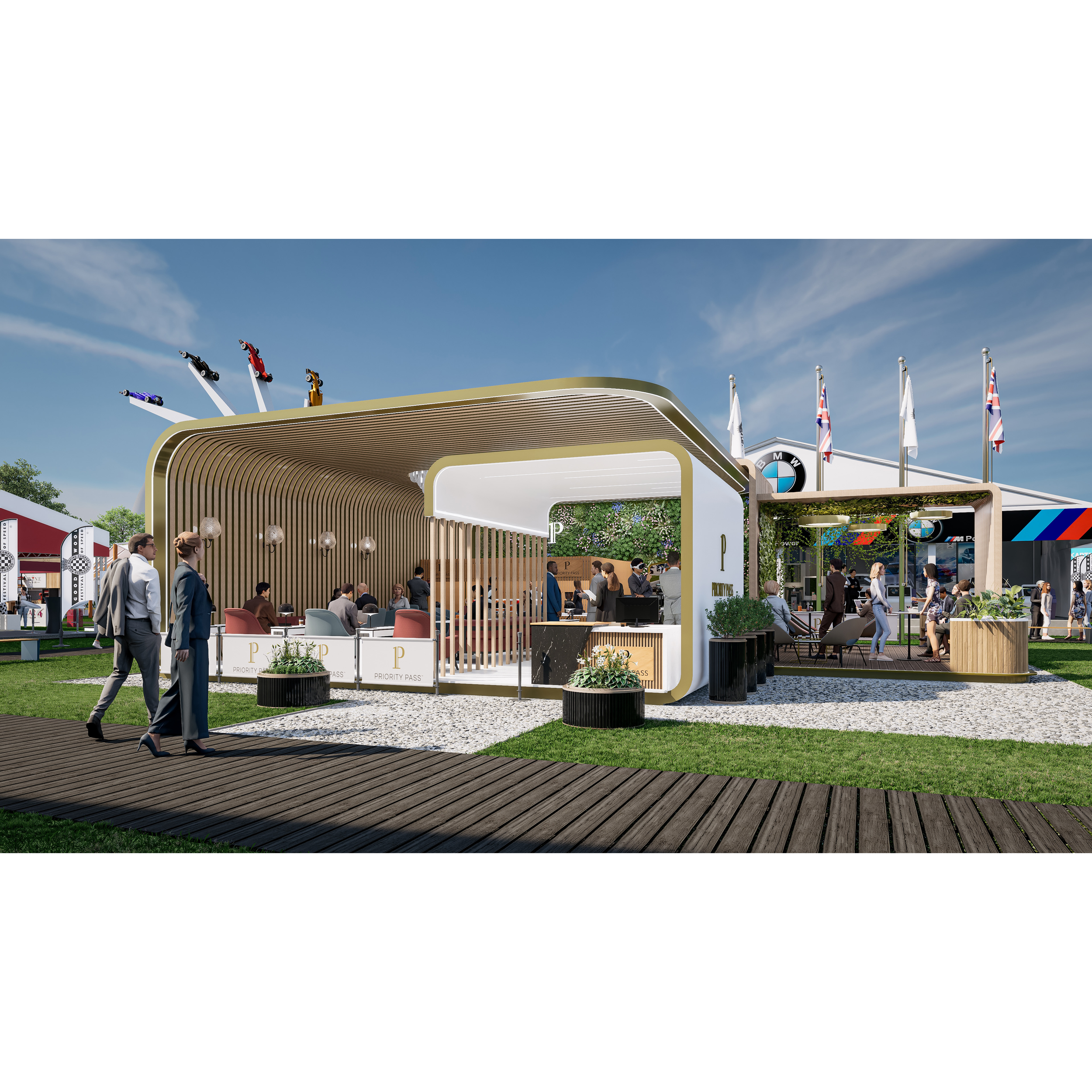
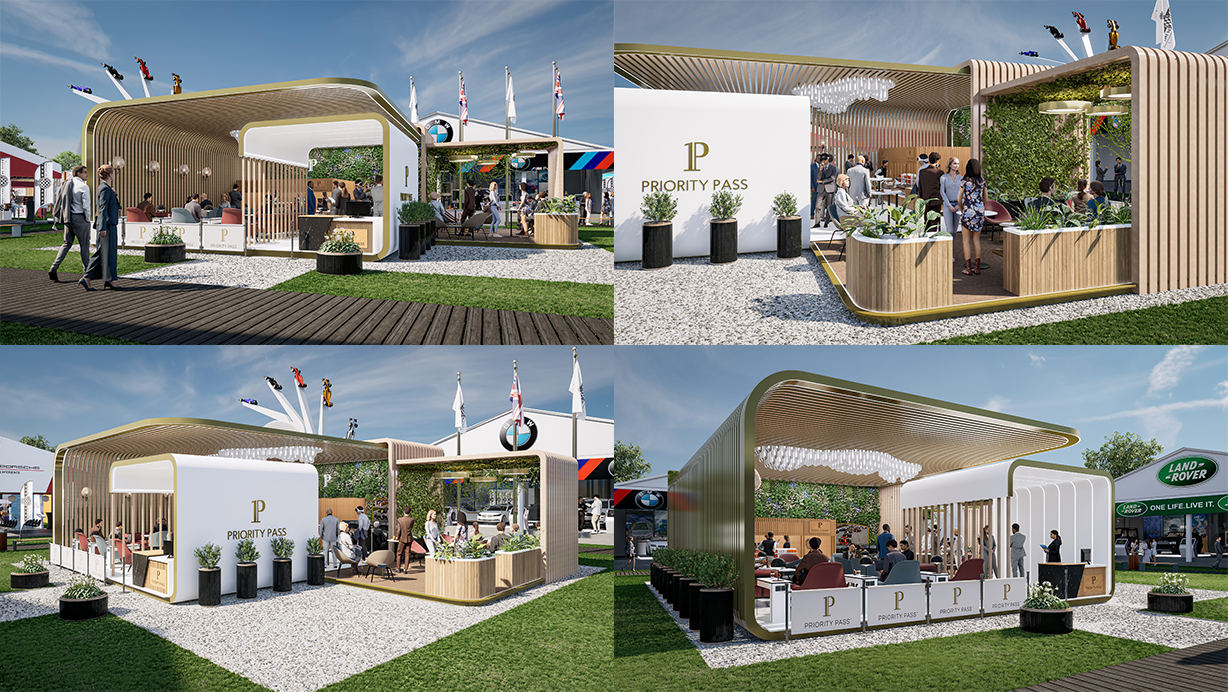
As the client was delighted with the lounge setting, the next step was the include this space and adapt them to a couple of the largest events in the UK. The first of which being The Goodwood Festival of Speed.
The setting around the lounge and kiosk was changed to display key aspects of the festival, such as the BMW sculpture seen in the background. An extra conversational area was added to the structure with some greenery to tie into the surroundings of the festival.
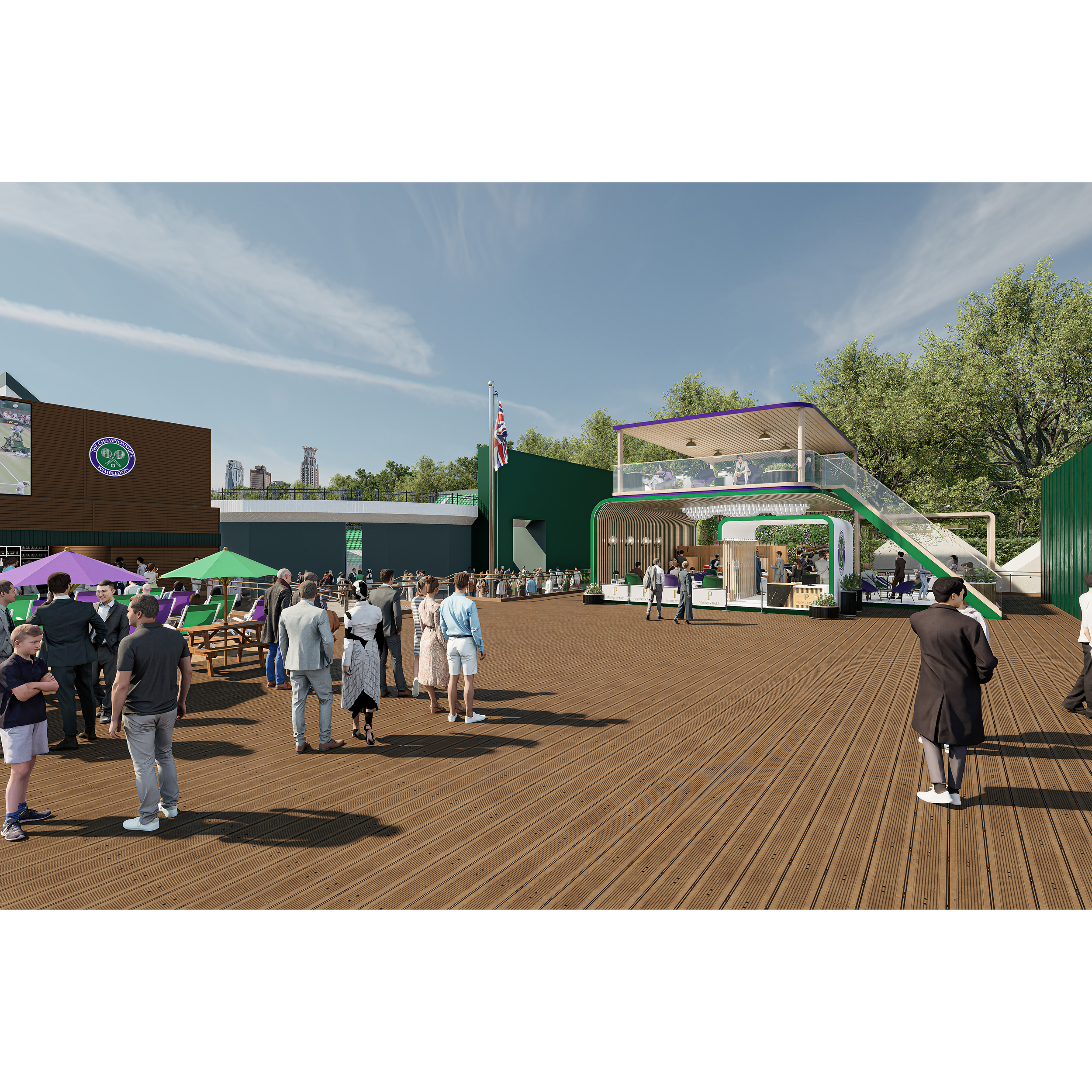
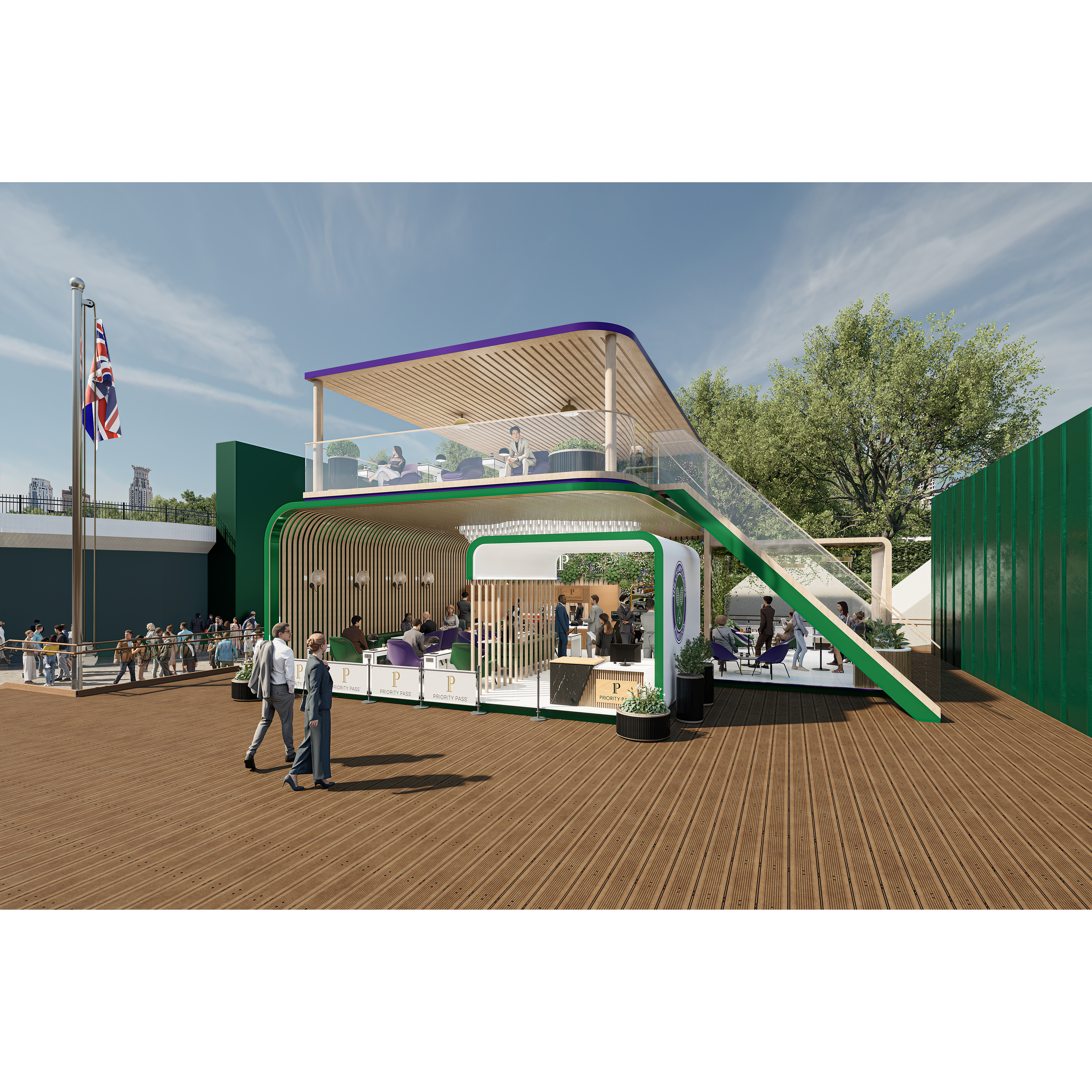
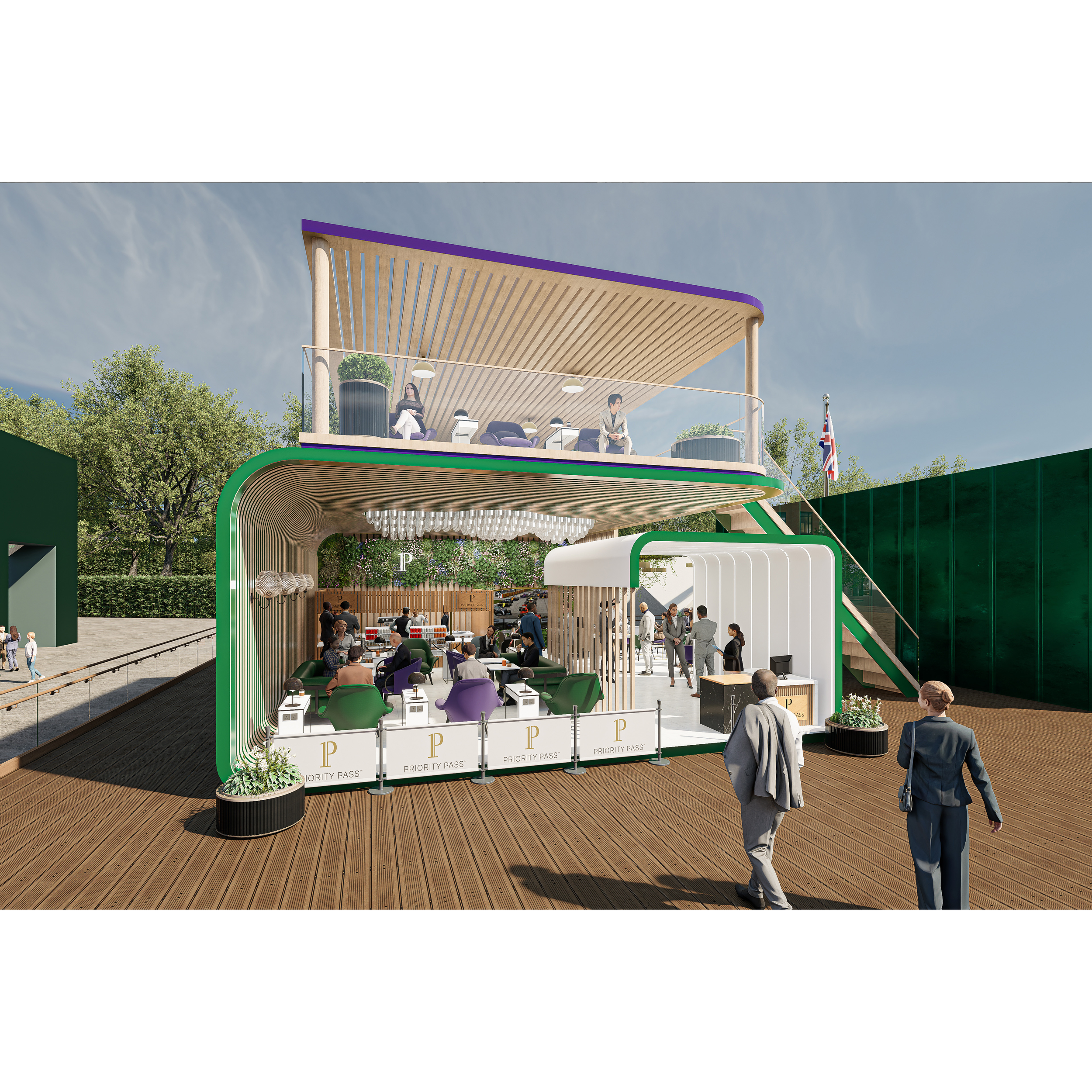
Setting 3 - Wimbledon
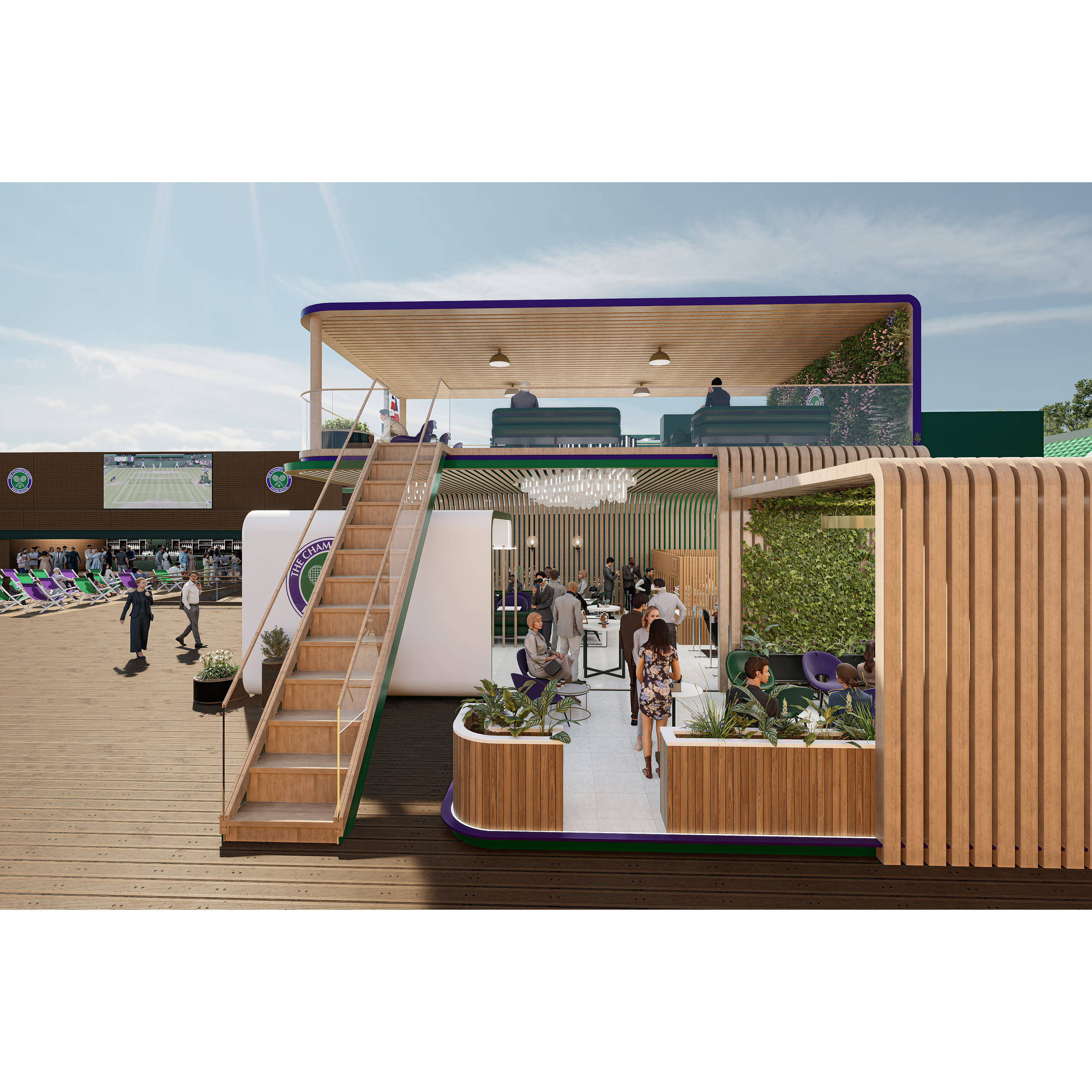
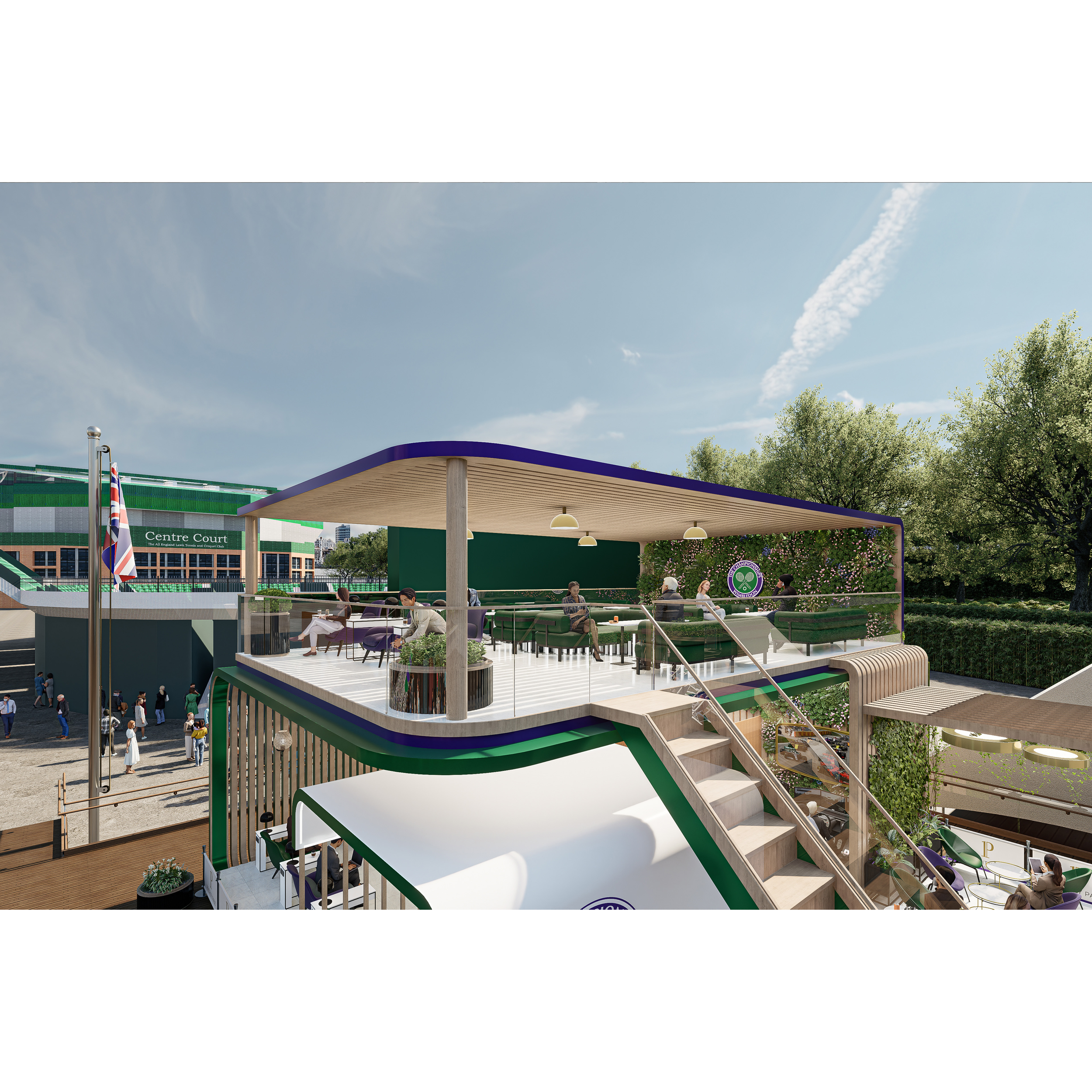
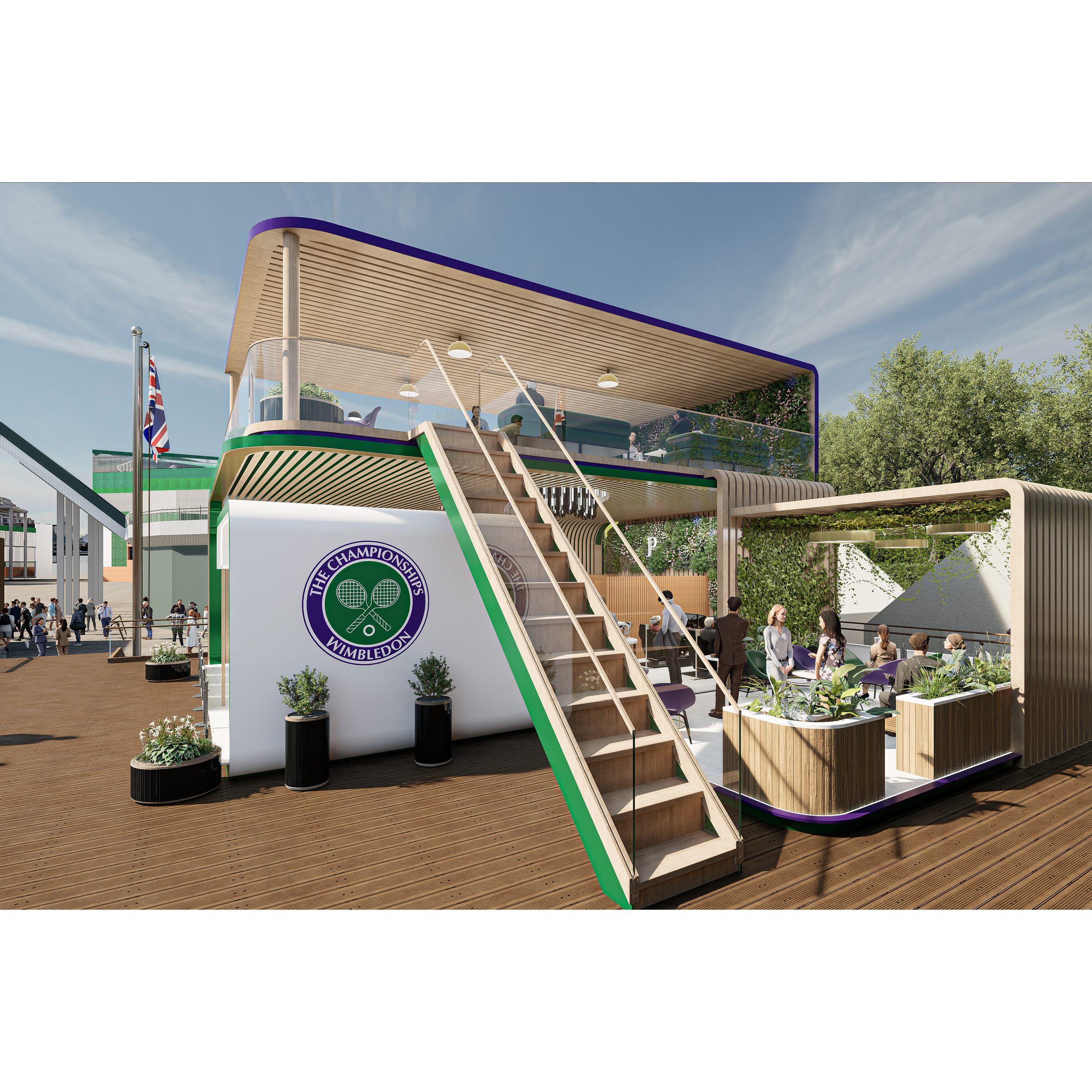
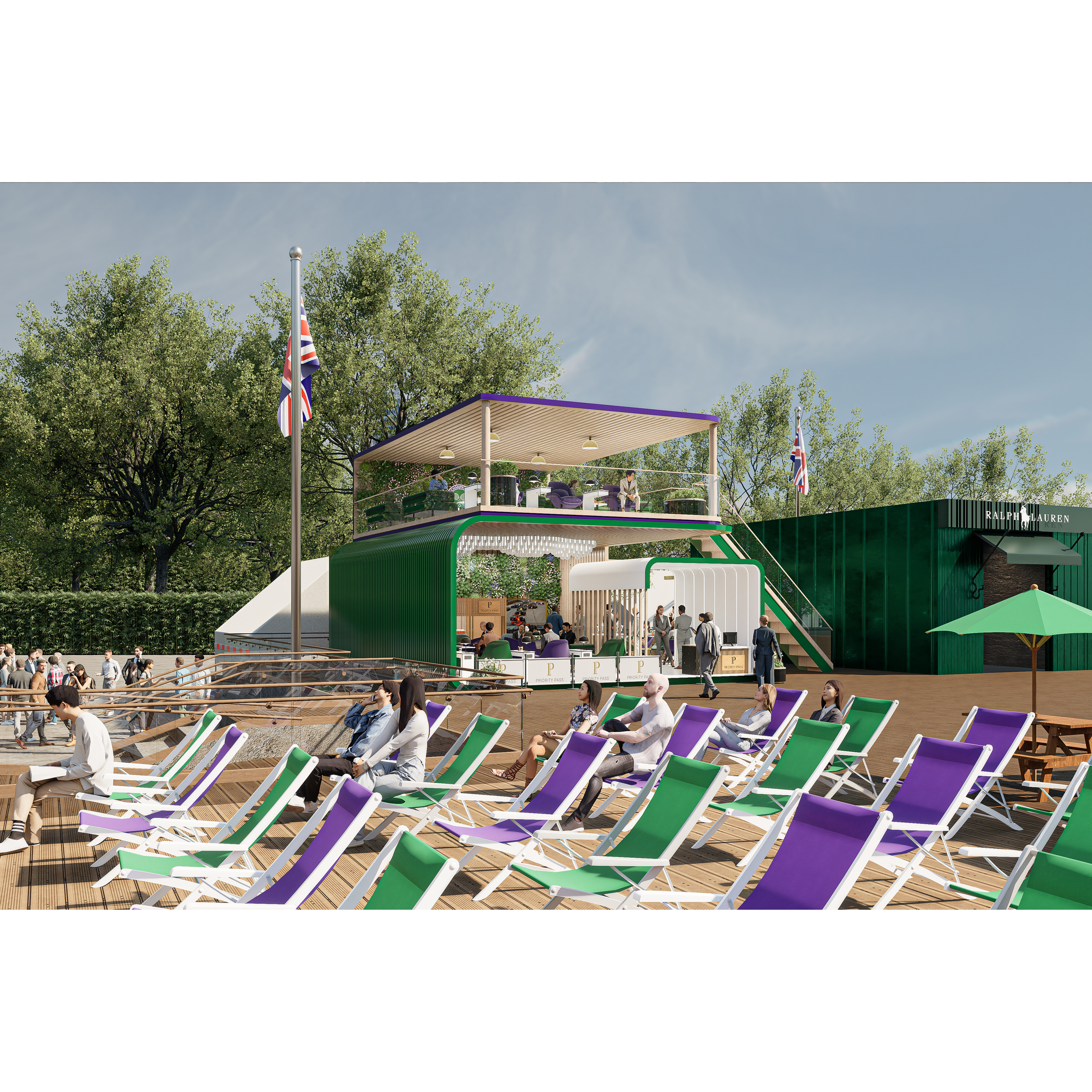
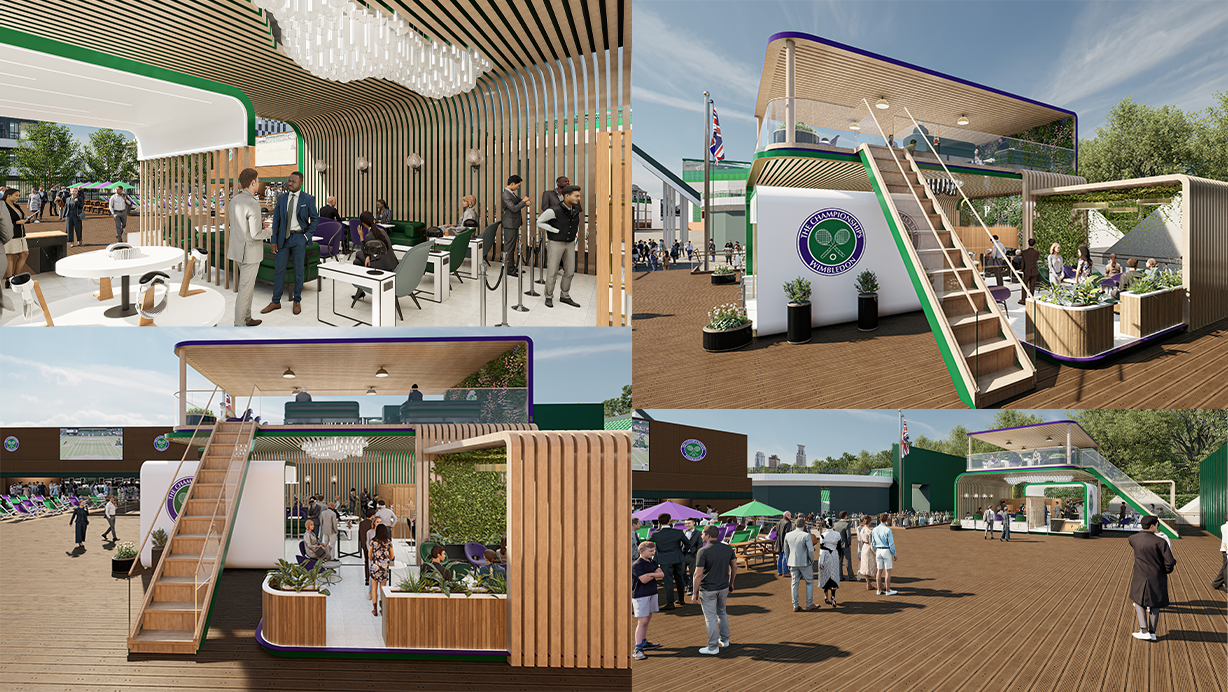
The final setting that was requested was Wimbledon. This environment was a tad trickier as aspects of this tournament are widely recognised, like centre court, bar and watching areas, which had to look very accurate.
The brand colours were altered to fit in seamlessly with it’s environment and an extra floor level has added to the lounge set up, as Wimbledon is one of the busiest sporting events in the UK with 500,000 visiting the even every year, making this a two teared area.
Final Deliverables